NLIGHTD L4 LEP Prototype Review
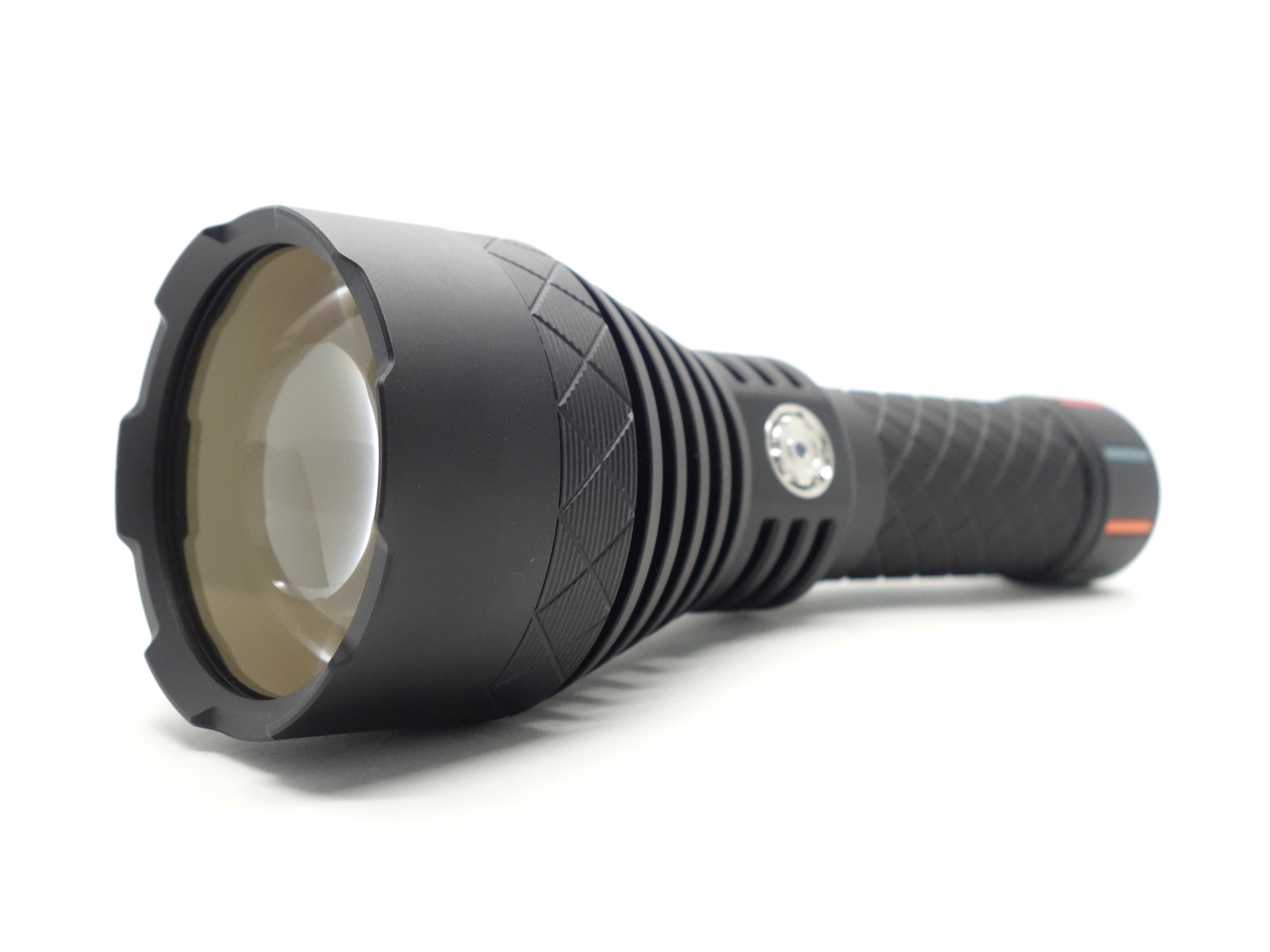
NLIGHTD L4 LEP Prototype#
- Specifications
- Introduction
- Torch in use
- Build quality
- LED, bezel, lens, reflector and beam
- Size and comparison
- User interface
- Batteries and charging
- Performance
- Beamshots
- Thermal Images
- Conclusion
- Price
- Product page
Specifications#
| Brand/model | NLIGHTD L4 Prototype |
|---|---|
| LEP | 15W shine-through LEP module |
| Maximum lumens | 900 lm |
| Maximum beam intensity | 1,563,000 cd |
| Maximum throw | 2,500 m |
| Battery | 1*21700 |
| Onboard charging | Yes (USB-C) |
| Material | Aluminium |
| Modes | 2 |
| Blinkies | |
| Waterproof | IPX8 |
| Review date | July 2026 |
Introduction#
This NLIGHTD L4 prototype is a 21700-sized torch with a 15W shine-through Laser Excited Phosphor (LEP) module, a large lens, and USB-C charging.
NLIGHTD is a brand by nealsgadgets.com.
Neal kindly provided this prototype for early feedback. He is sending a final version with a new driver and an updated user interface.
The Low mode is going to be more powerful in the final version so I have omitted measurements for Low from this review.
The final version of this torch will be different to the prototype in this review.
Packaging#
This NLIGHTD L4 prototype arrived in a cardboard box with bubble wrap. Nothing fancy. But the torch certainly looks complete!
The following is included in the box:
- NLIGHTD L4 prototype
- Vapcell F56 21700 3.7V Li-ion 5600mAh (optional)
A user manual was not included with the prototype.
Torch in use#
The NLIGHTD L4 prototype feels well balanced in my large hand.
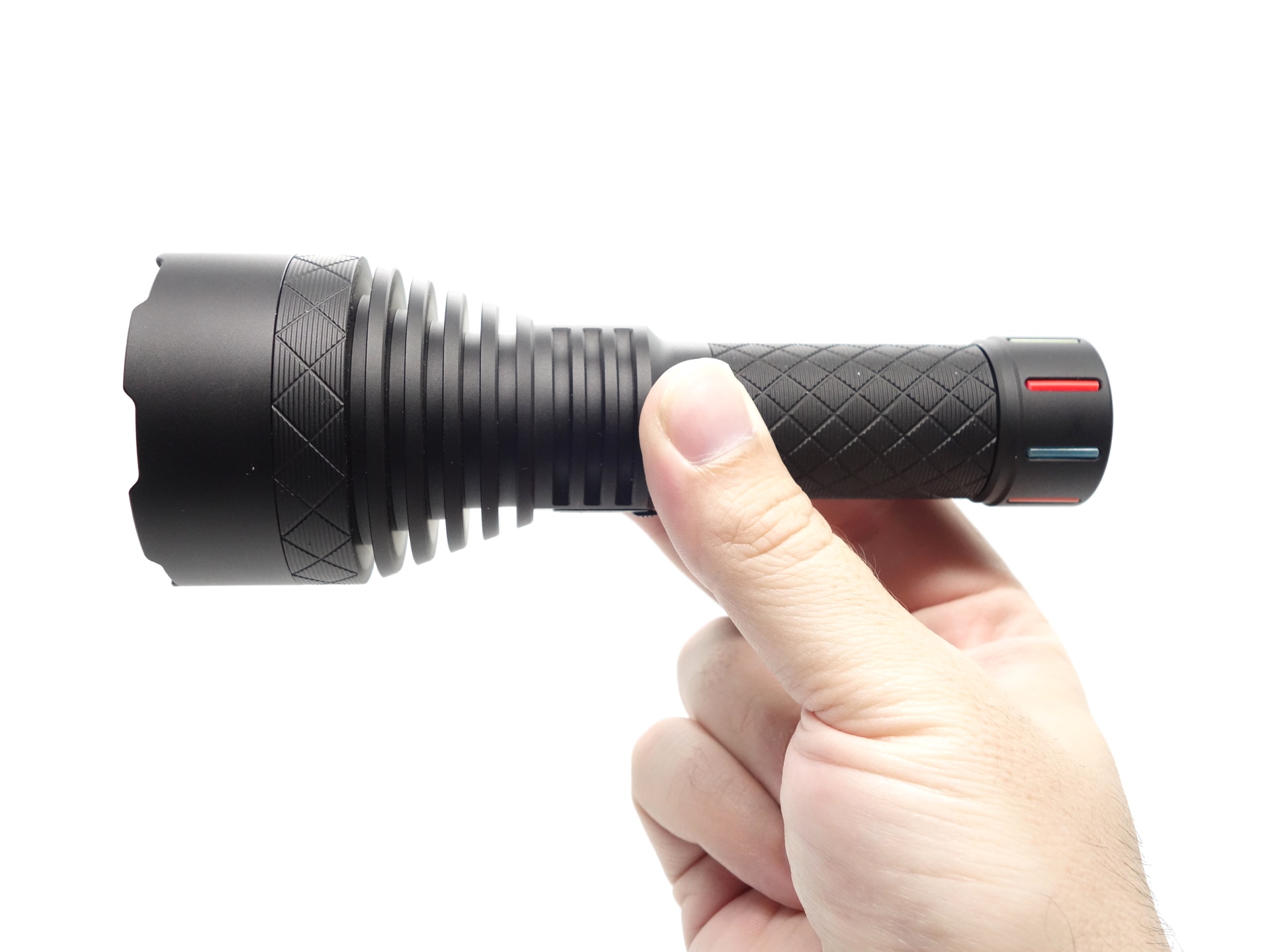
Neal asked for user input via social media to find out whether a lanyard ring should be added to the threads of the tube or if a hole should be cut into the tailcap.
I prefer the tailcap as it is. The tailcap sits smoothly against my wrist and I can put the torch in my jacket pocket.
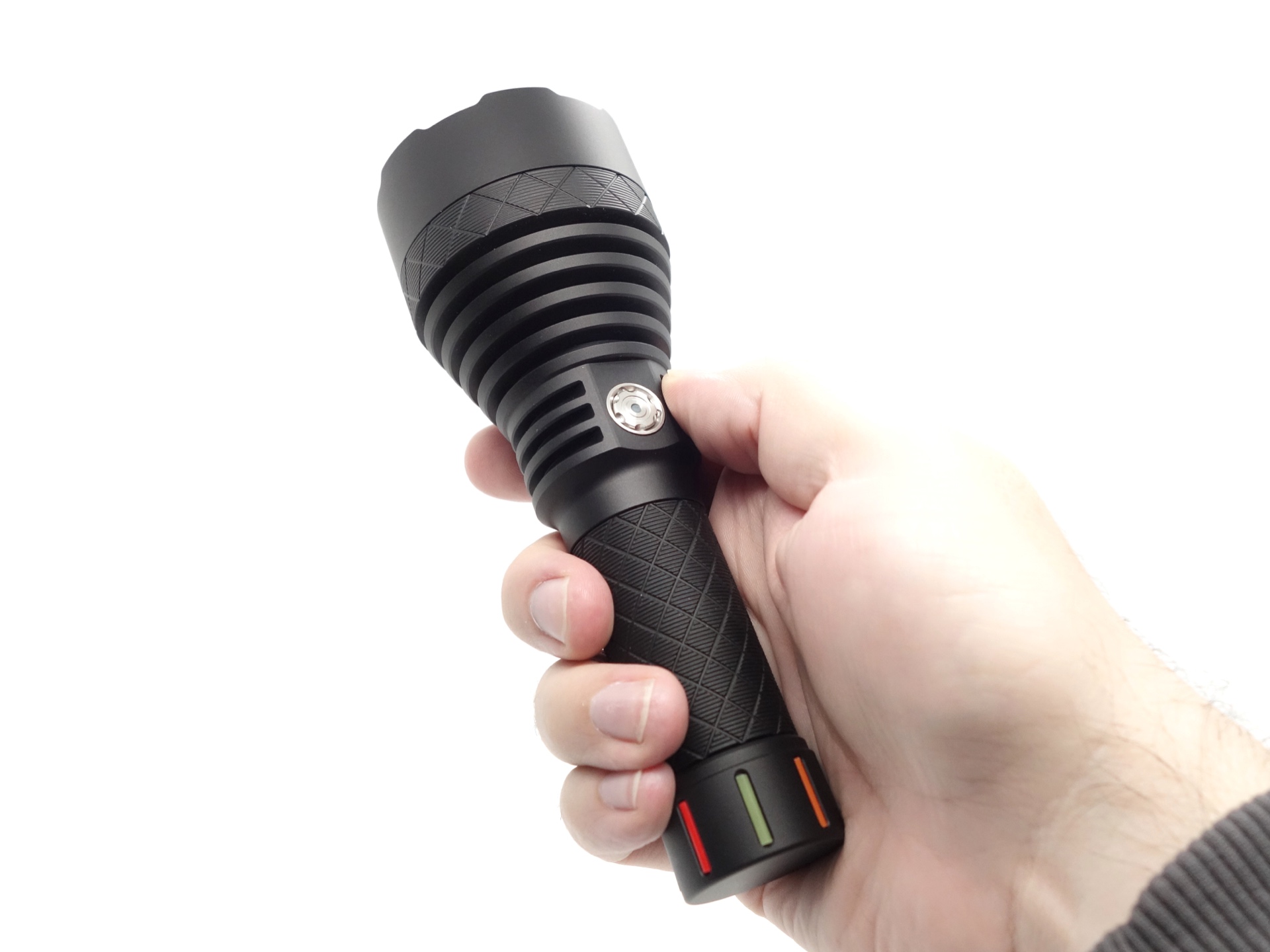
Like just about any Laser Excited Phosphor torch, this one is best used in situations where you want to shine a narrow beam of light hundreds of metres away. It is not suitable for lighting up a path while walking around at night because the beam is too intense.
Build quality#
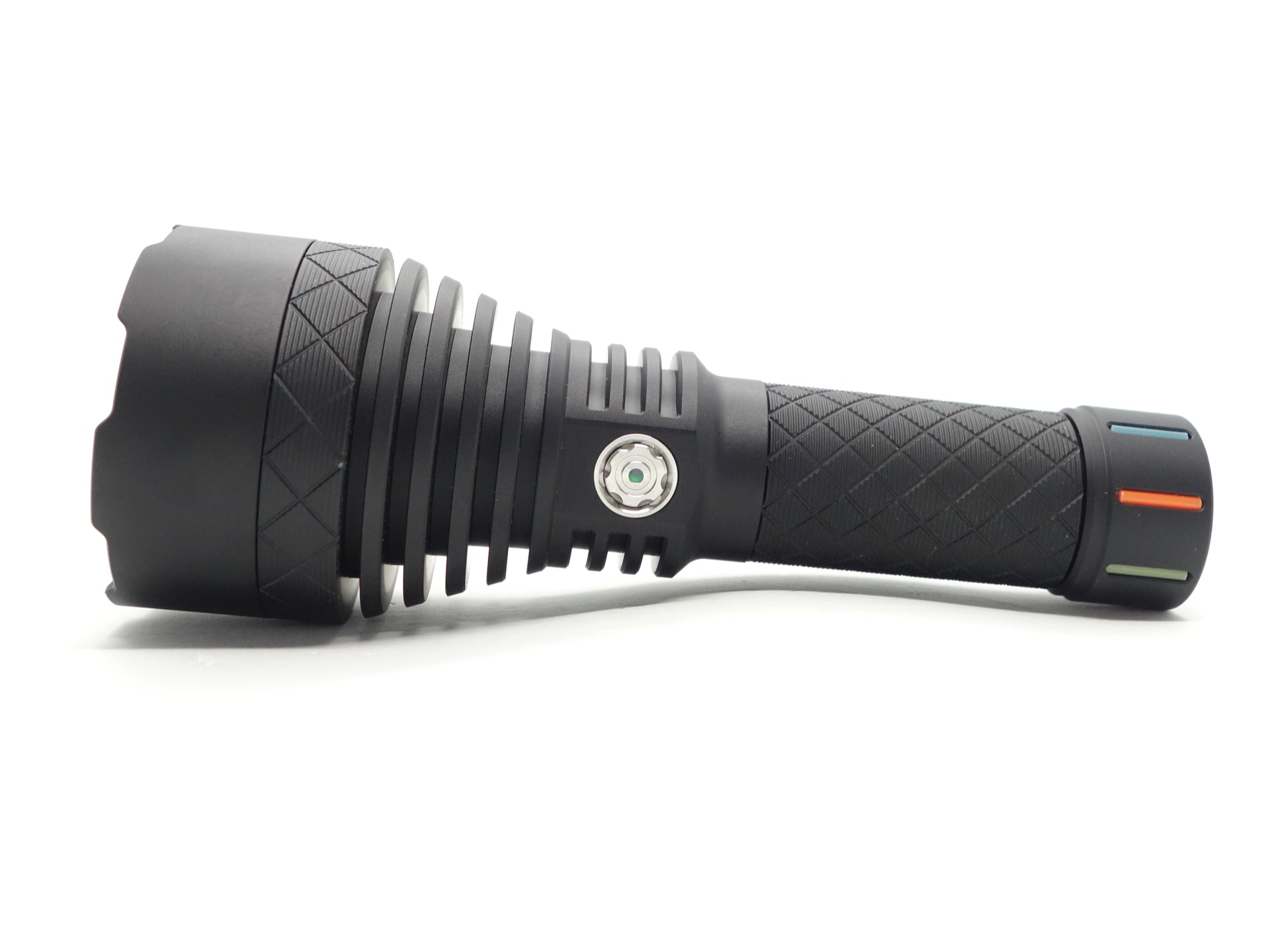
This NLIGHTD L4 prototype is made of aluminium and it has a matte black anodised finish. There are no sharp edges.

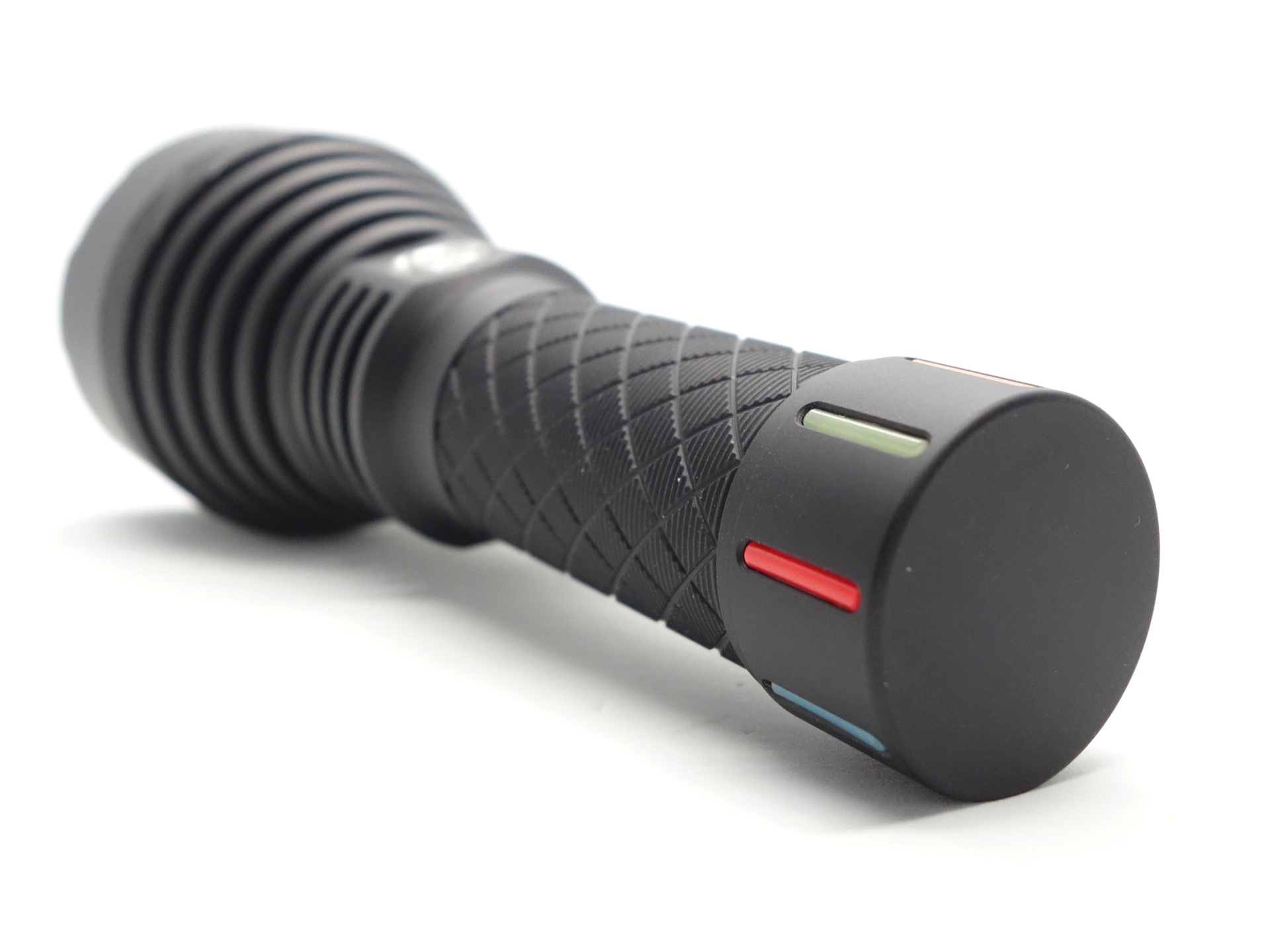
There is plenty of grip from the knurling on the tube. The heatsink fins near the LEP module have been chamfered.
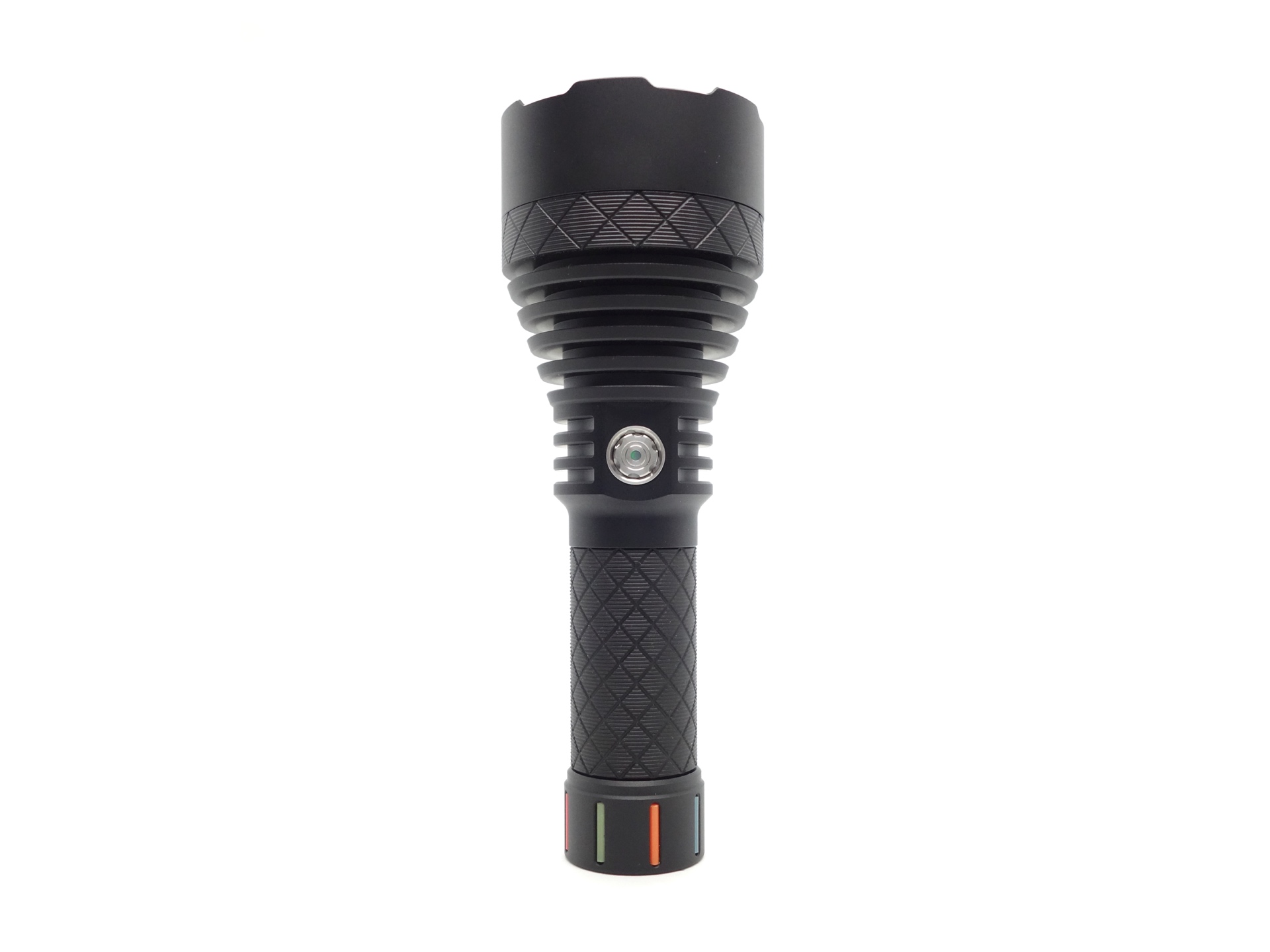
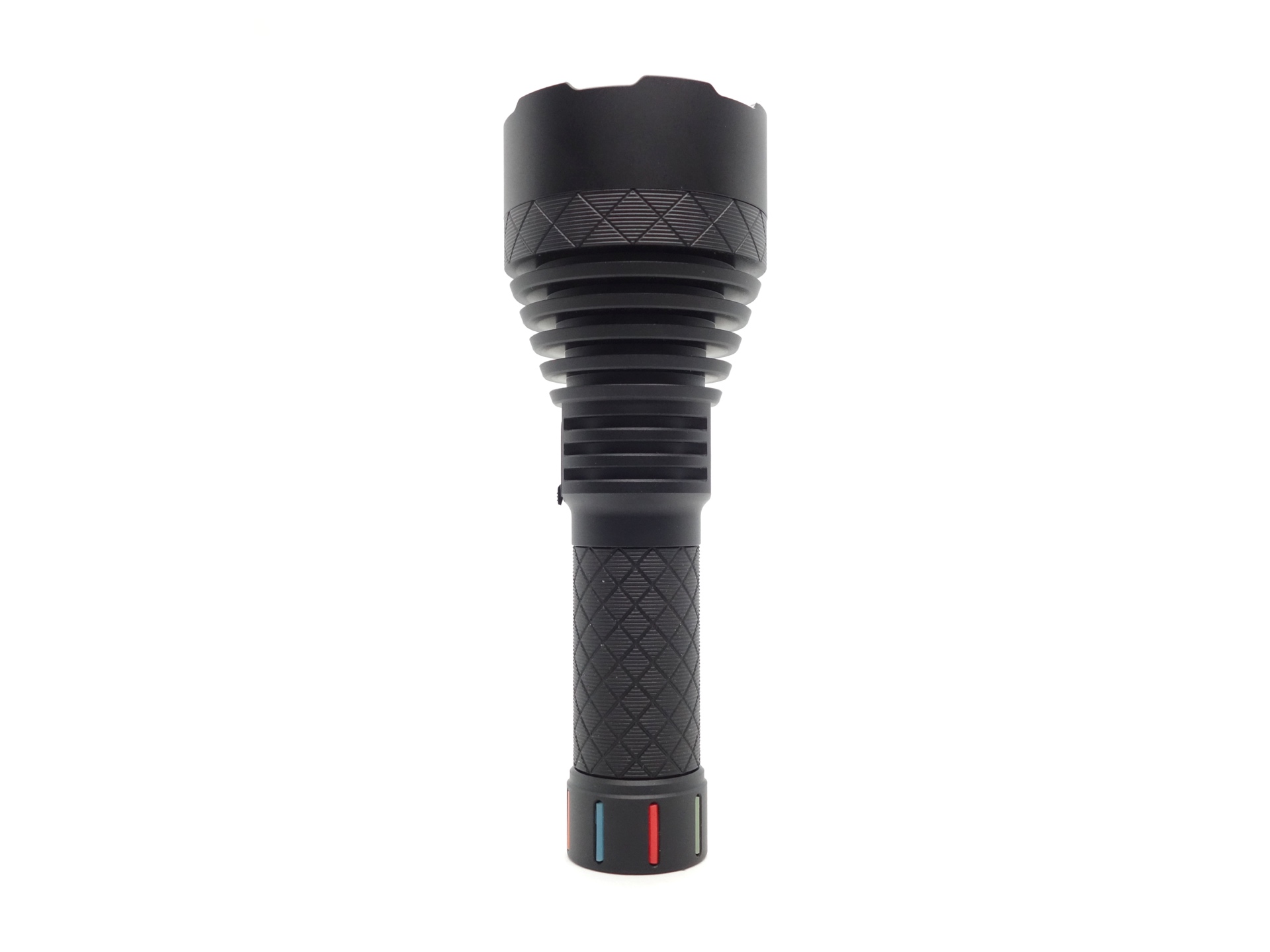
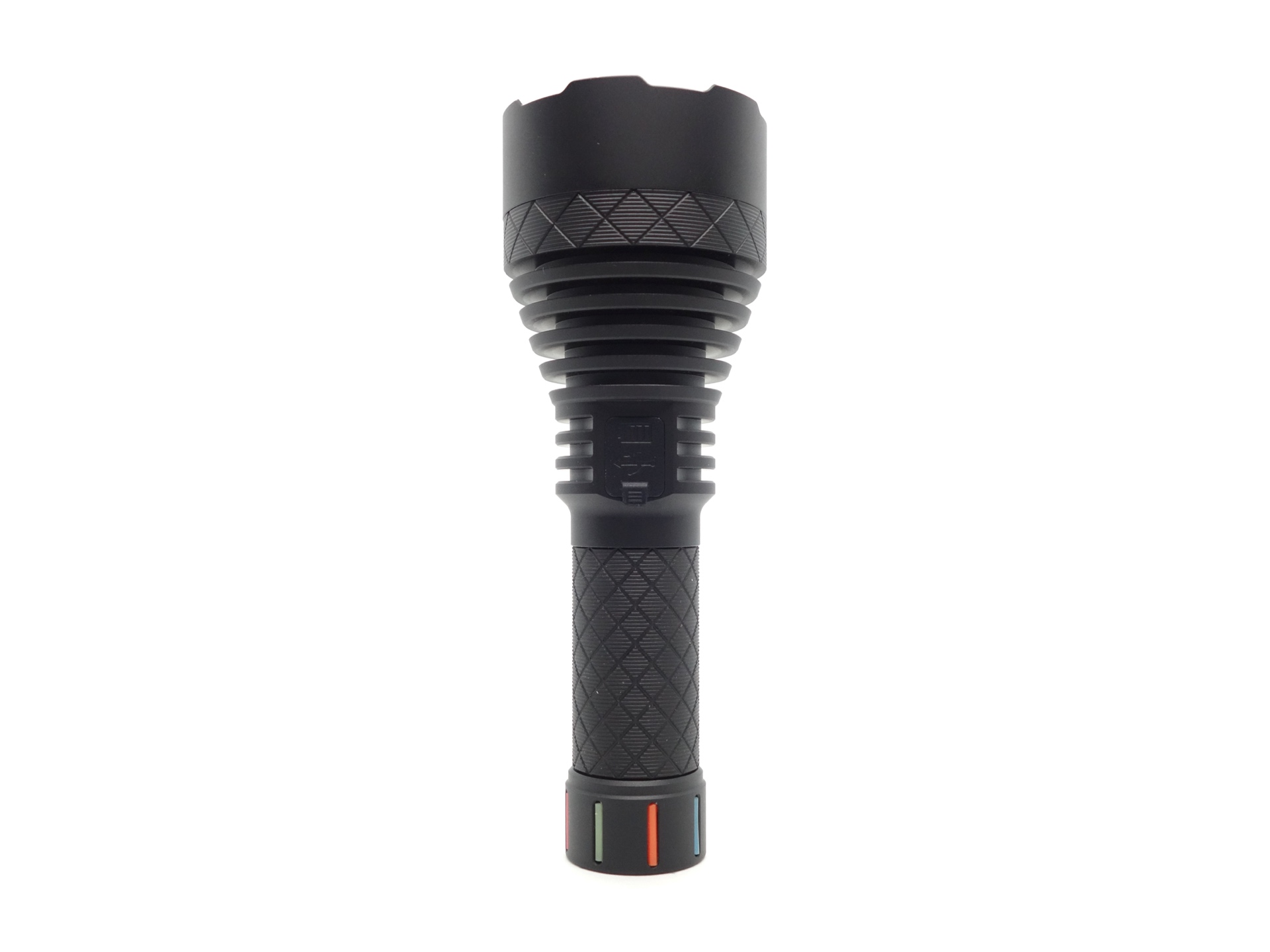
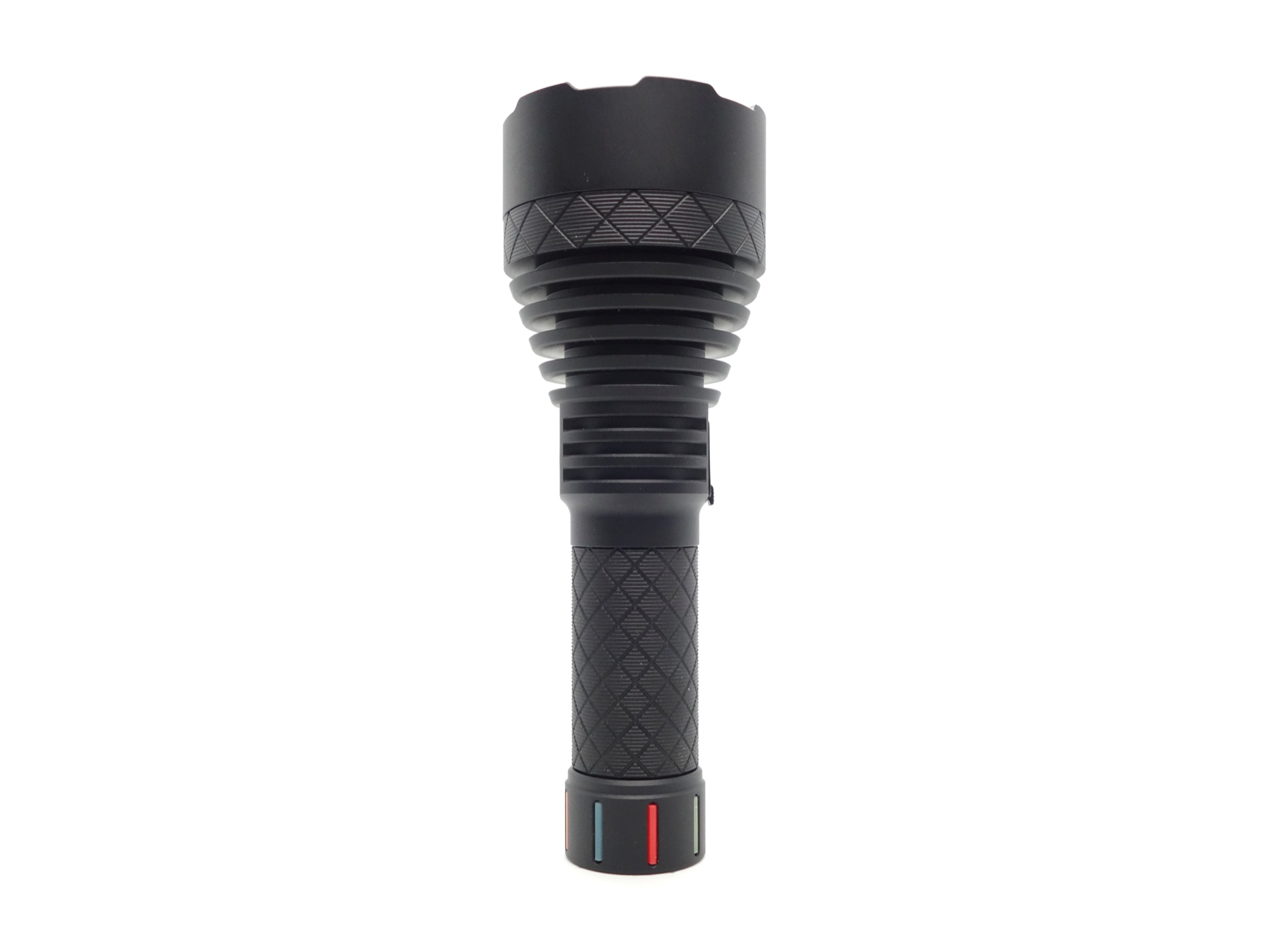
There are slots in the tailcap for glow sticks or tritium vials.
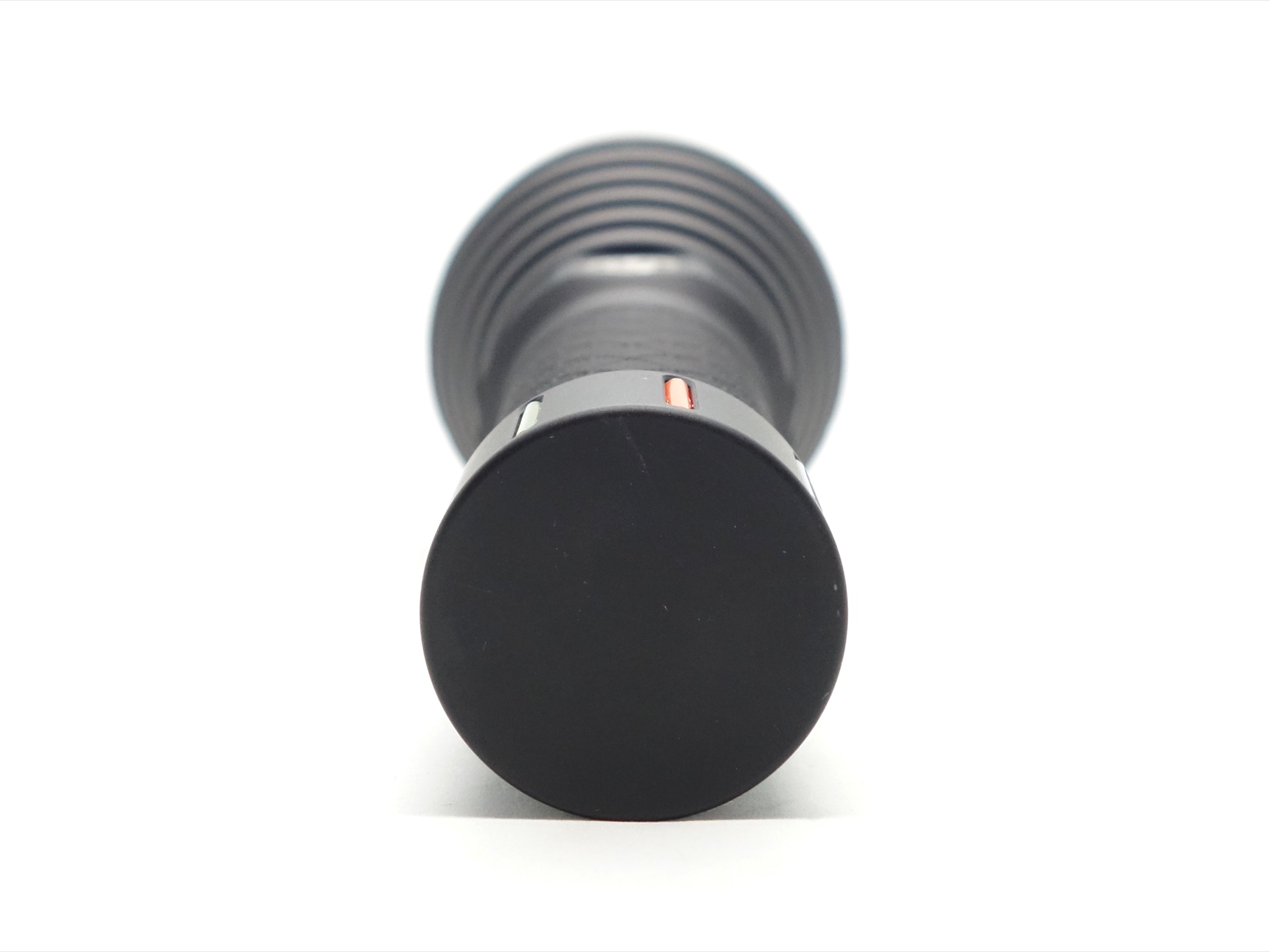
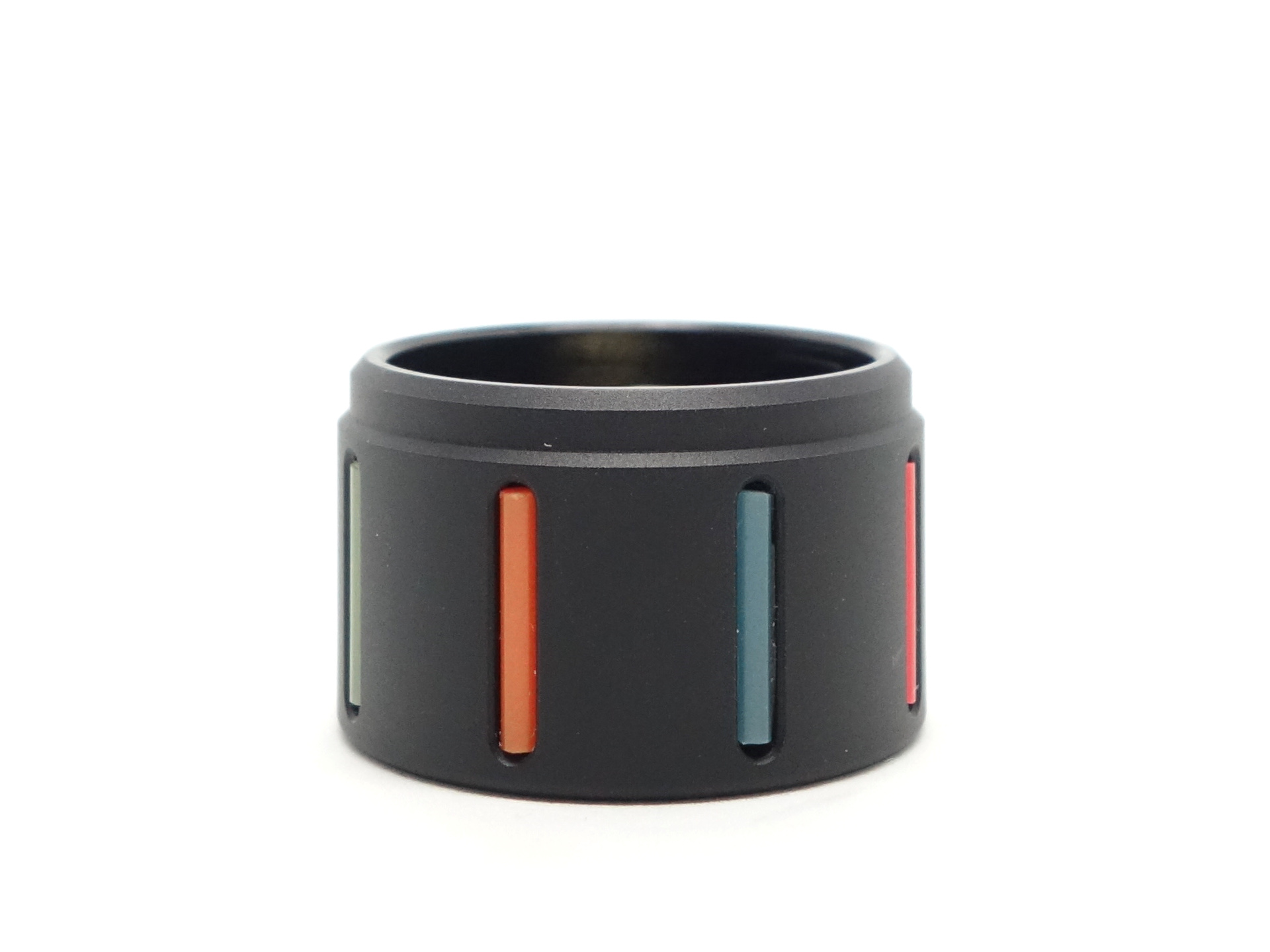
The strong magnet in the tailcap makes it easy to remove the battery.
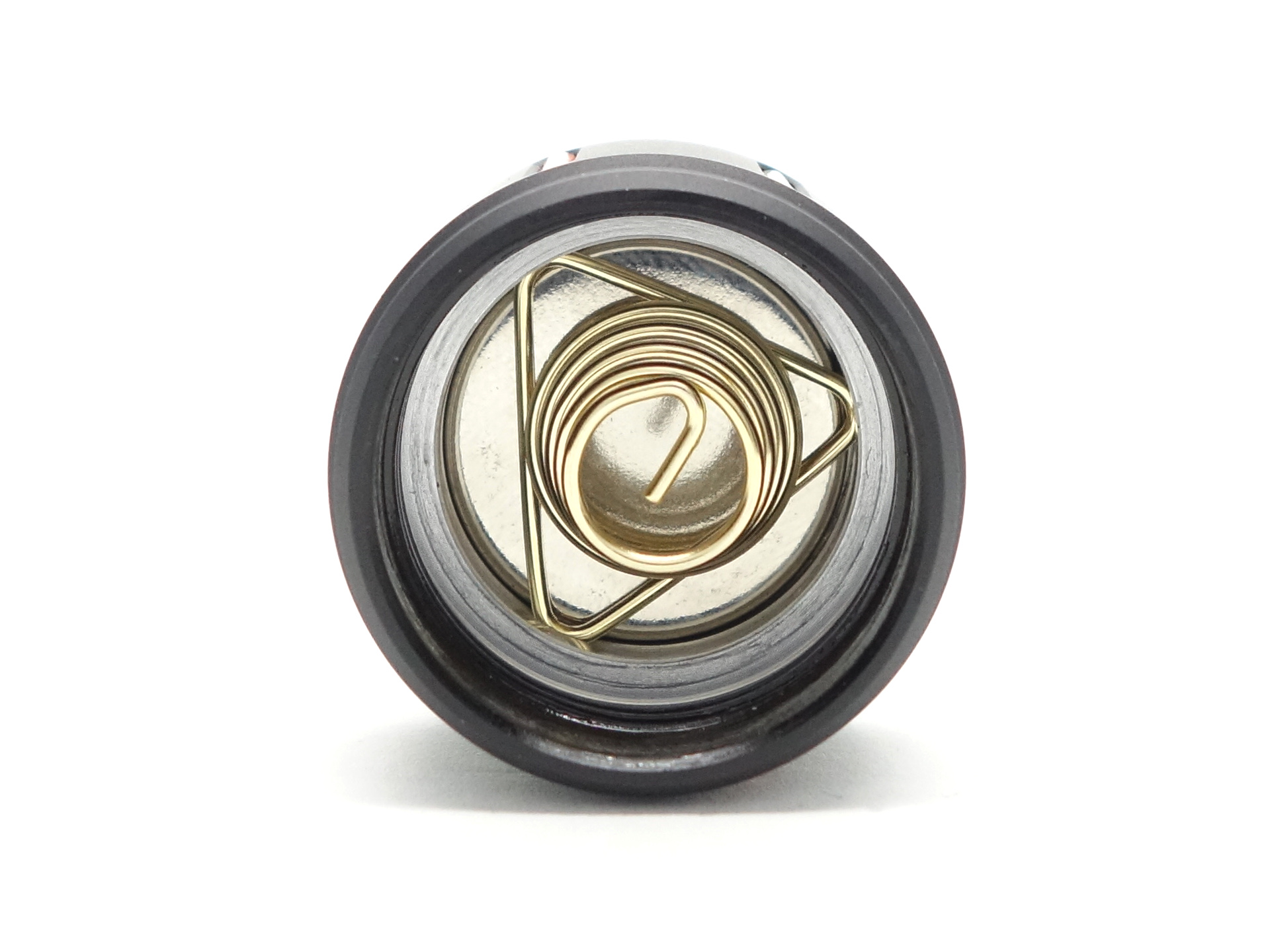
The head has a thick notch instead of a spring. Flat top 21700 cells fit but longer button top protected cells may be too long.
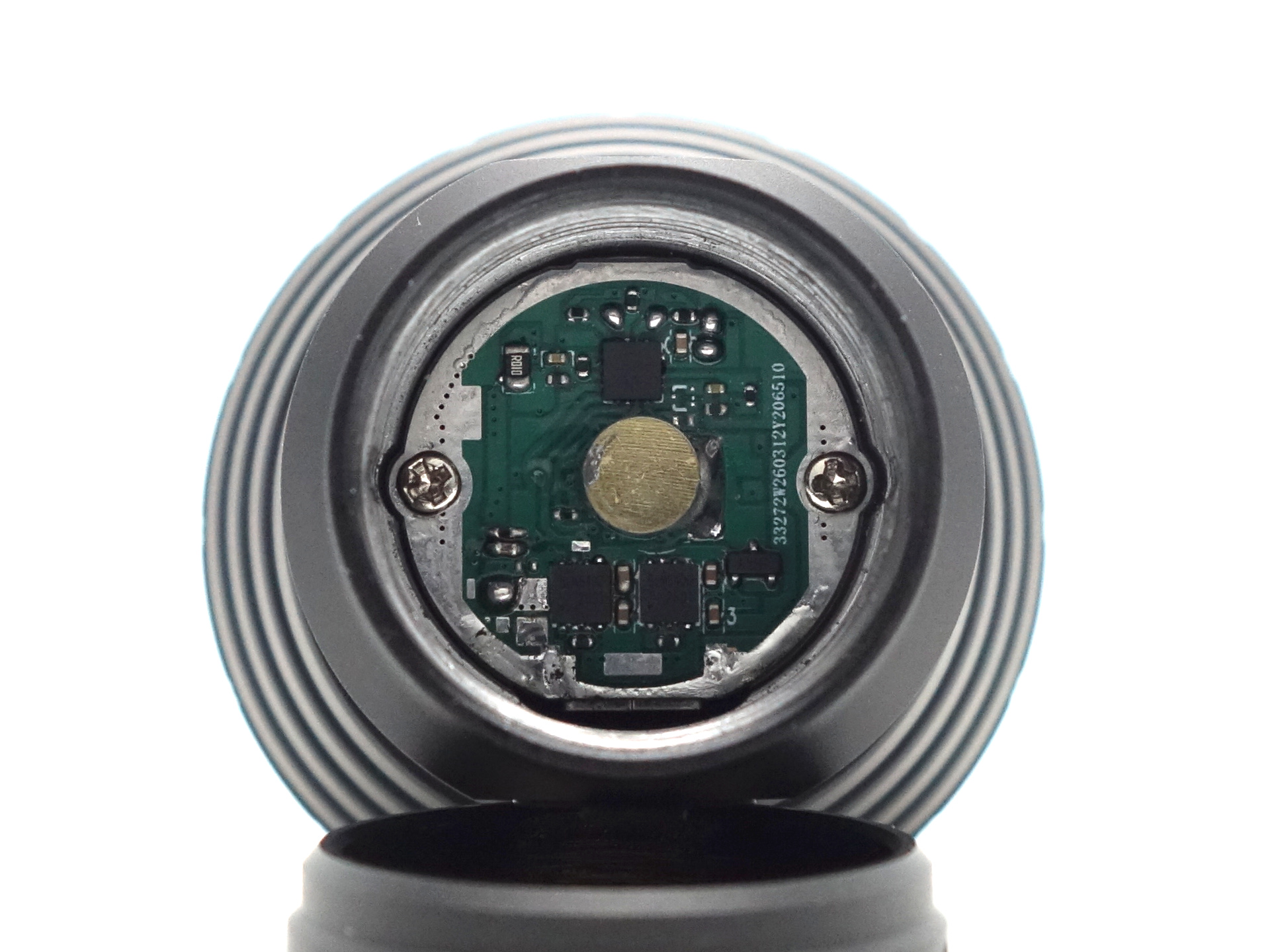
The tail threads are anodised and they turn smoothly. This allows you to physically disconnect the battery by slightly unscrewing the tailcap.
The inside of the tube is also anodised.
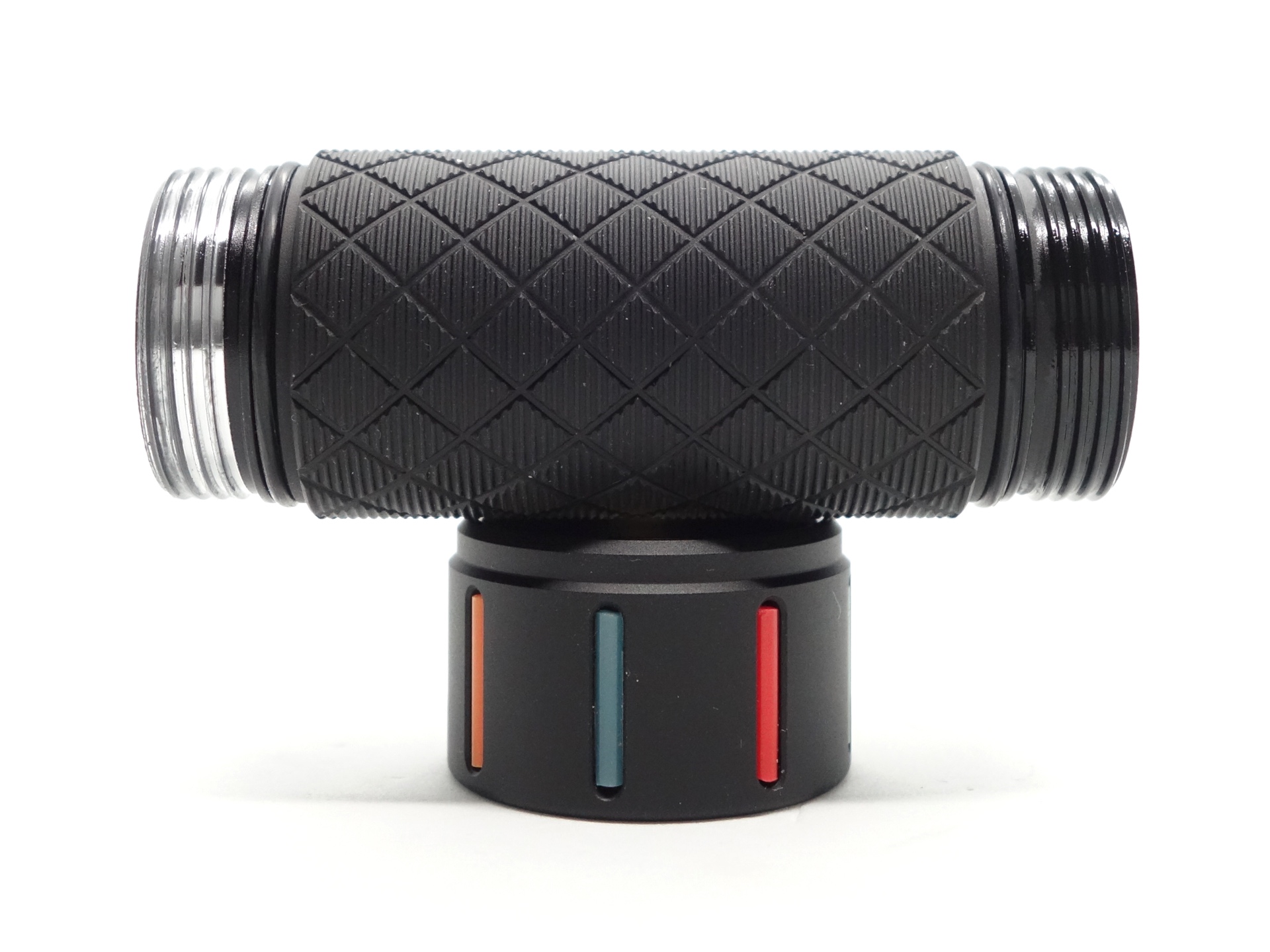
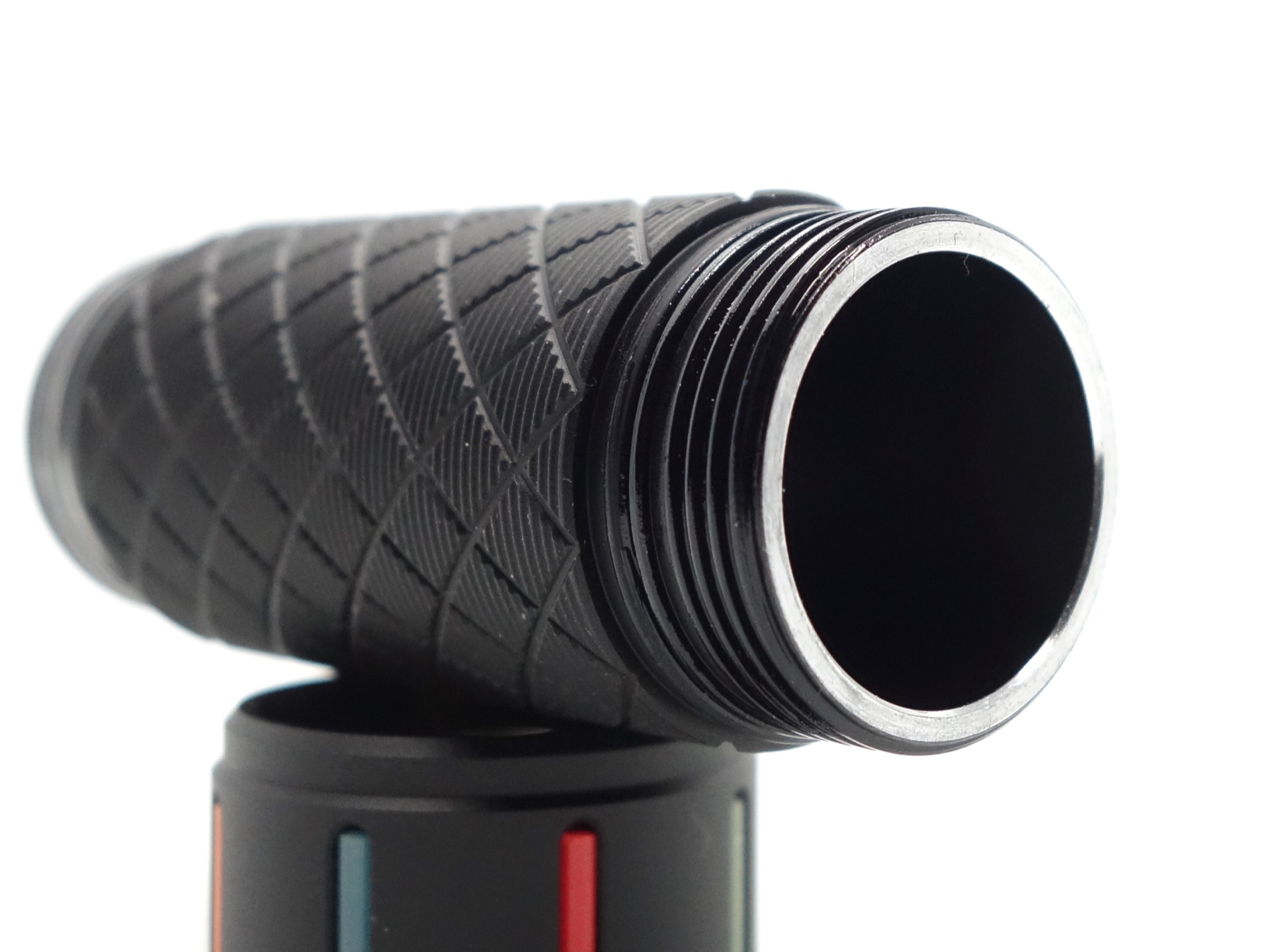
The build quality is really nice.
LED, bezel, lens, reflector and beam#
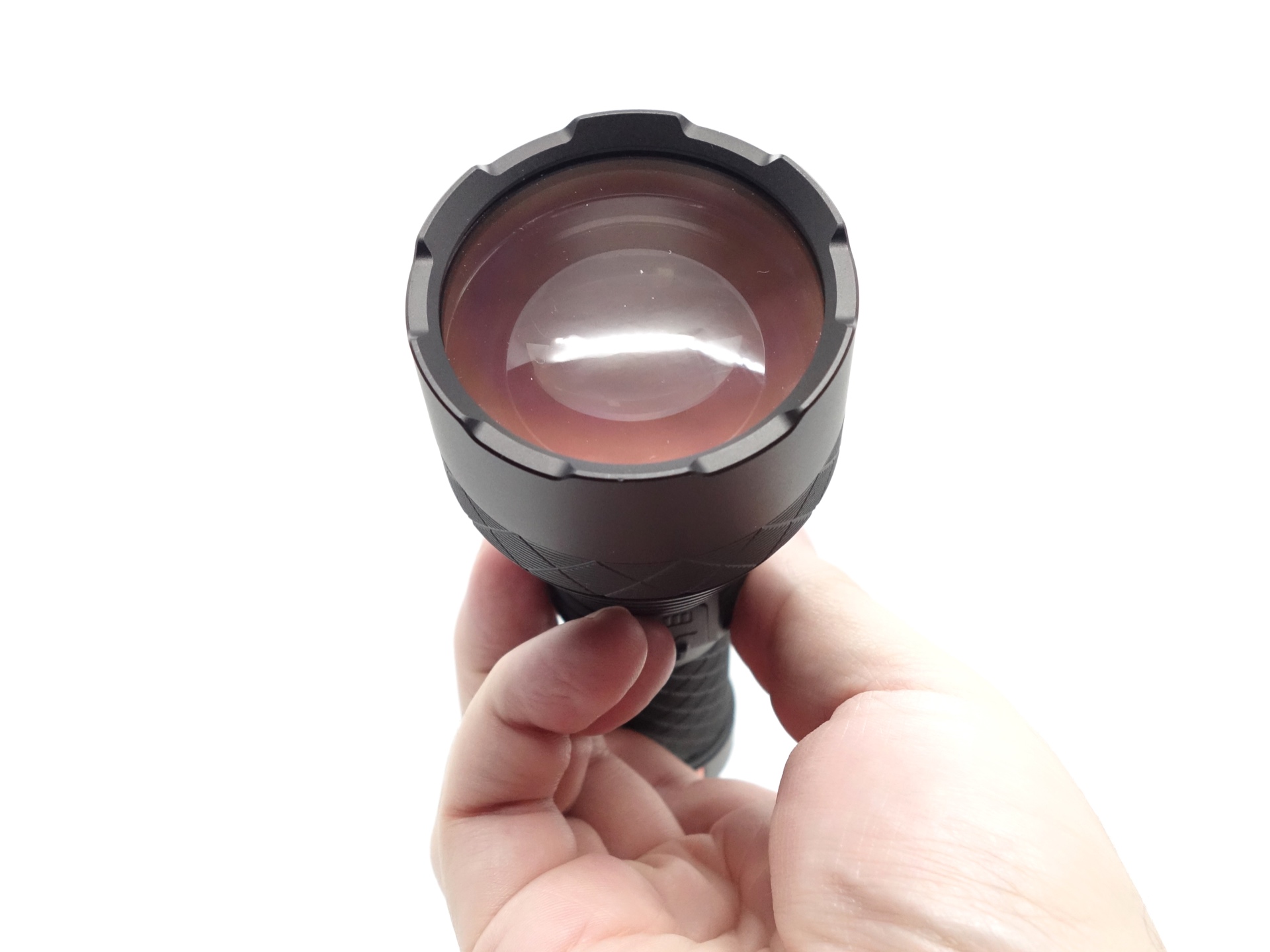
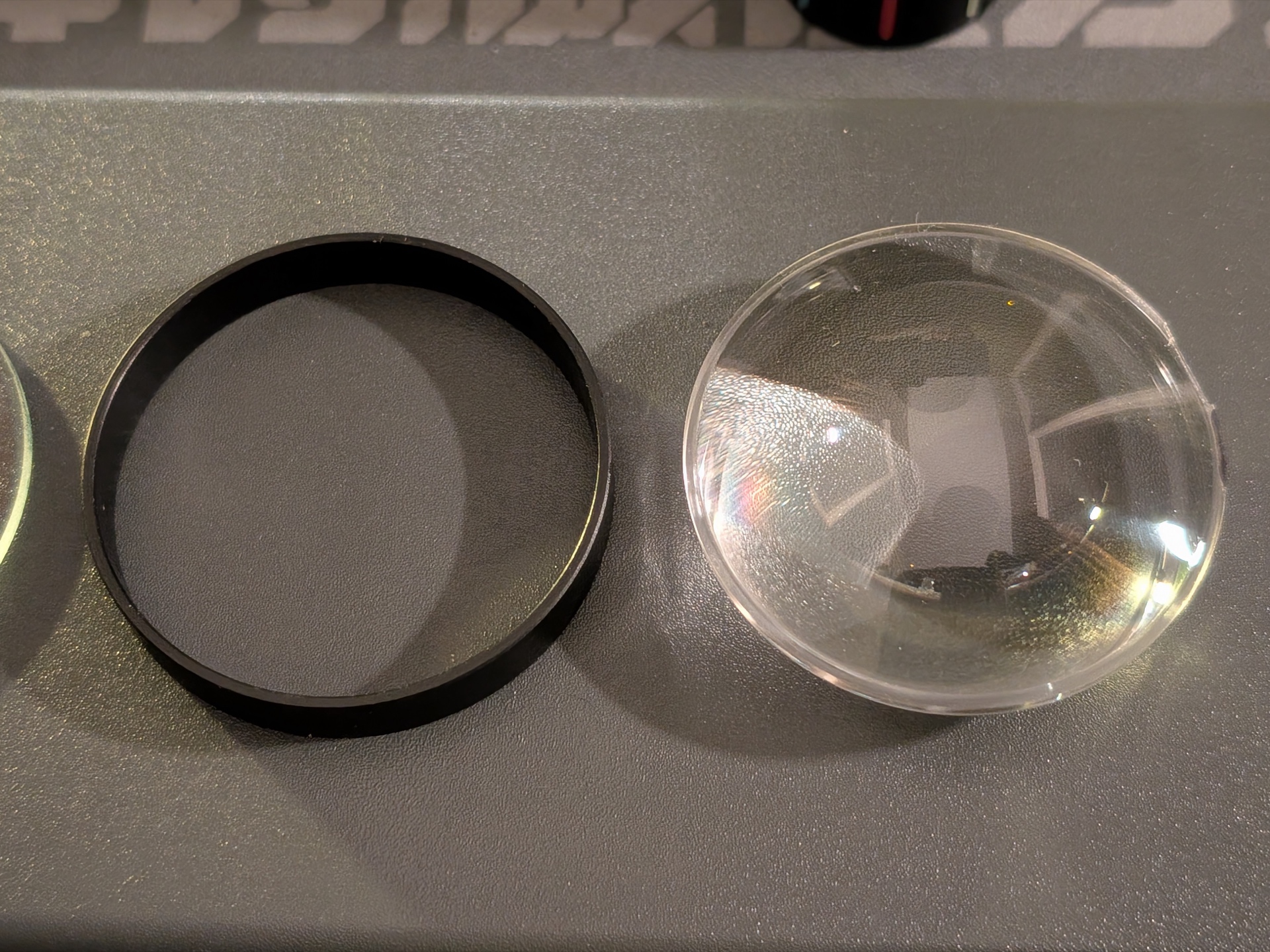
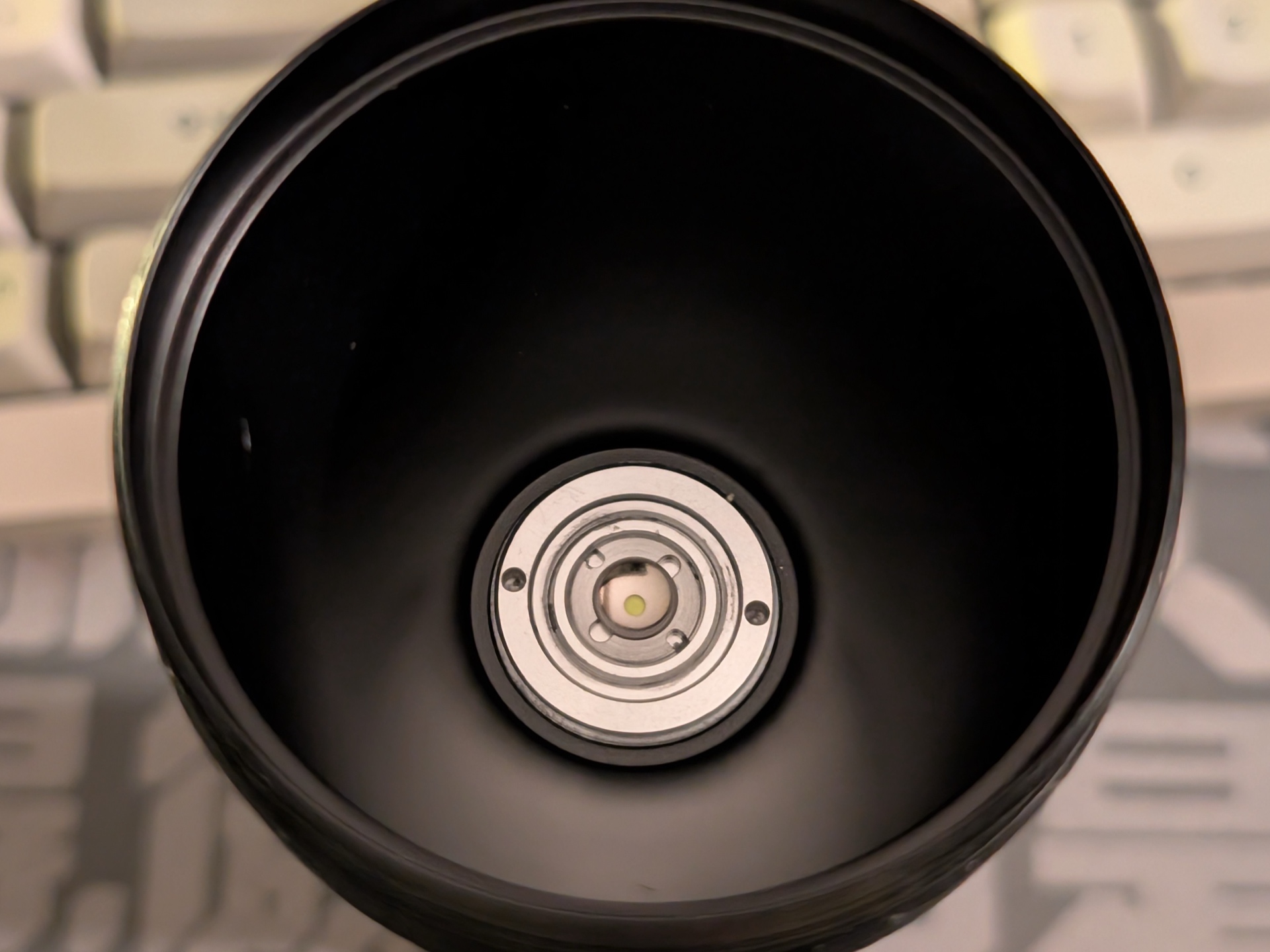
The NLIGHTD L4 prototype has a 15W shine-through LEP module behind a 54.6mm biconvex lens.
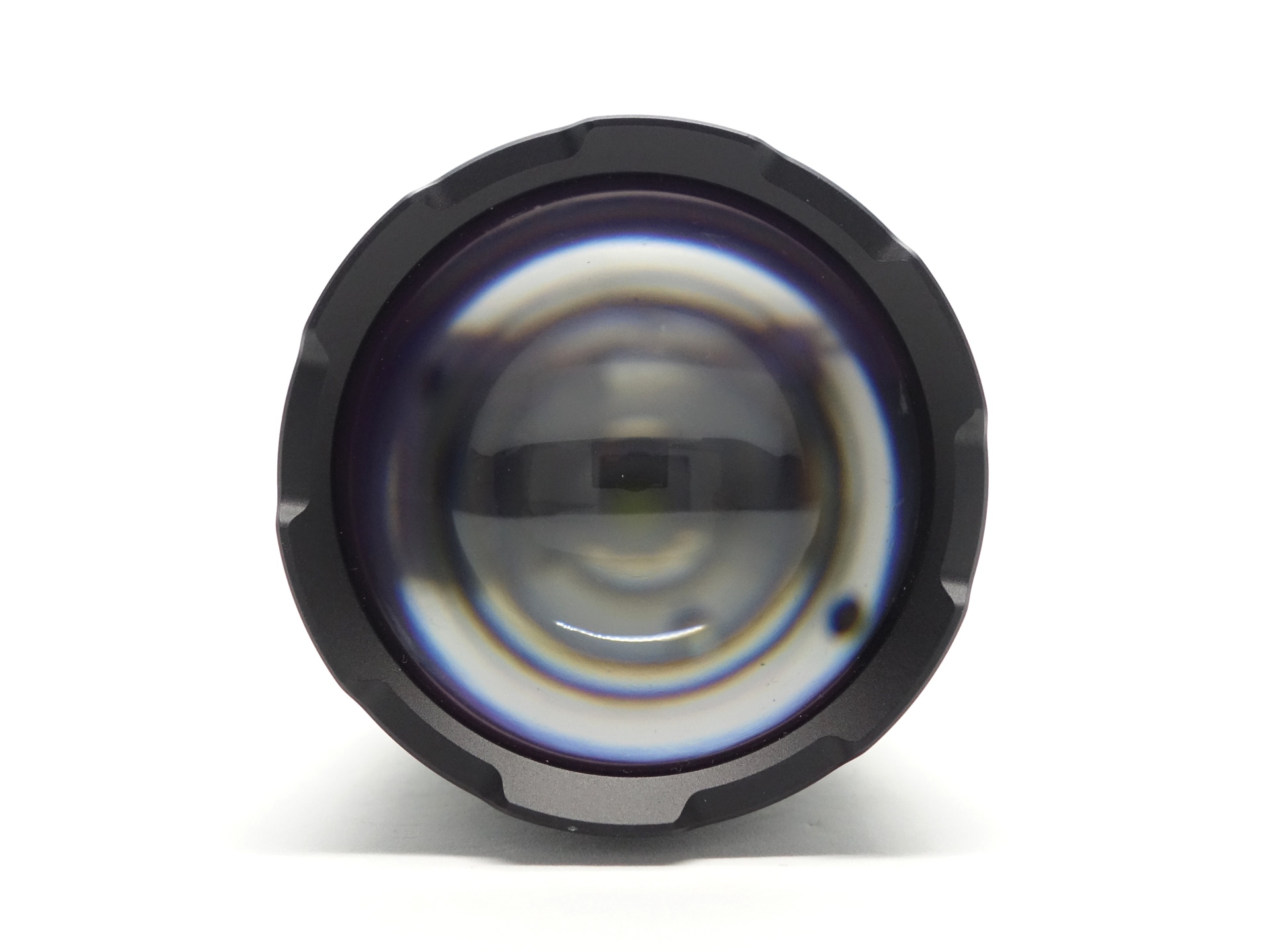
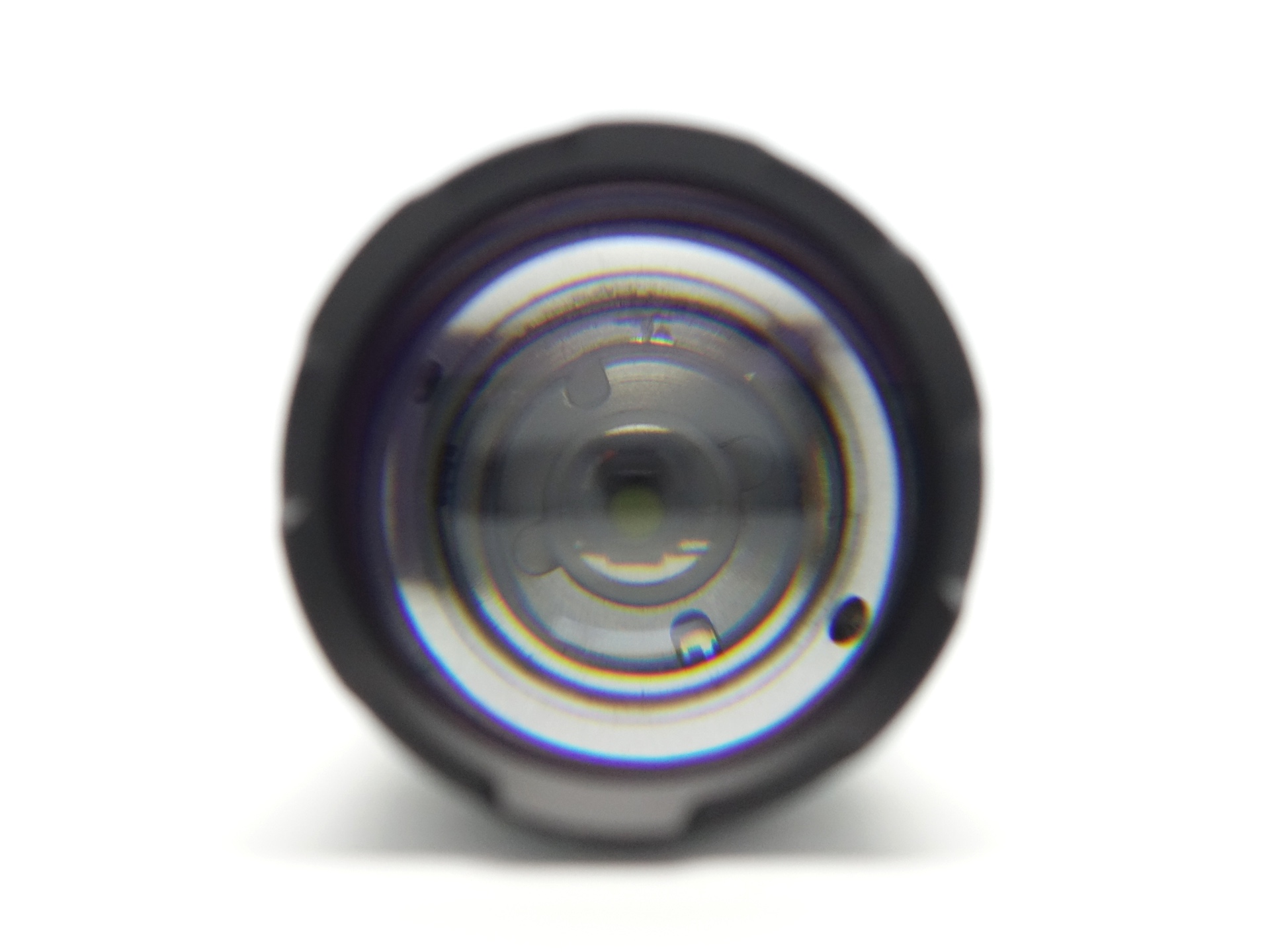
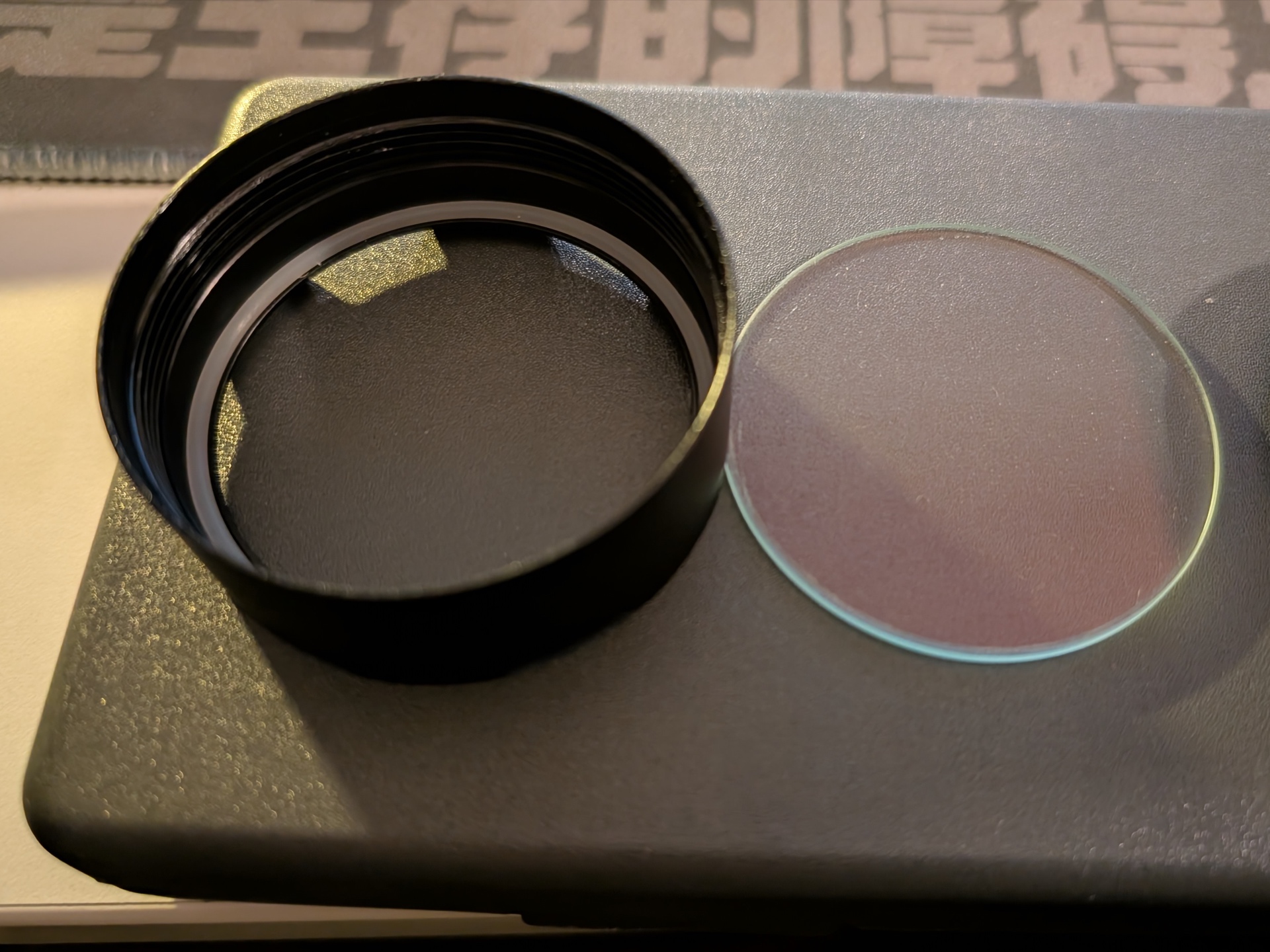
There is an o-ring under the bezel followed by a glass lens with an anti-reflective coating, a spacer and a biconvex lens.
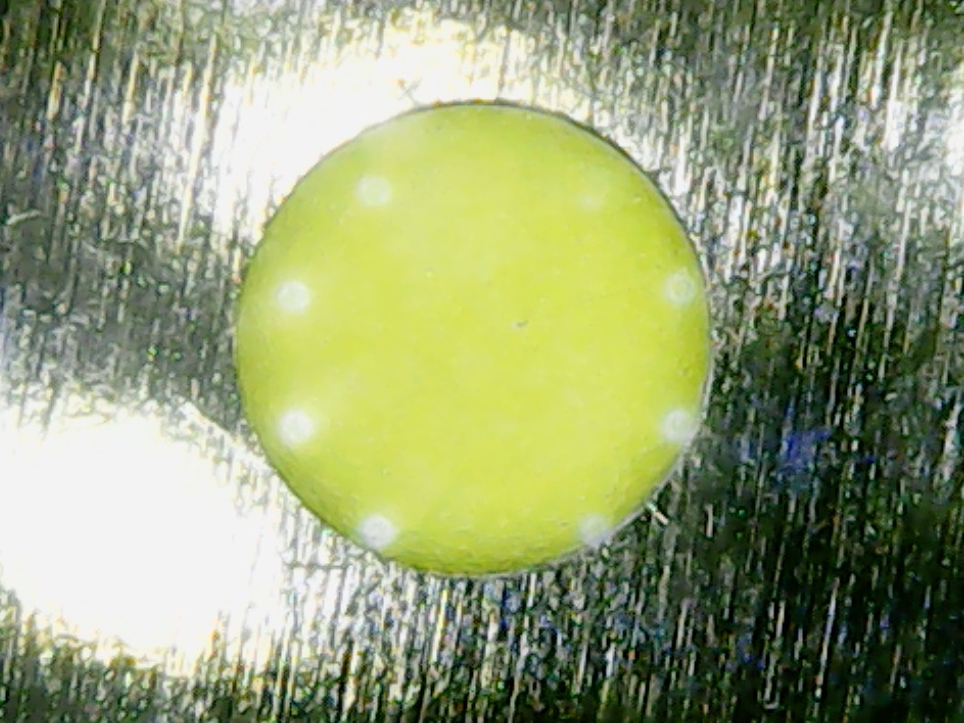
The yellow phosphor layer appears to have a dark spot near the centre when viewed under a microscope.
CCT, CRI, and duv#
I have taken Correlated Colour Temperature (CCT) and Colour Rendering Index (CRI, RA of R1-R8) measurements with the torch positioned ten metres away from an Opple Light Master Pro III (G3). I measured the centre of the beam.
The CCT is around 9400K, the CRI is around 71 and the Delta u, v is close to zero.
The beam produced has an extremely intense hot spot with minimal spill.
| Mode | CCT (K) | CRI (Ra) | x | y | Duv |
|---|---|---|---|---|---|
| Low | |||||
| High | 9436 | 71.2 | 0.2838 | 0.2909 | -0.0006 |
Calculate Duv from CIE 1931 xy coordinates
Dimensions and size comparison#
Dimensions#
I took the following measurements using a digital caliper.
| Measurement | Unit (mm) |
|---|---|
| Length | 166.23 |
| Head diameter | 59.36 |
| Tail diameter | 32.09 |
| Biconvex lens diameter | 54.6 |
Weight#
I took the following measurements using a digital scale.
| Weight | Unit (g) |
|---|---|
| Torch | 292.49 |
| Battery | 70.96 |
| Torch and battery | 363.45 |
Size comparison with its competition#
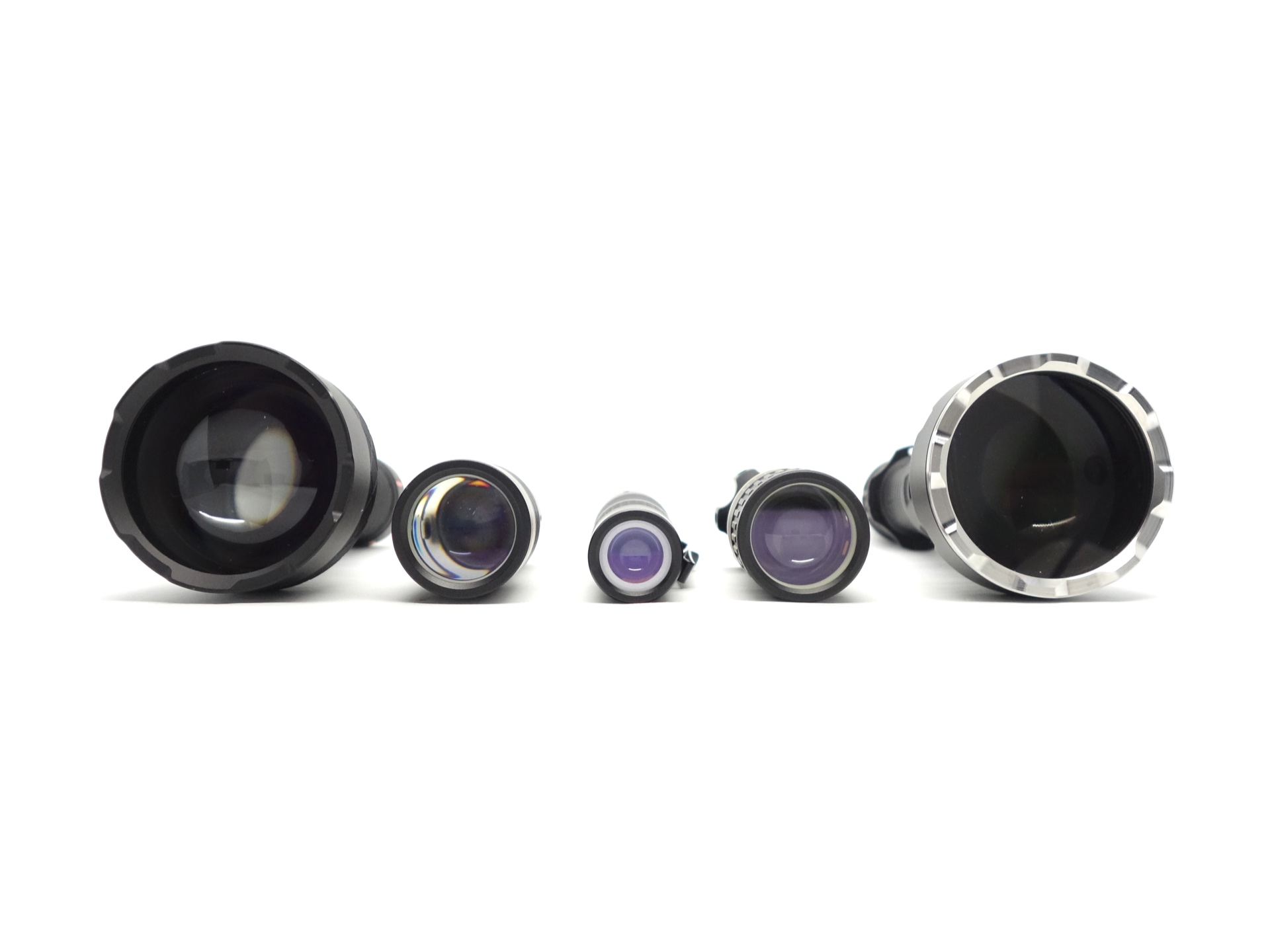
From left to right: NLIGHTD L4 prototype, NLIGHTD L3, NLIGHTD L2, Lumintop Petal, NLIGHTD LZ1
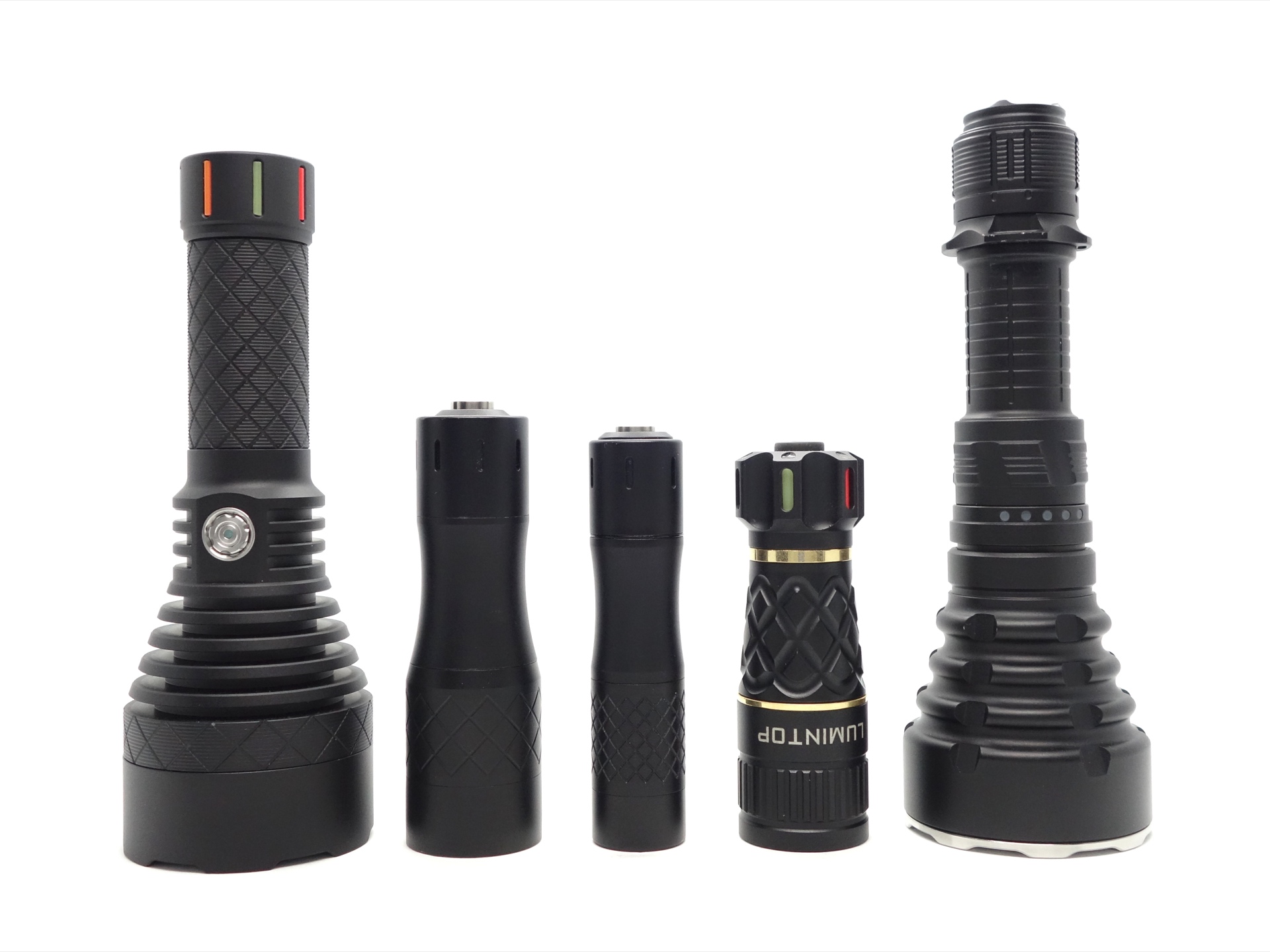
From left to right: NLIGHTD L4 prototype, NLIGHTD L3, NLIGHTD L2, Lumintop Petal, NLIGHTD LZ1
User interface#
The NLIGHTD L4 prototype has an electronic side switch with a battery status indicator.
There are two main modes: Low and High.
The user interface will be different in the final version.
| State | Action | Result |
|---|---|---|
| Off | Press and hold | Nothing |
| Off | Click | On (memory) |
| On | Click | Cycle (Low, High) |
| On | Hold | Off |
| Off | Four clicks | Lock |
| Lock | Four clicks | Unlock and on (memory) |
Mode memory#
This prototype has mode memory. Low and High are memorised.
Low voltage protection#
There is low voltage protection. The torch turns off around 2.50V.
I tested low voltage protection by connecting the driver of the torch to a bench power supply and then by lowering the voltage from 4.2V to 0V.
Pulse Width Modulation#
I did not notice any visible PWM (flickering).
What I like about the UI#
- I like that the UI on the final version is going to be different.
What could be improved#
I would prefer a single click for on/off and hold to cycle between low and high.
Batteries and charging#
Battery#
Neal included an optional flat top Vapcell F56 21700 3.7V Li-ion 5600mAh cell with this prototype.
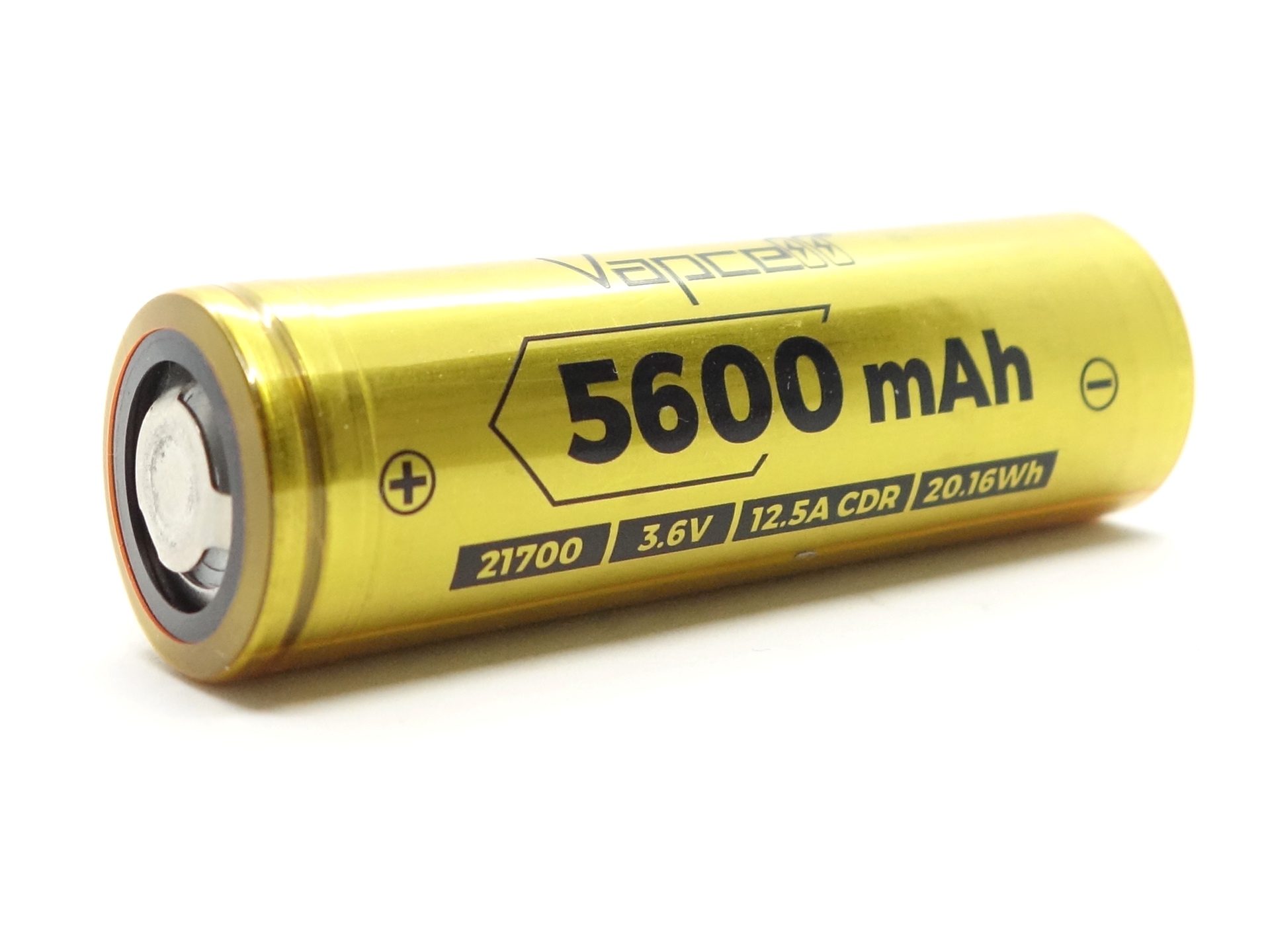
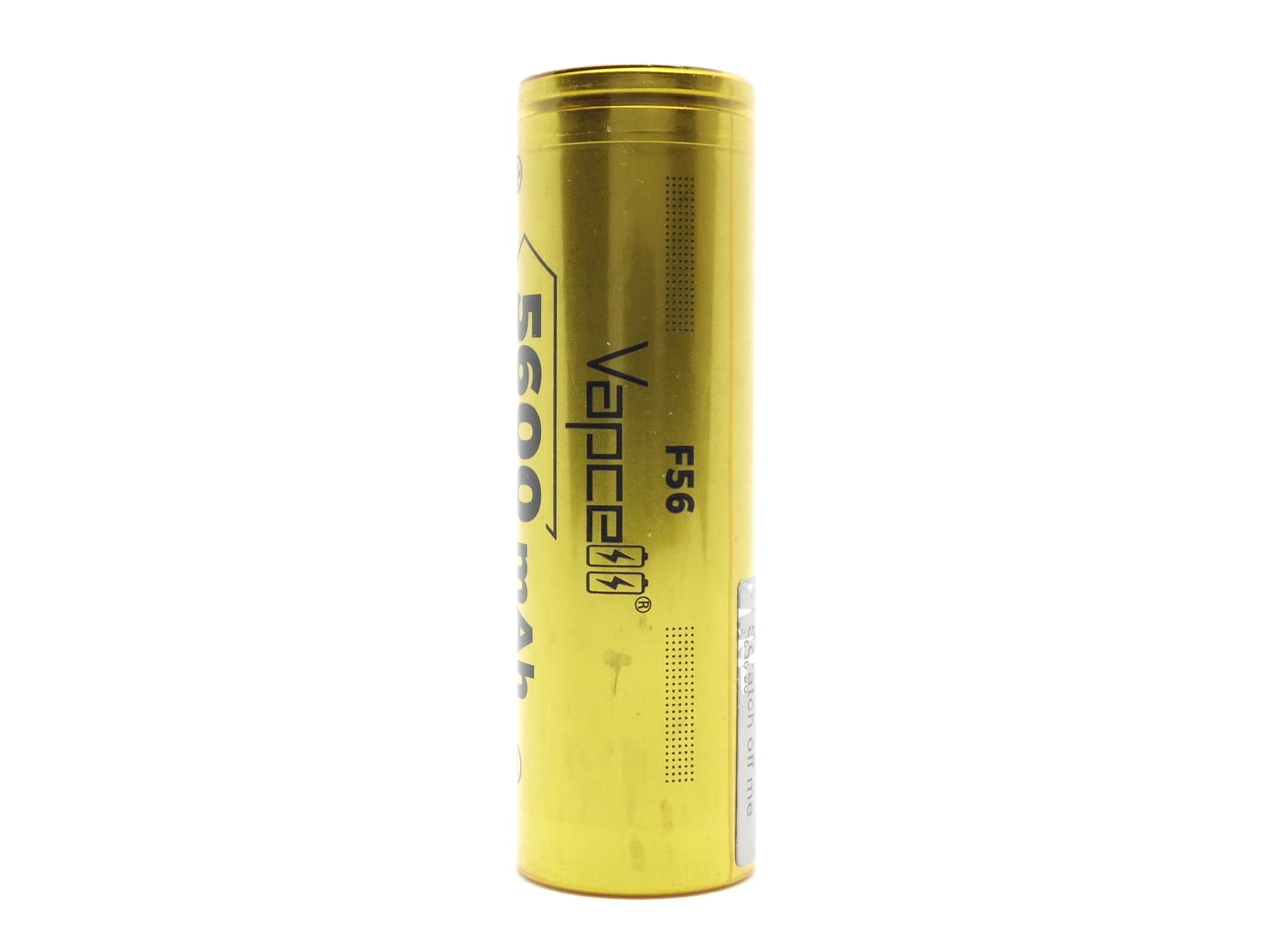
I tried the following cells:
| Cell | Top | Compatible? | Comment |
|---|---|---|---|
| Molicel P42A 21700 4200mAh | Flat | Yes | |
| Wuben ABD4800 21700 3.6V Li-ion 4800mAh | Button | No | Too long. |
| Vapcell F56 21700 3.7V Li-ion 5600mAh | Flat | Yes |
Charging#
There is built-in USB-C charging.
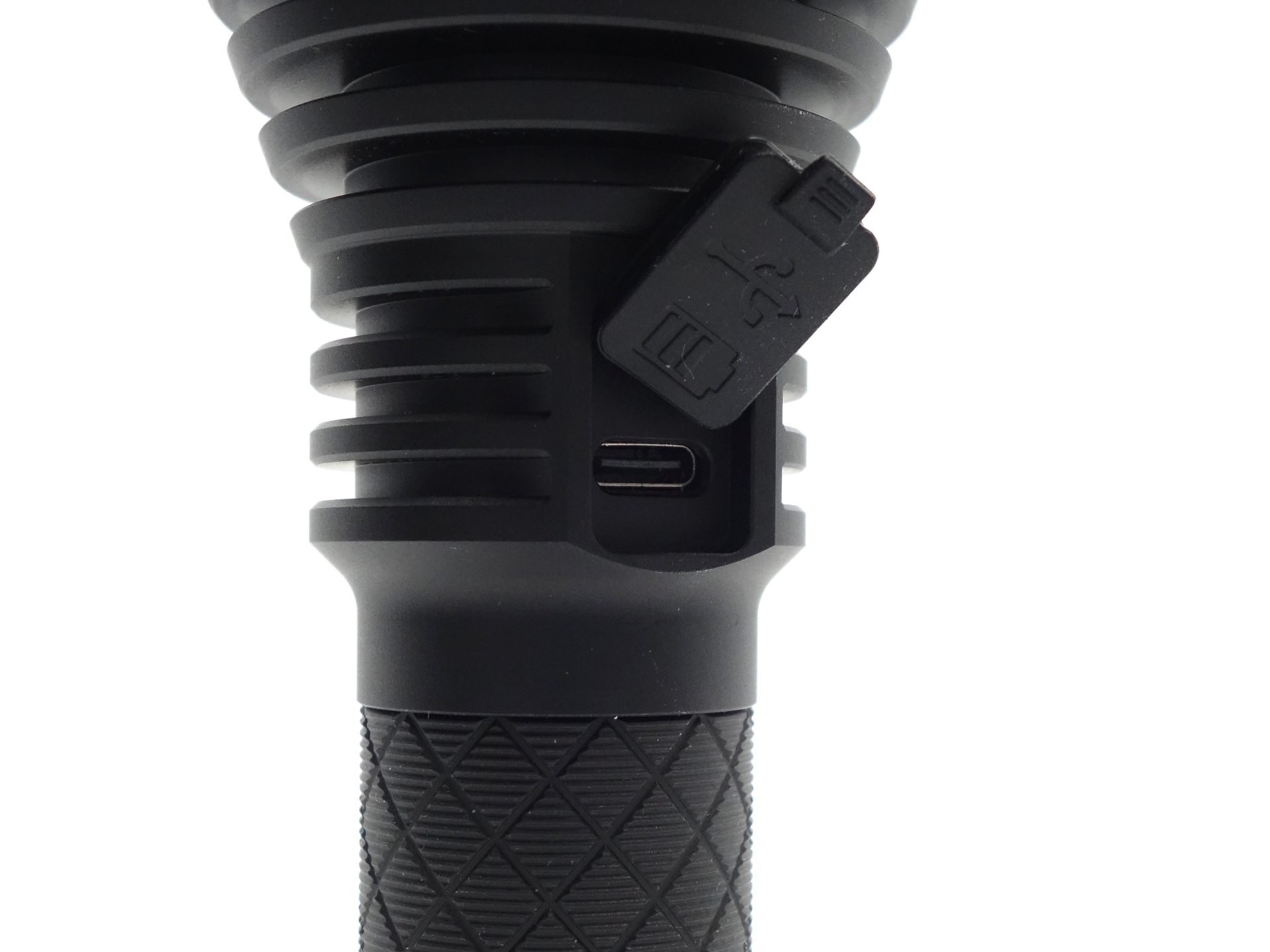
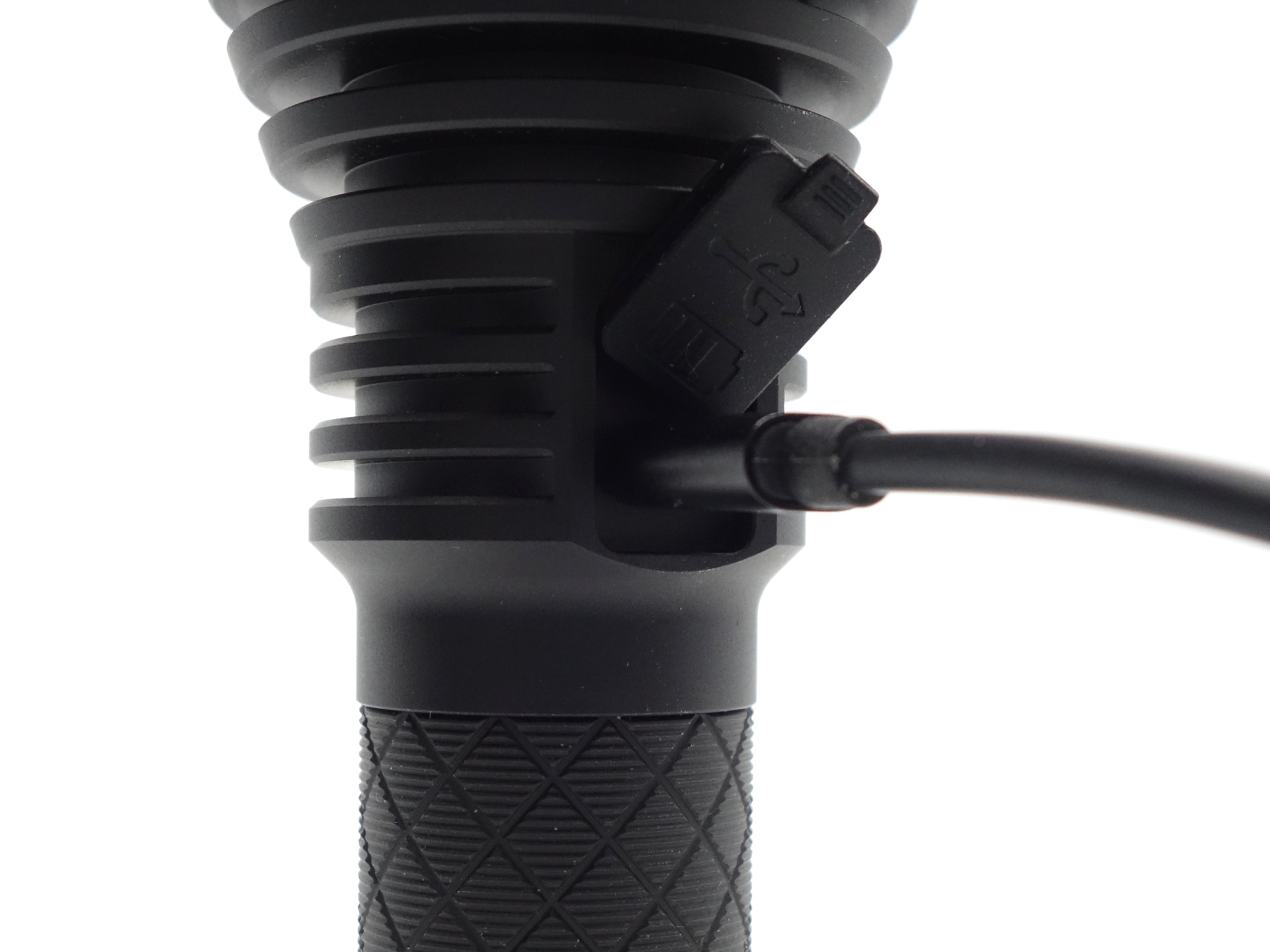
Power supply: PinePower Desktop USB-C
USB Meter: ChargerLAB Power-Z KM003C Amazon Australia
Room temperature: 20 C
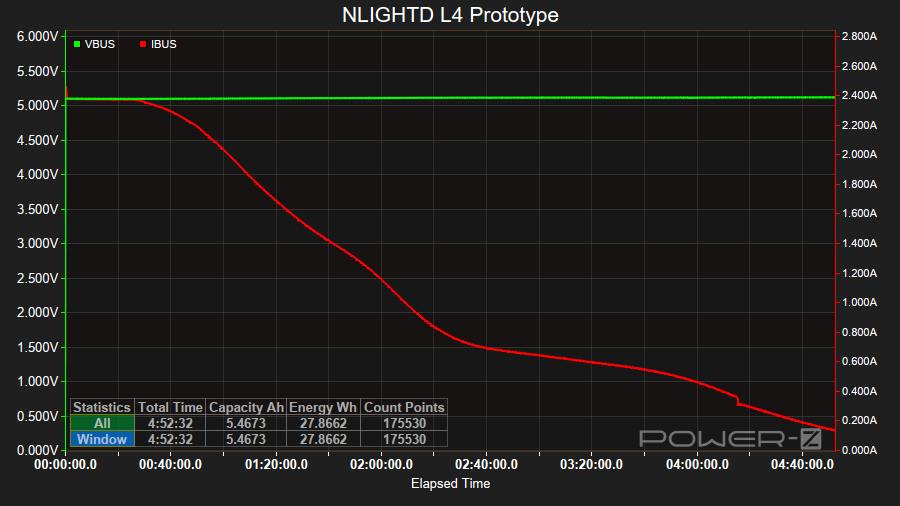
It took 4 hours 52 minutes to charge the battery from 3.01V to 4.18V at a rate of 5V/2.4A.
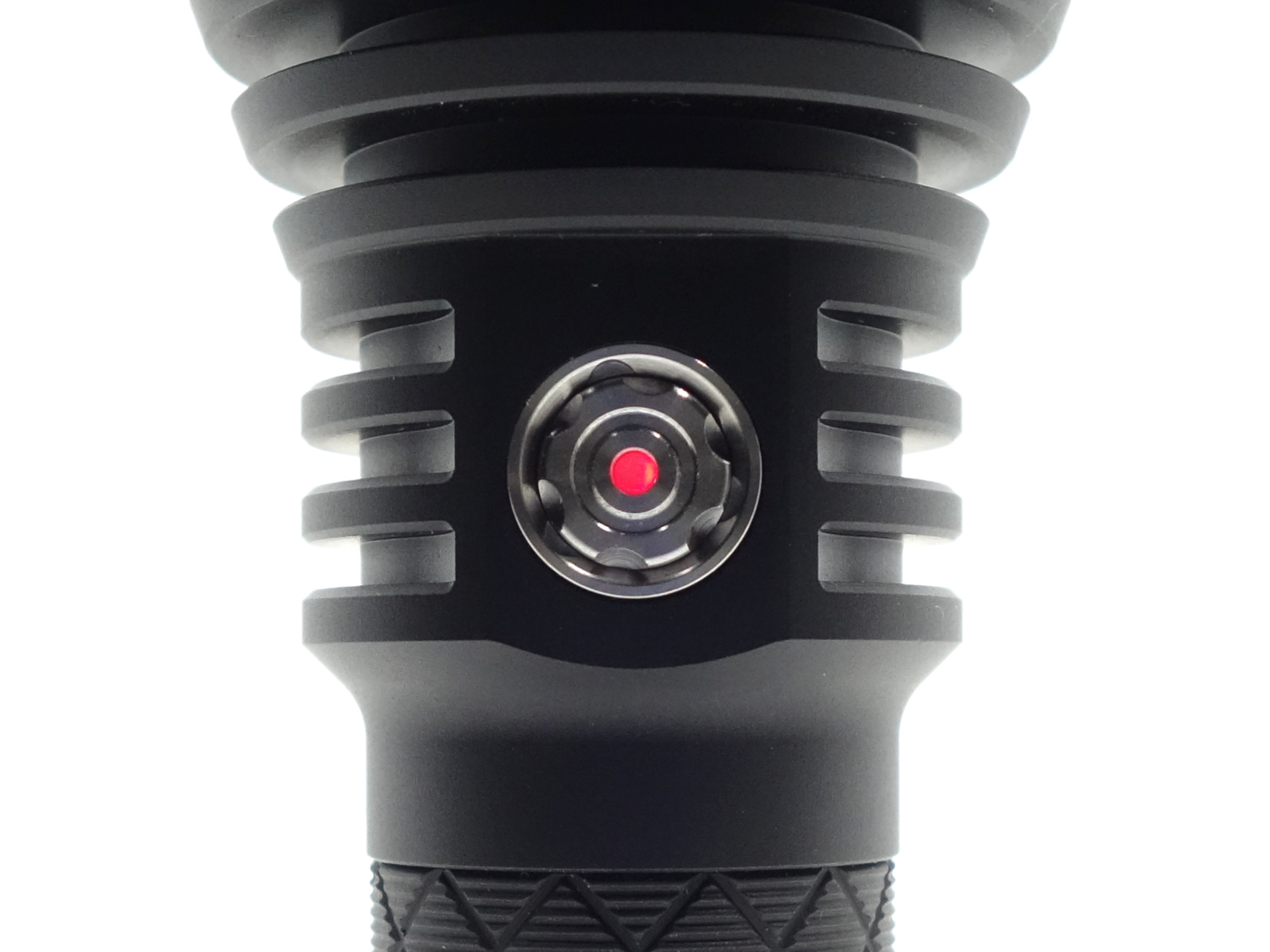
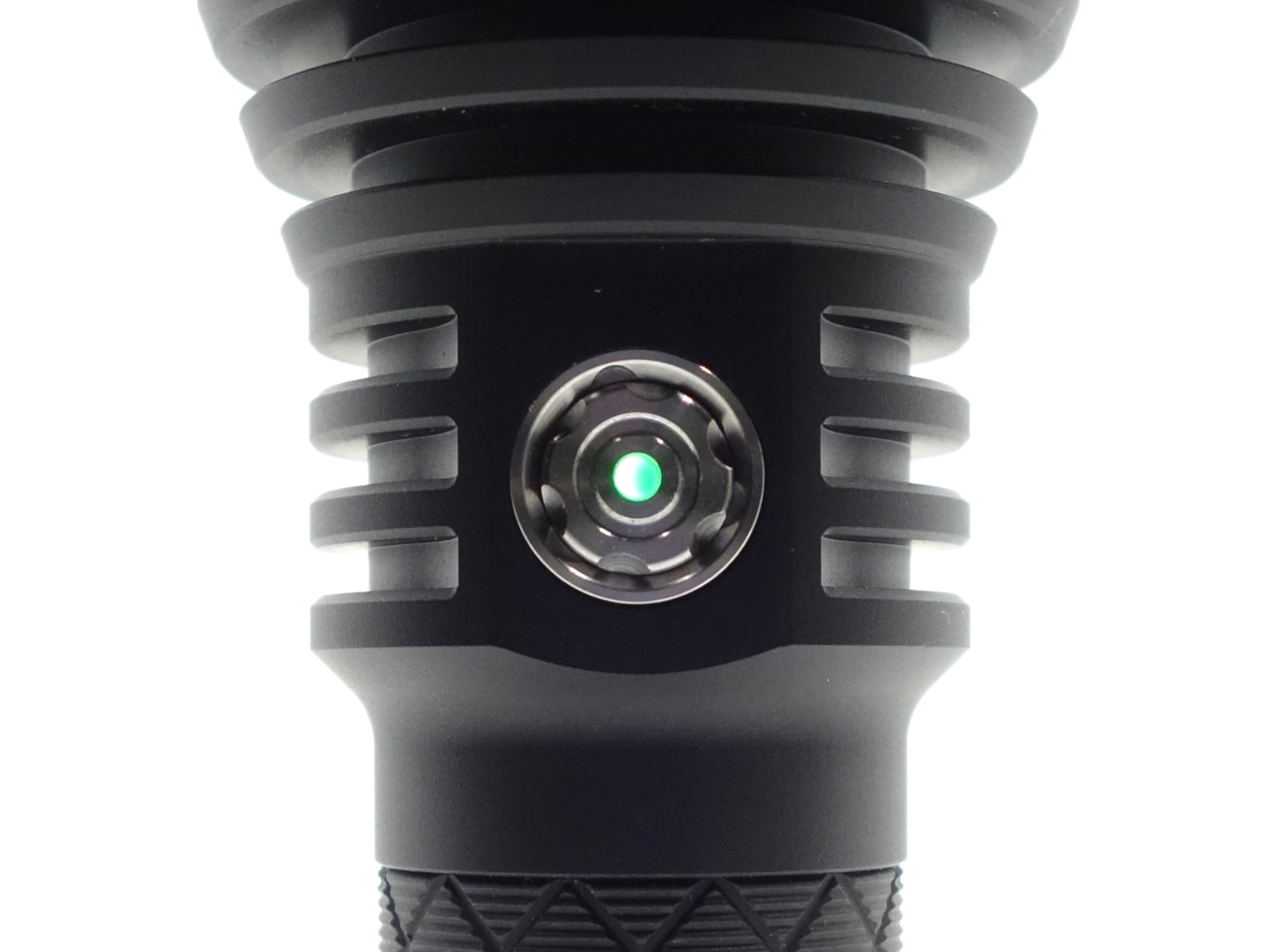
The charging status indicator is red while charging and it becomes green when charging is complete.
Performance#
Specifications from the product page:
| ANSI/NEMA FL1 | High | Low |
|---|---|---|
| Output (lumens) | 900 | 300 |
| Runtime | 2min + 2h 5min | 2h 45min |
| Beam Distance (metres) | 2,500 | |
| Beam Intensity (cd) | 1,563,000 |
I tested the light using a flat top Vapcell F56 21700 3.7V Li-ion 5600mAh cell.
Lumen measurements#
I used a Zoyi ZT-QS7 clamp meter to measure the current at turn on.
| Mode | Amps at start | Specs | Lumens @turn on | Lumens @30 sec | Lumens @10 min |
|---|---|---|---|---|---|
| Low | |||||
| High | 4.00 A | 802 | 739 | 307 |
Standby drain#
I measured a standby current of 75 µA with a Zoyi ZT-706S Oscilloscope Multimeter.
Runtime graphs#
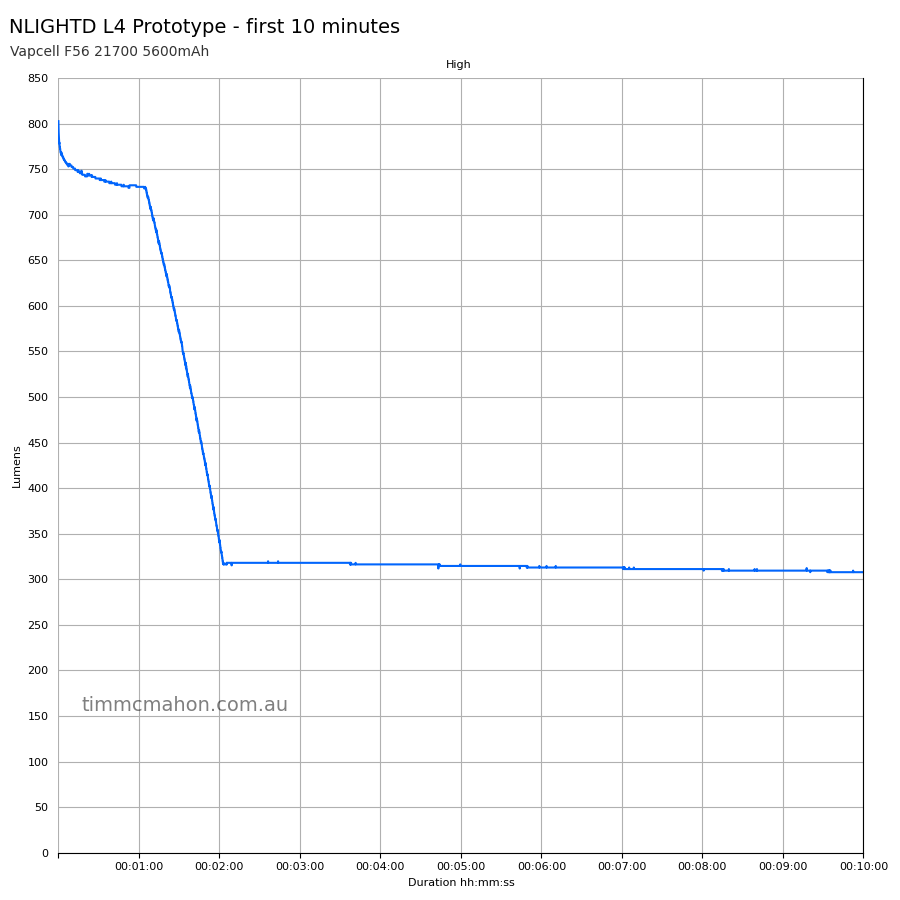
I used my own DIY lumen tube with a TSL2591 sensor and forked bmengineer’s project RuTiTe to record runtimes.
Note: Lumen measurements may be off by 10% with my DIY lumen tube.
The room temperature was approximately 20 C.
Runtime#
Here is a summary of the runtime results:
| Mode | User manual | Runtime | Turn off | Final voltage |
|---|---|---|---|---|
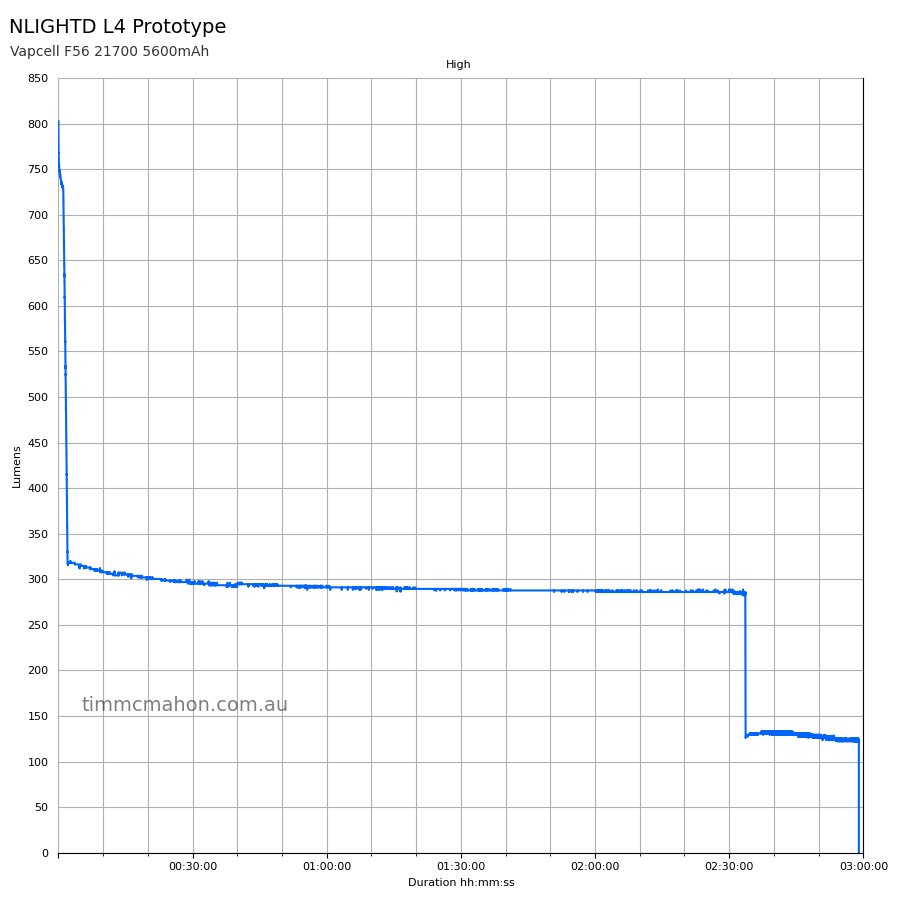
| High | 2min + 2h 5min | 2h 58min 59s | 2h 58min 59s | 3.01 |
| Low | 2h 45min |
“Runtime” is the time until the output reduces to 10% of the output at 30 seconds (as per the ANSI/PLATO FL1 2019 Standard).
“Turn off” is the time until my DIY lumen tube no longer detects more than one lumen.
“+” indicates that the light remained on after recording had stopped.
The runtime is slightly better than expected.
The output is well regulated.
Throw#
I took lux measurements with a UNI-T UT383BT at 30 seconds. High was measured at ten metres.
| Mode | Specs (cd) | Specs (m) | Candela measured (cd) | Distance (m) |
|---|---|---|---|---|
| Low | ||||
| High | 1,563,000 | 2,500 | 1,360,700 | 2,332 |
Beamshots#
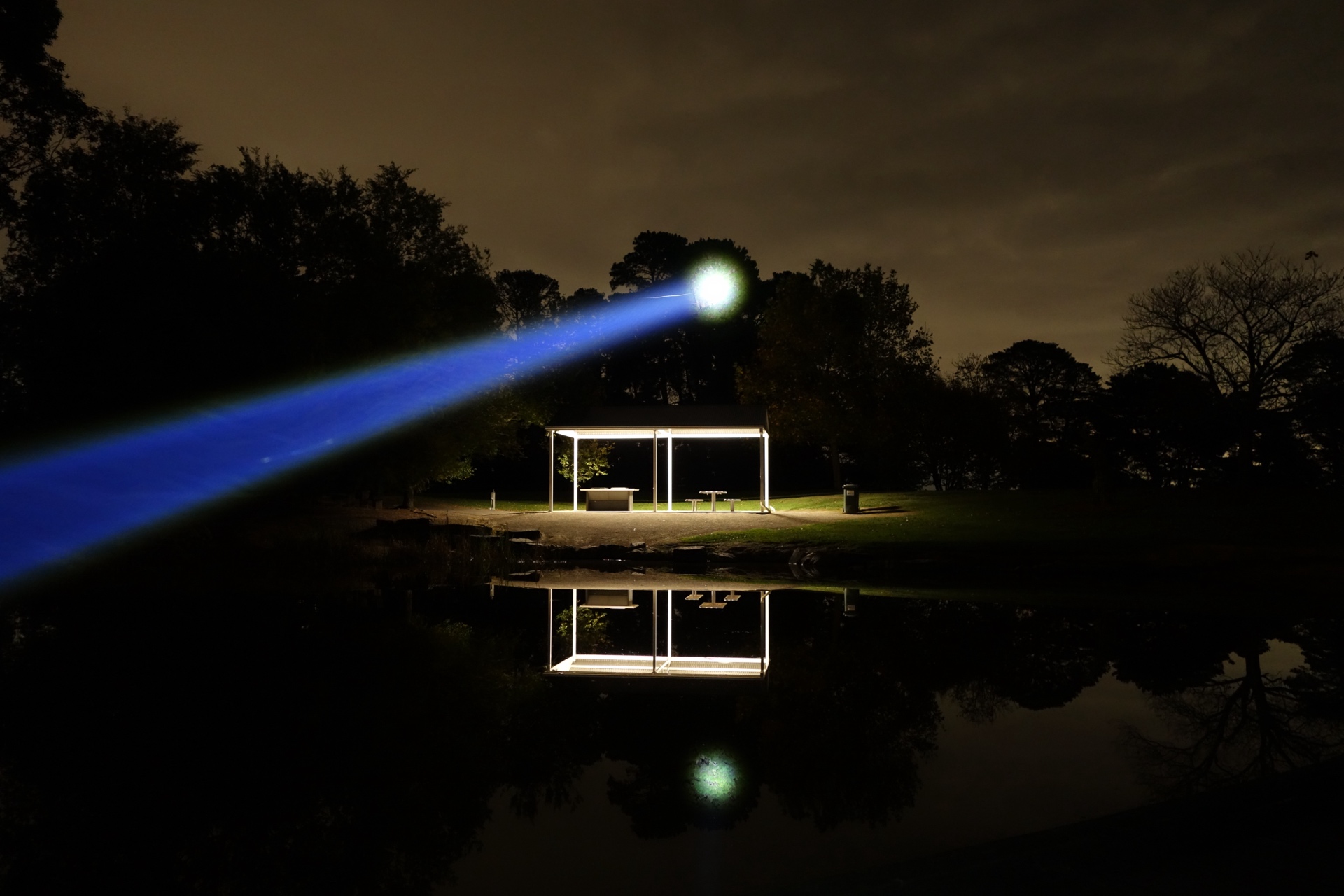
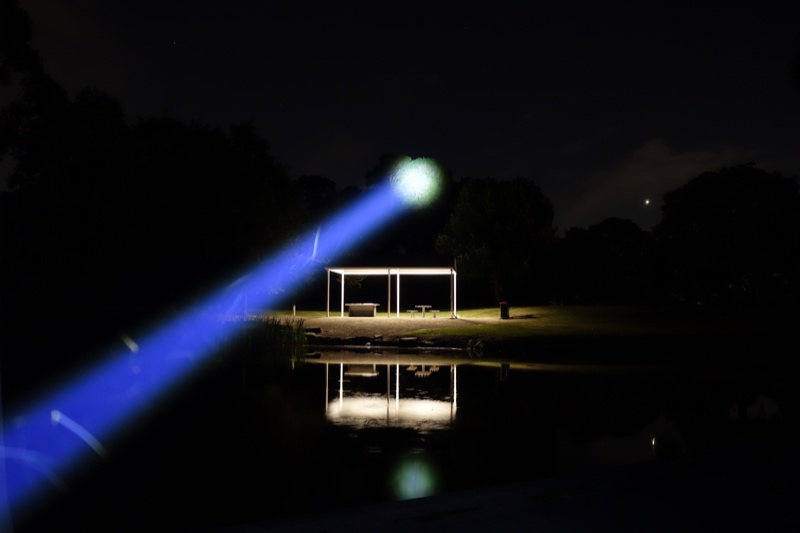
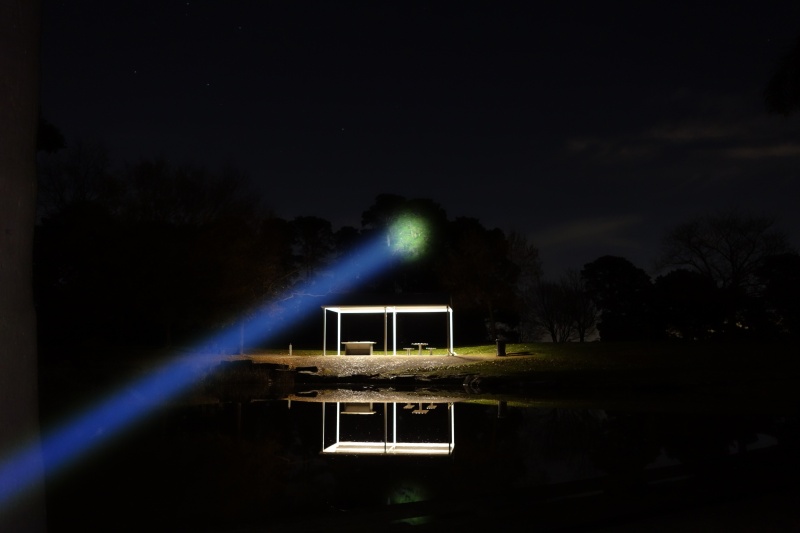
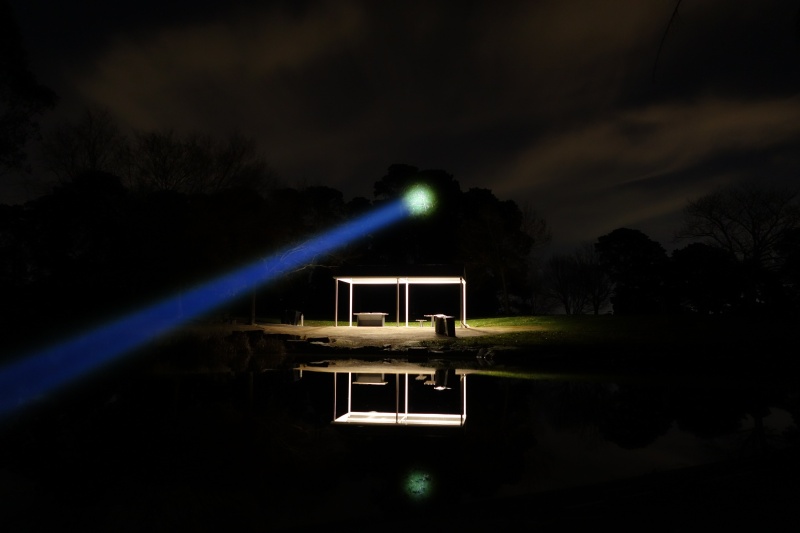
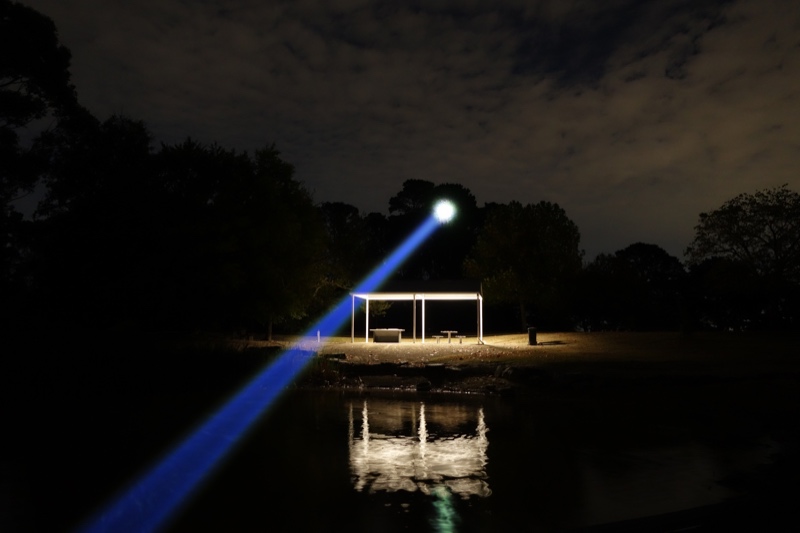
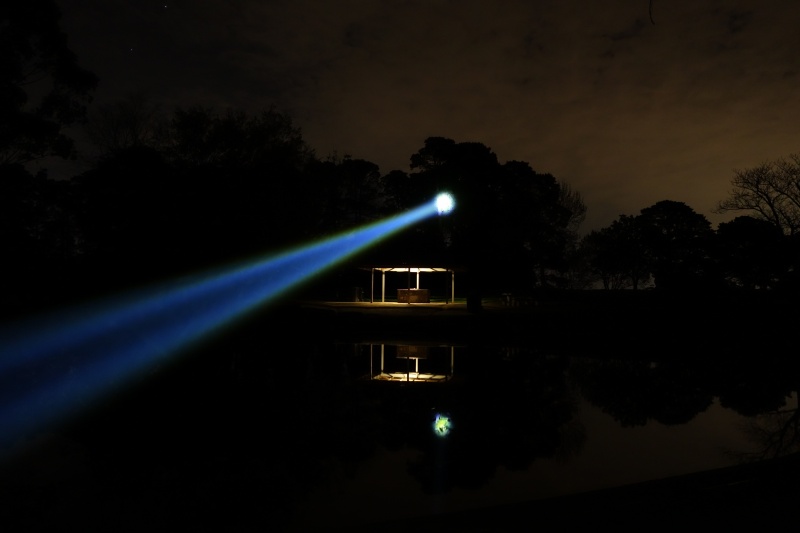
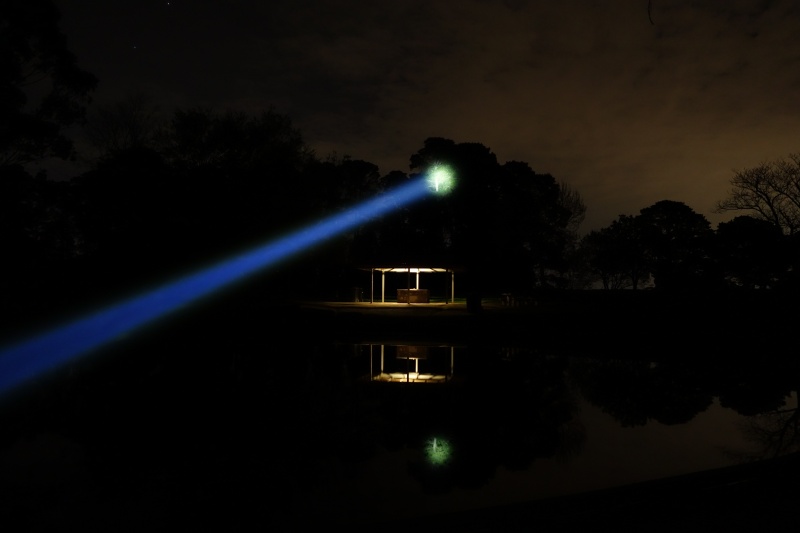
I went to a local park and I aimed the torch at a tree 100 metres away while using High.
Beamshots were taken using a Sony RX100M2 using 1.3", f3.2, ISO 800, 5000K WB.
NLIGHTD L4 prototype (High)#
NLIGHTD L3 (High)#
NLIGHTD L2 (High)#
Lumintop Petal (LEP High)#
NLIGHTD LZ1 (Turbo) Zoomed In#
Weltool W4Pro (High)#
Amutorch BT35 (High)#
Thermal Images#
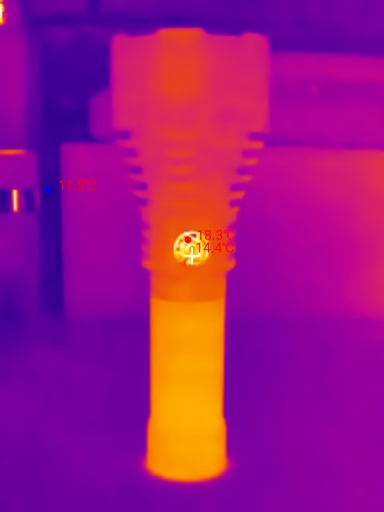
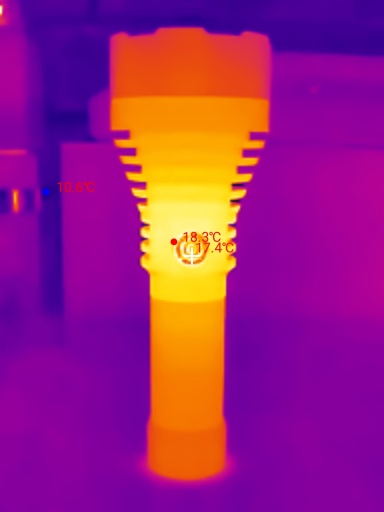
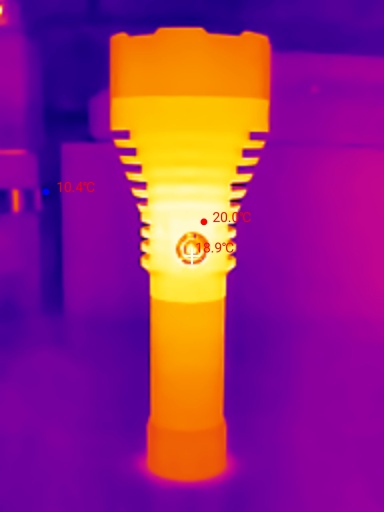
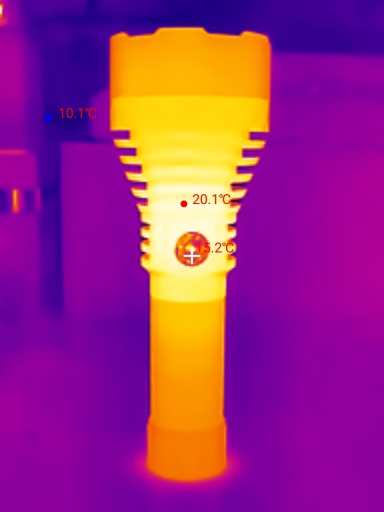
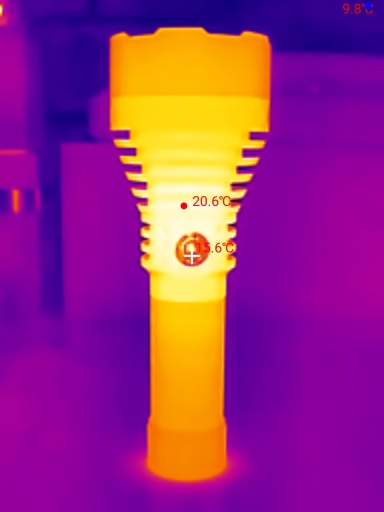
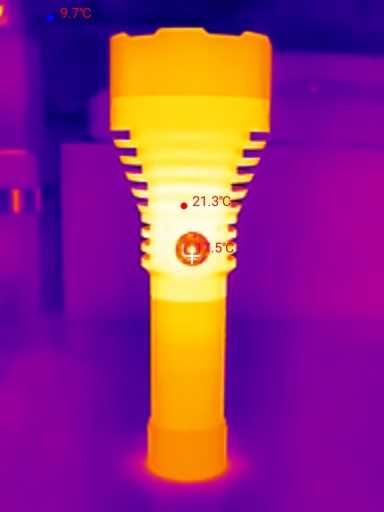
I used a Thermal Master P3 to take thermal images of the torch while using High. Get 10% off the Thermal Master P3 with code Mcmahon10
Room temperature: 10 C
| Time (mm:ss) | Max Temperature |
|---|---|
| 00:00 | 18.3 C |
| 01:00 | 18.3 C |
| 02:00 | 20.0 C |
| 03:00 | 20.1 C |
| 04:00 | 20.6 C |
| 05:00 | 21.3 C |
Conclusion#
This NLIGHTD L4 prototype is a beautiful Laser Excited Phosphor torch.
So many torches these days look mean and tactical. This one has a bit of elegance with the knurling pattern, matte black finish, and glow sticks.
I like how the heatsink fins have been chamfered so that they are not sharp.
It looks and feels good.
The user interface is a bit of a let down. I personally do not like “hold for off”. I look forward to seeing what the final version has.
I wish that the High output could be maintained for a bit longer instead of stepping down after 1-2 minutes. It looks like the torch could handle it thermally. Then again, it is winter in Australia right now.
If you are looking for another LEP torch to add to your collection, then this L4 is a nice step up over the L3.
Pros:#
- Excellent build quality.
- Good runtime.
- Good beam distance.
- Nice looking beam.
- Built-in USB-C charging.
Cons:#
- User interface for this prototype is a bit awkward with “hold for off”.
- Output drops within a few minutes.
Price#
The aluminium NLIGHTD L4 is US$155.97 at nealsgadgets.com after using the code NLDL4 (valid 6th to 31st July 2026) for 40% off.
The NLIGHTD L4 is available in black aluminium, green aluminium, silver aluminum, polished titanium and stonewashed titanium.
Product page#
Promo code: TimMcAU
Promo code: TIMMC
NLIGHTD L4 at nealsgadgets.com (affiliate link)
I may earn a commission if you use an affiliate link or a promo code. This will help fund future torch reviews and tutorials.