Armytek Elf C2 Max WR Warm Headlamp Review
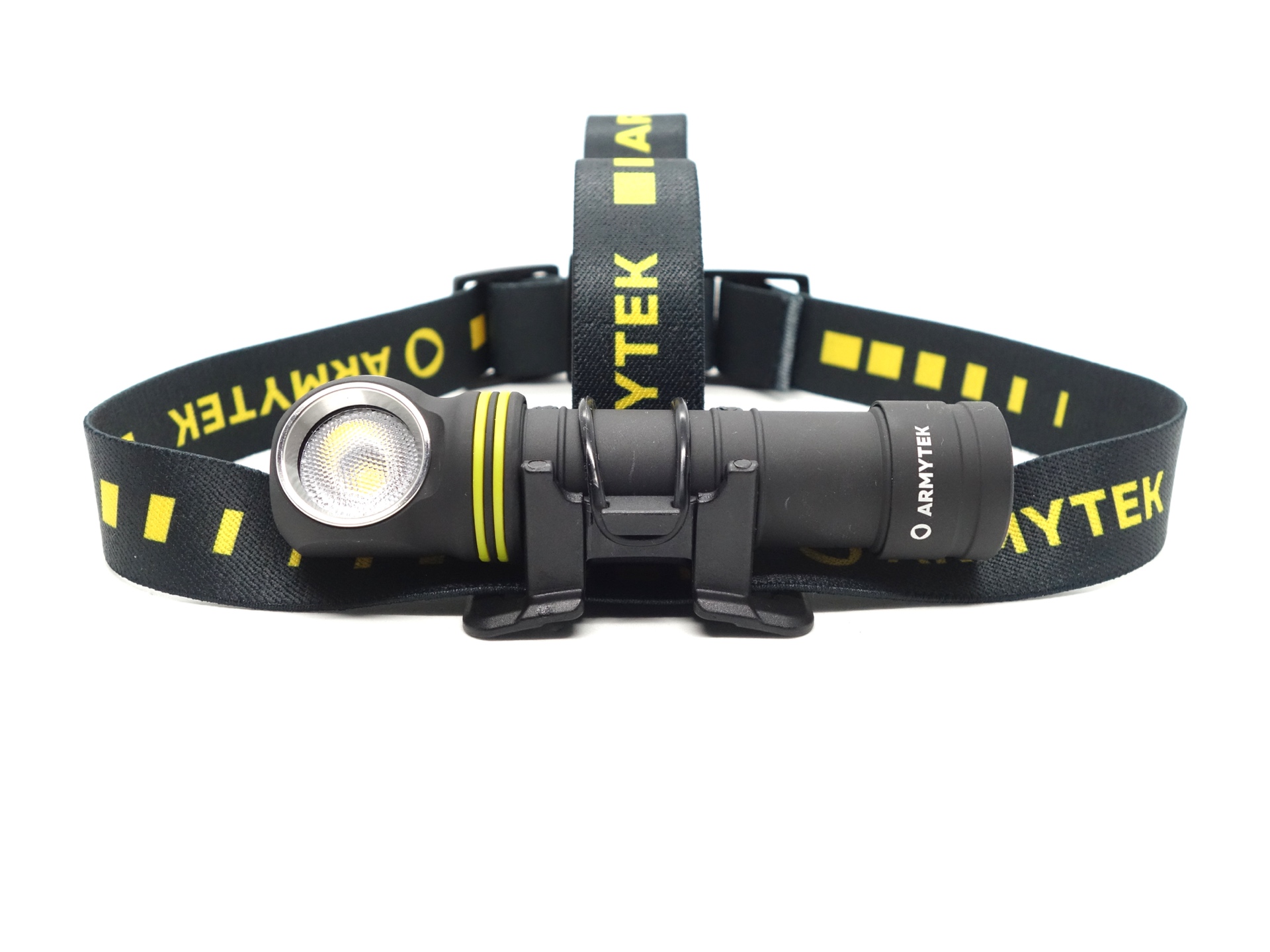
Armytek Elf C2 Max WR Warm#
- Specifications
- Introduction
- Torch in use
- Build quality
- LED, bezel, lens, reflector and beam
- Size and comparison
- User interface
- Batteries and charging
- Performance
- Beamshots
- Thermal Images
- Conclusion
- Price
- Product page
Specifications#
| Brand/model | Armytek Elf C2 Max WR Warm |
|---|---|
| LED | Warm White, Red |
| Maximum lumens | 2,325 lm |
| Maximum throw | 110 m |
| Battery | 1*21700, 1*18650 |
| Onboard charging | Yes (USB-C) |
| Material | Aluminium |
| Modes | 5 |
| Blinkies | Beacon, Strobe |
| Reflector | TIR |
| Waterproof | IP68 |
| Review date | July 2026 |
Introduction#
The Armytek Elf C2 Max WR Warm is a 21700-sized headlamp with a Warm White Light, a Red Light and USB-C charging.
I have reviewed multiple headlamps and hunting torches from Armytek.
The Elf range has USB-C charging. The Wizard range has magnetic charging.
WR is short for White Light and Red Light.
Armytek provided this torch for review. I have not been paid for this review nor have I held back my opinions of this torch.
Packaging#
The headlamp comes in a black and bronze box with Armytek branding. There are specifications on the box instead of in the printed user manual.
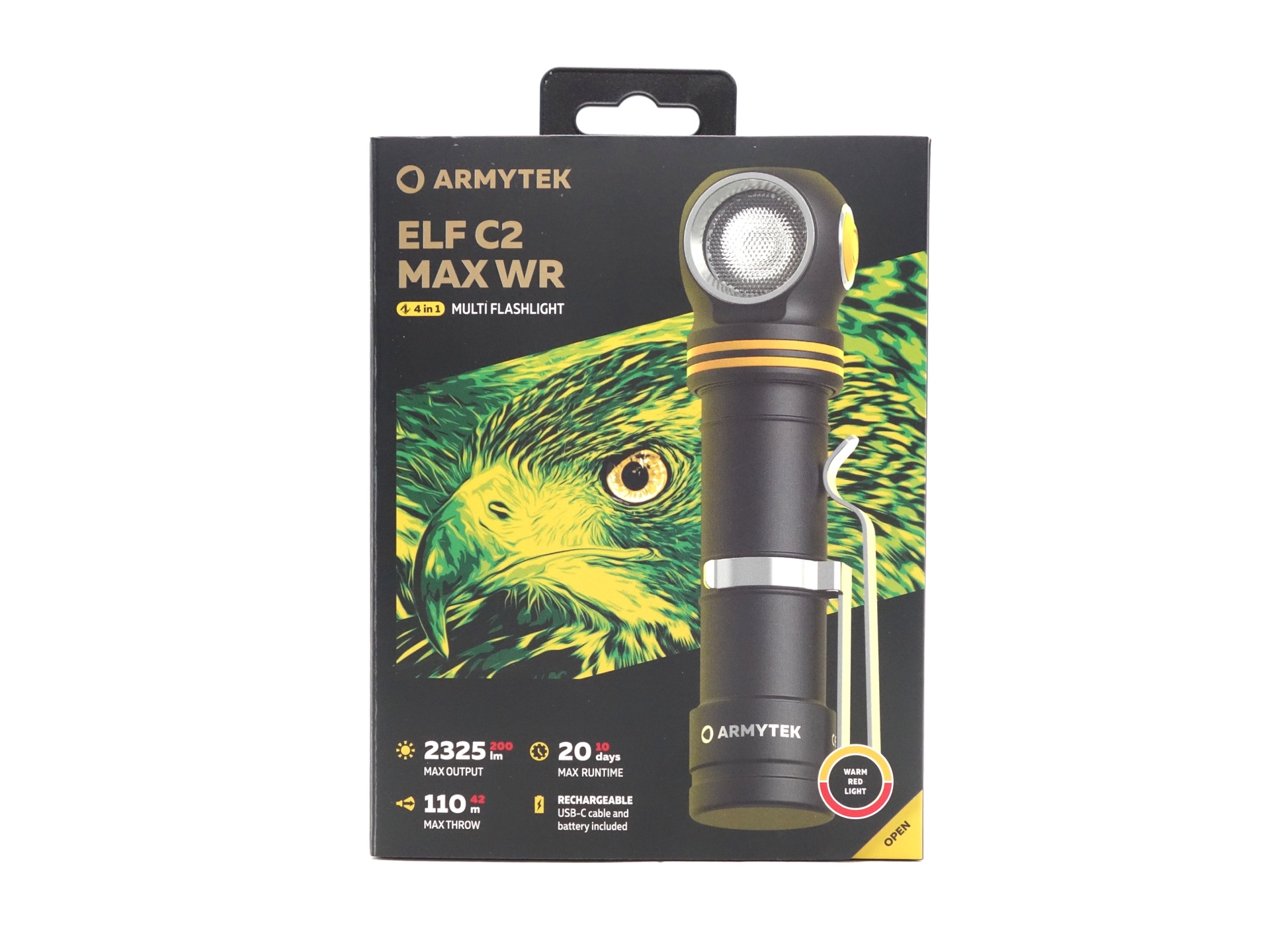
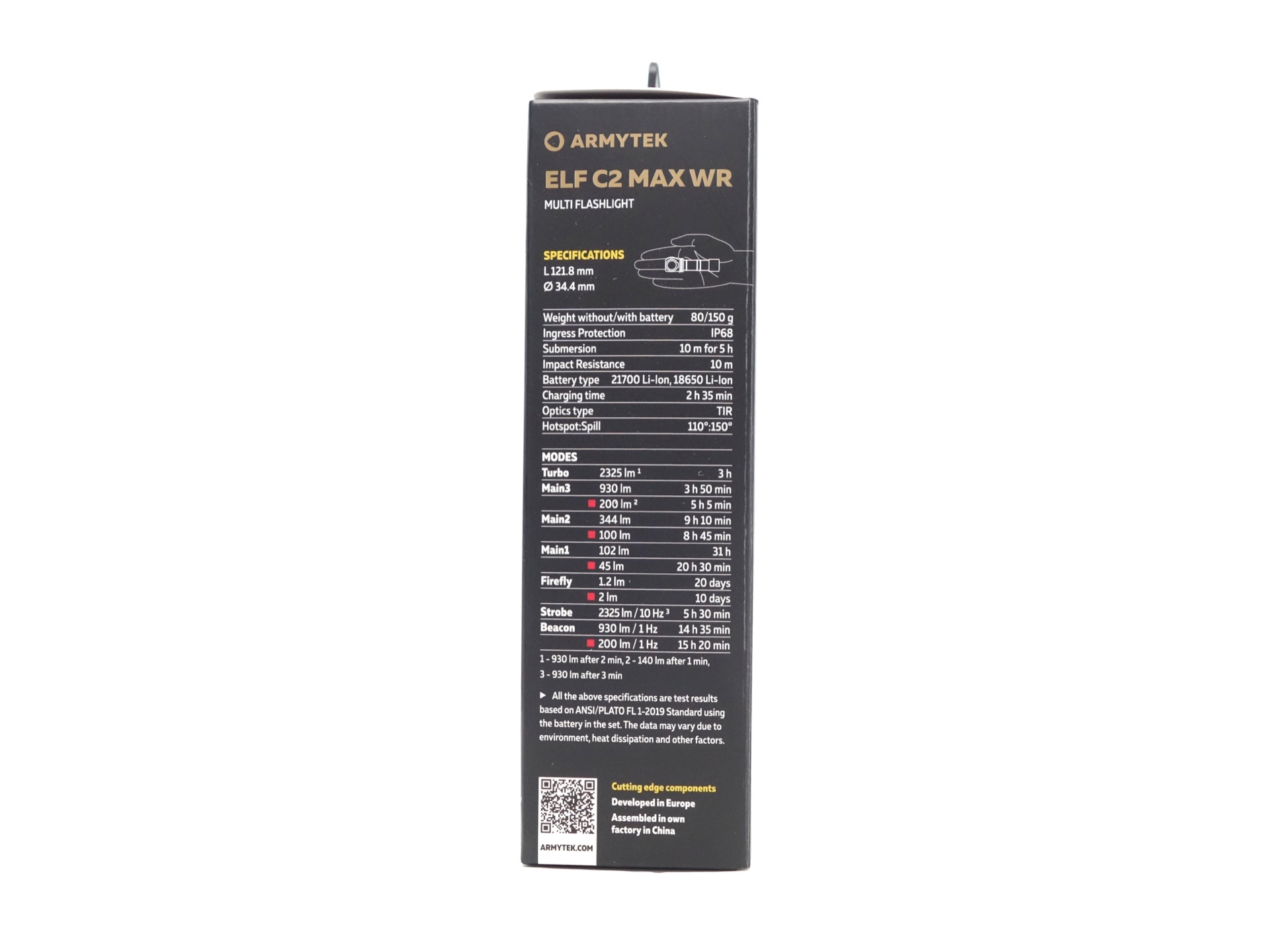
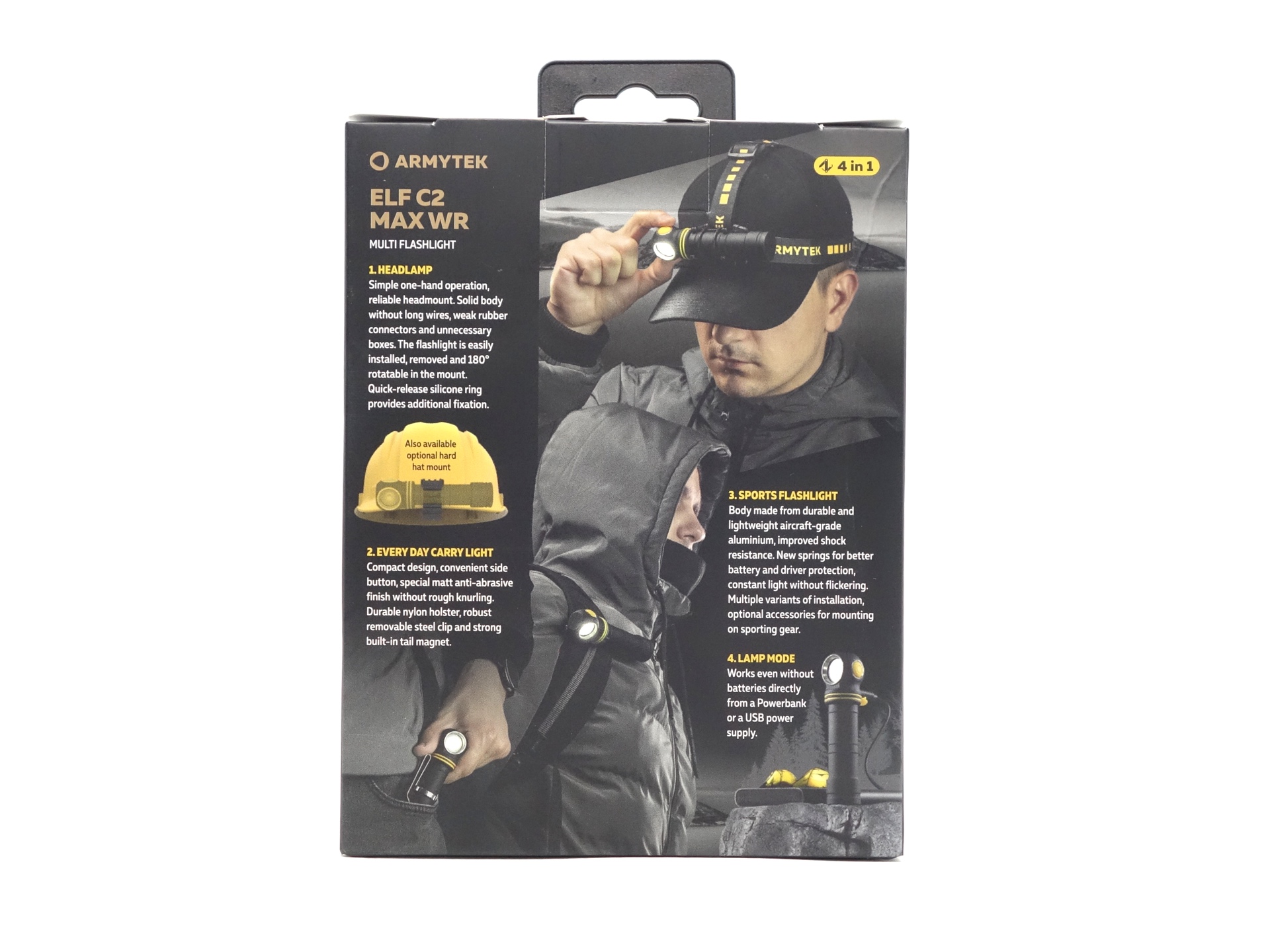
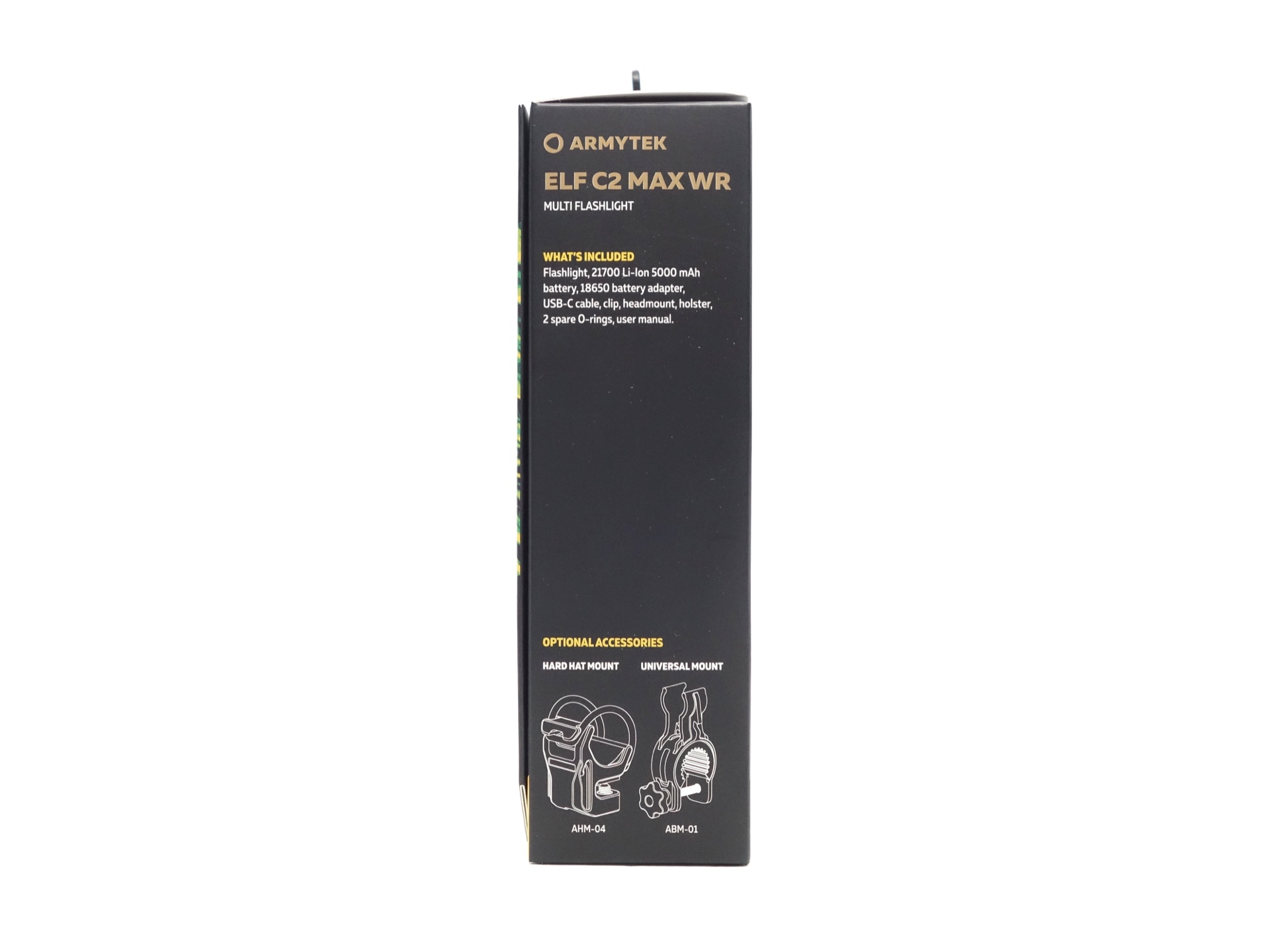
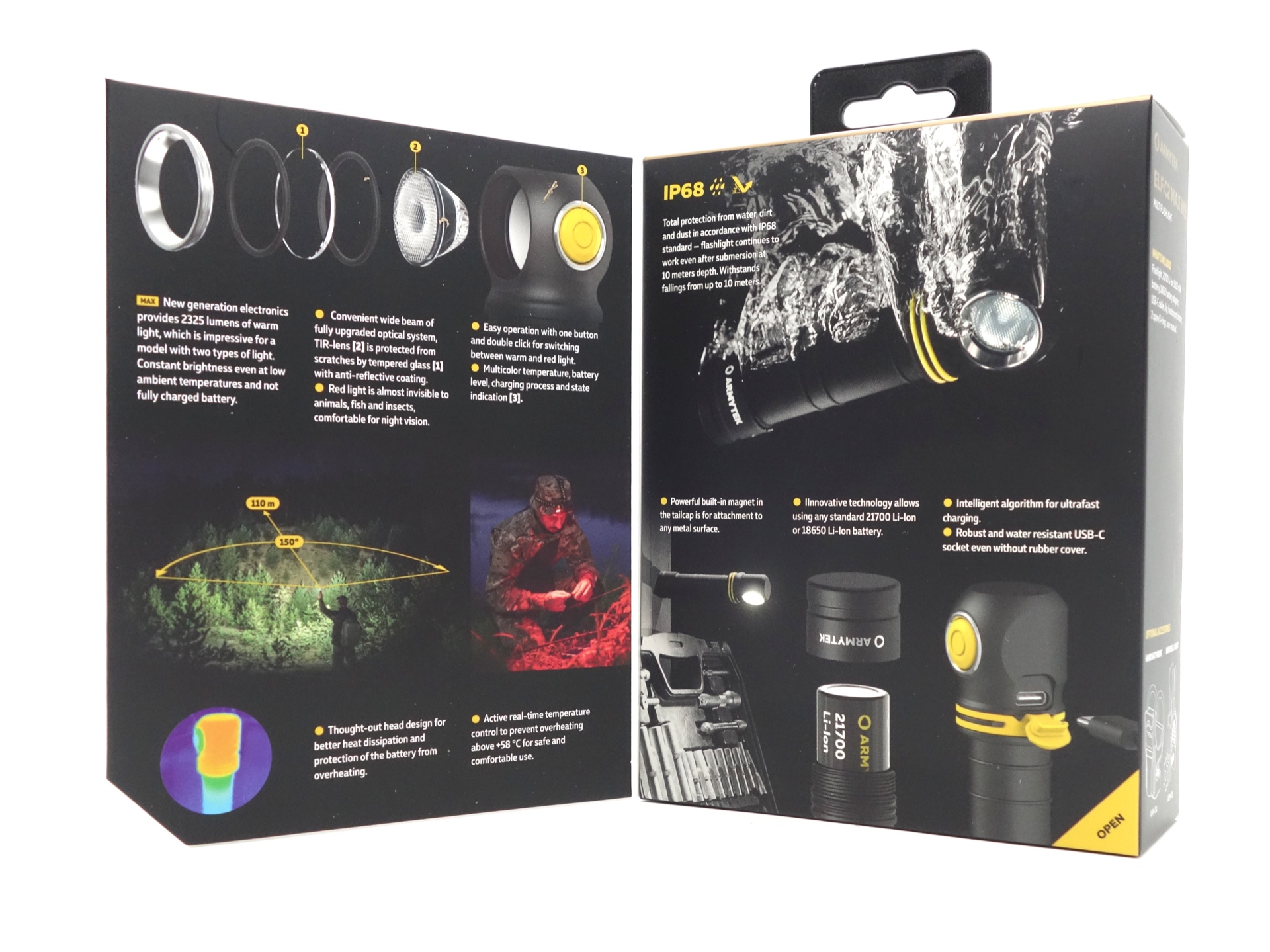
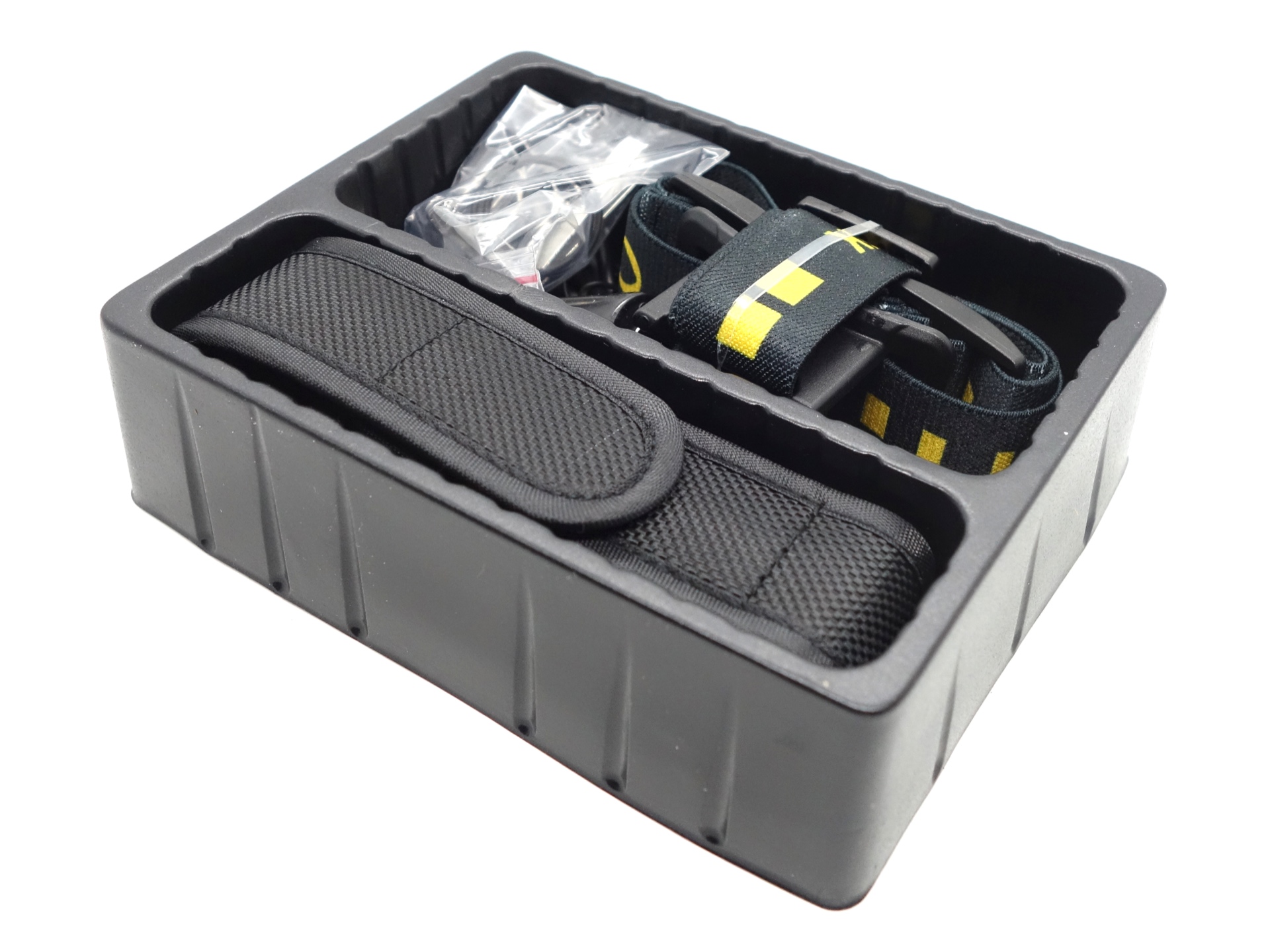
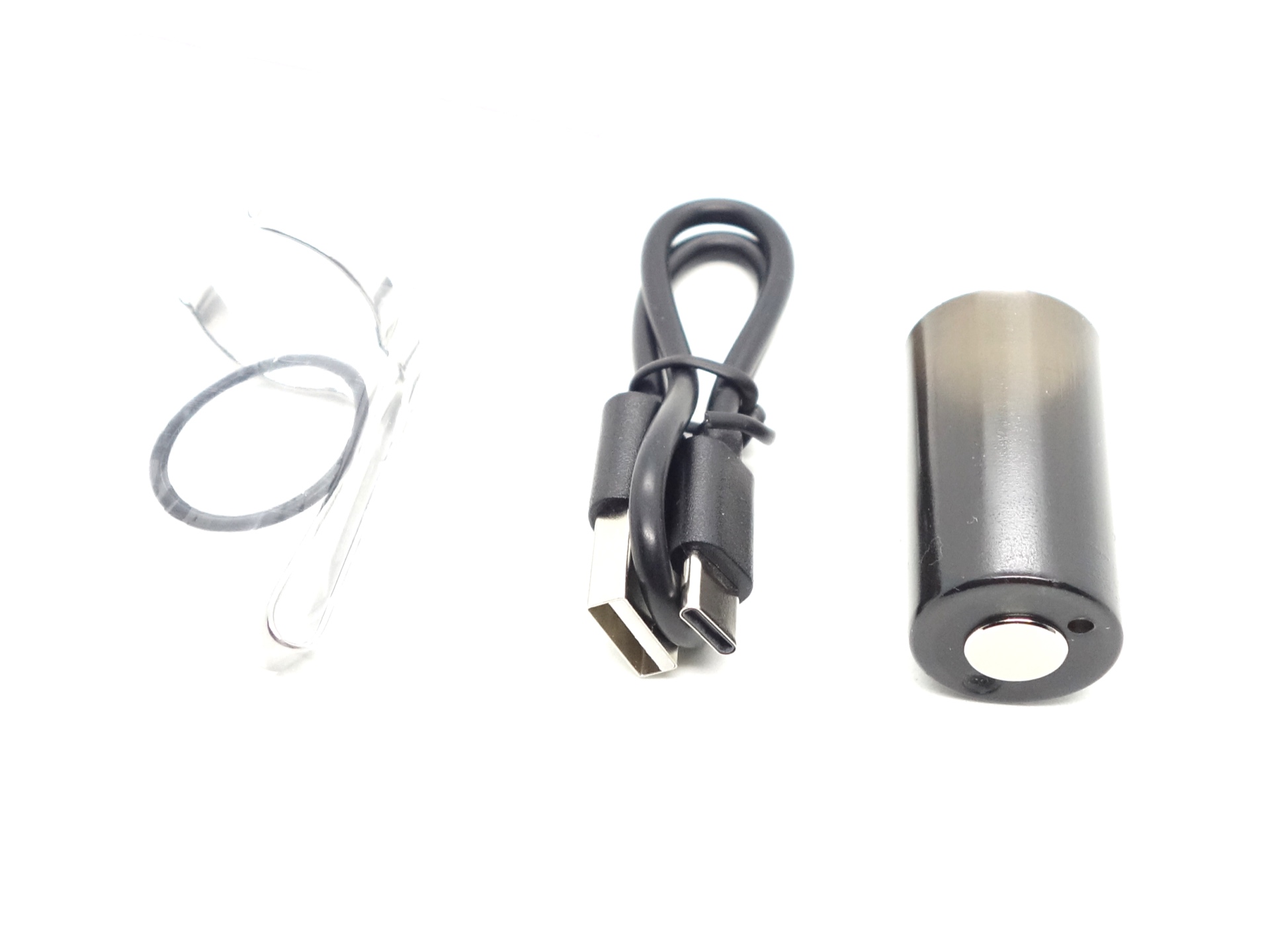
The following was included in the box:
- Armytek Elf C2 Max WR Warm.
- Holster.
- Protected Armytek 3.6V Li-ion 21700 5000mAh cell.
- 18650 adapter.
- USB-A to USB-C charging cable.
- Pocket clip.
- Two spare o-rings.
- User manual.
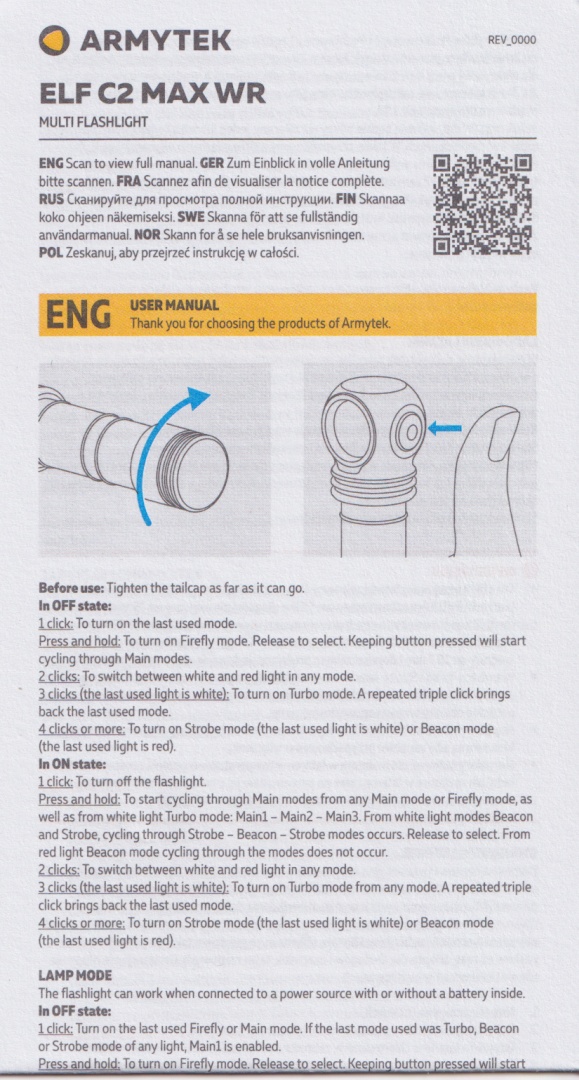
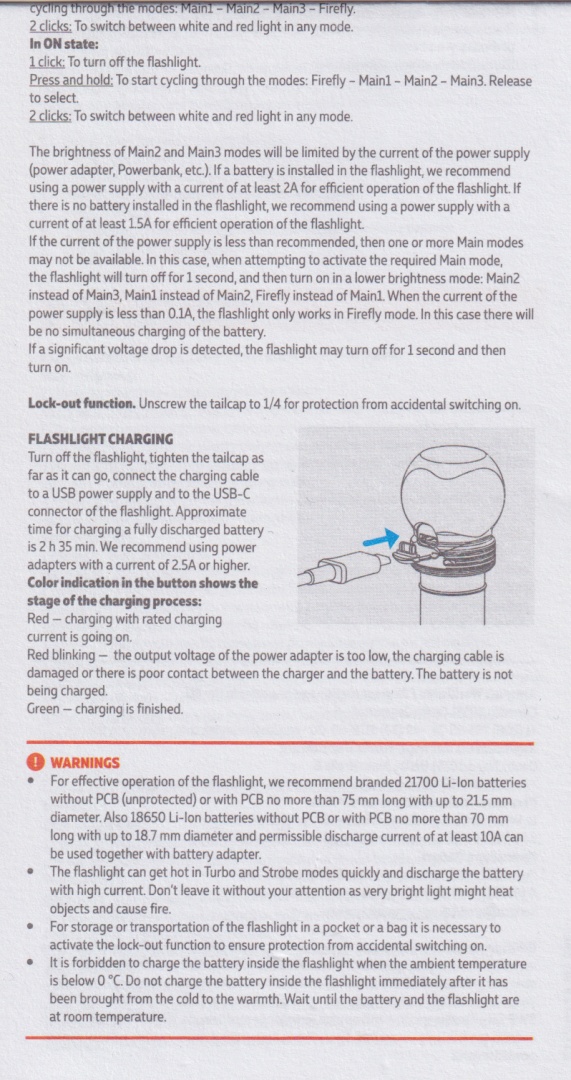
User Manual#
Torch in use#
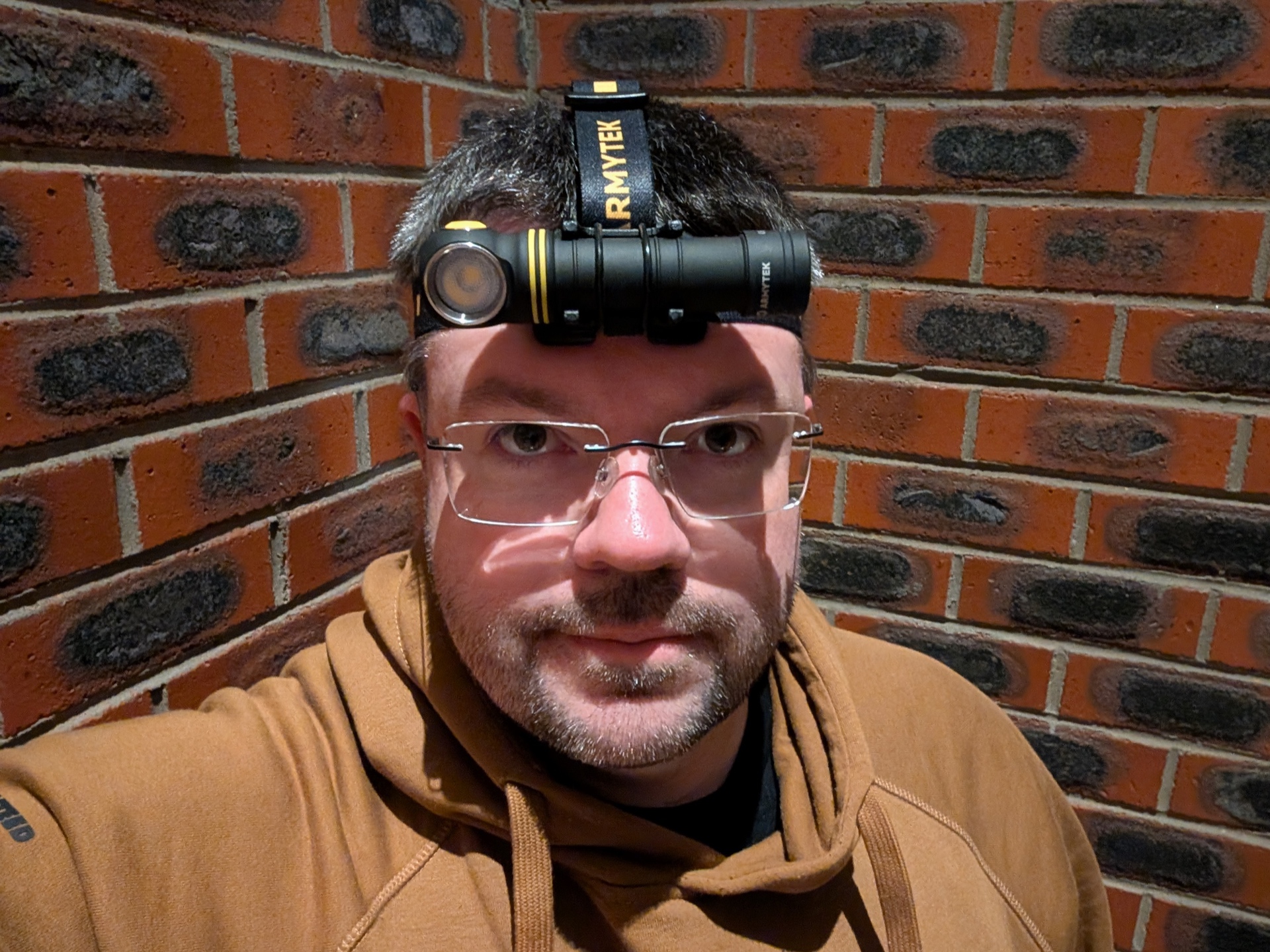
The Armytek Elf C2 Max WR Warm could be used for astrophotography, fishing, hunting and running.
I went jogging with this headlamp and it works well! I thought it would wobble around due to the weight and size but I was able to pull the headband tight to keep it secure.
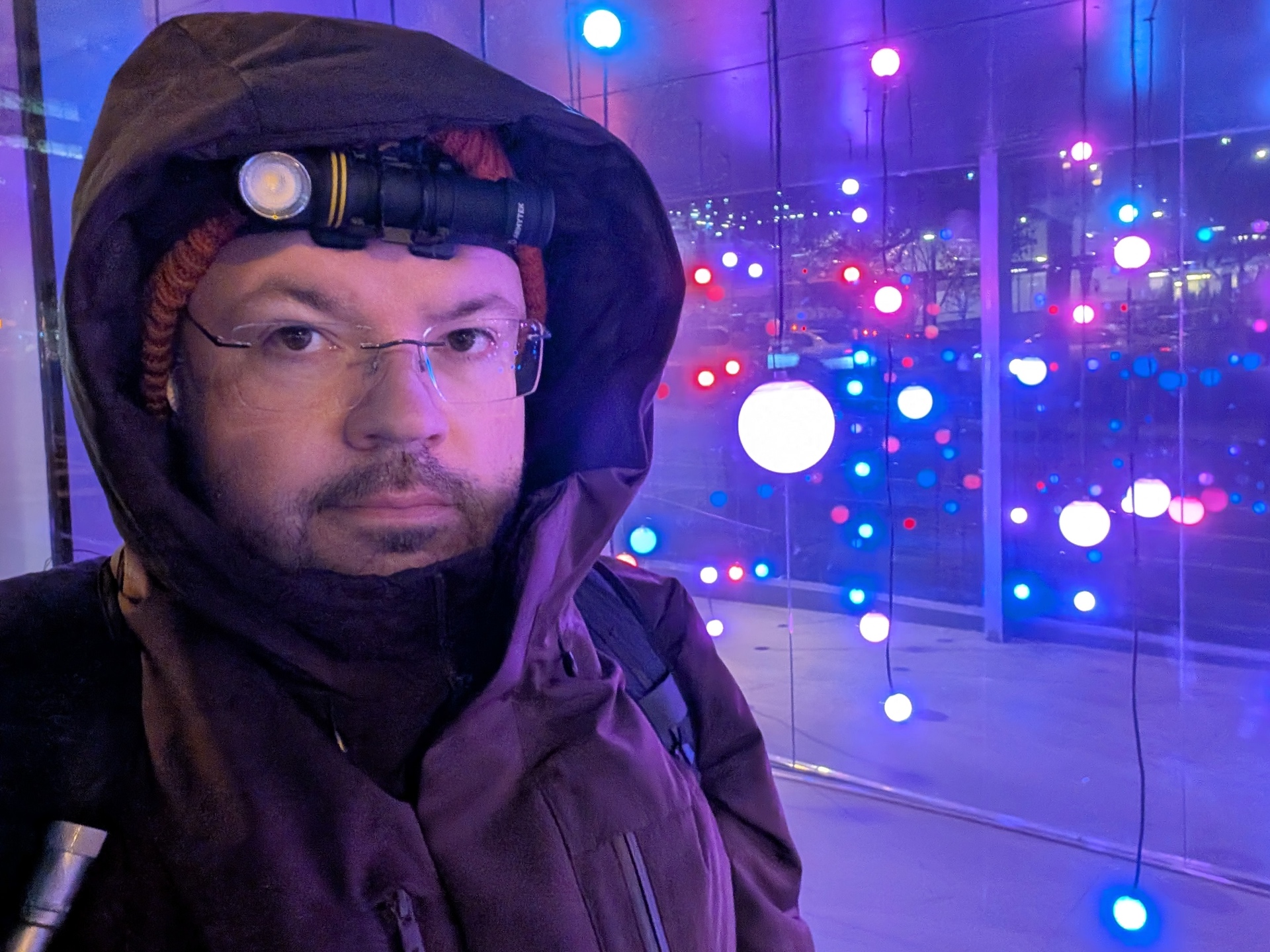
The beam produced is very floody. The brightness needs to be turned up when jogging to be able to clearly see the path ahead. This is where some other headlamps with a TIR optic that produce a throwy beam might be better for jogging. You could consider an “LR” (long range reflector) headlamp from Armytek: Armytek Wizard C2 Pro Max LR Warm.
The headlamp might be noticeably heavy and wobble if you spend a lot of time with your head down (e.g. landscaping at night). This made me rule out using 21700-sized headlamps for jogging. But I gave it a go and I was wrong! It is comfortable to use while jogging.
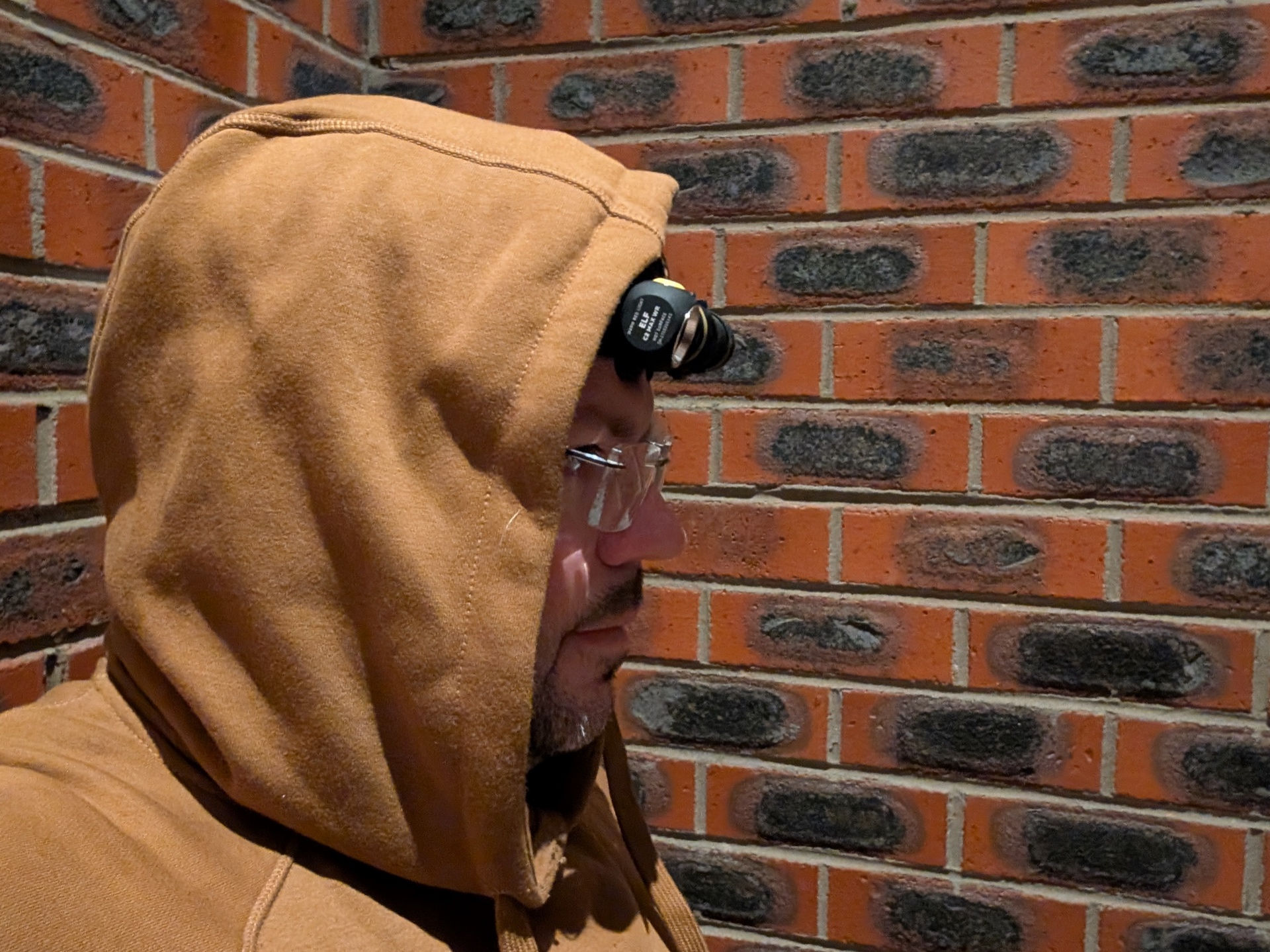
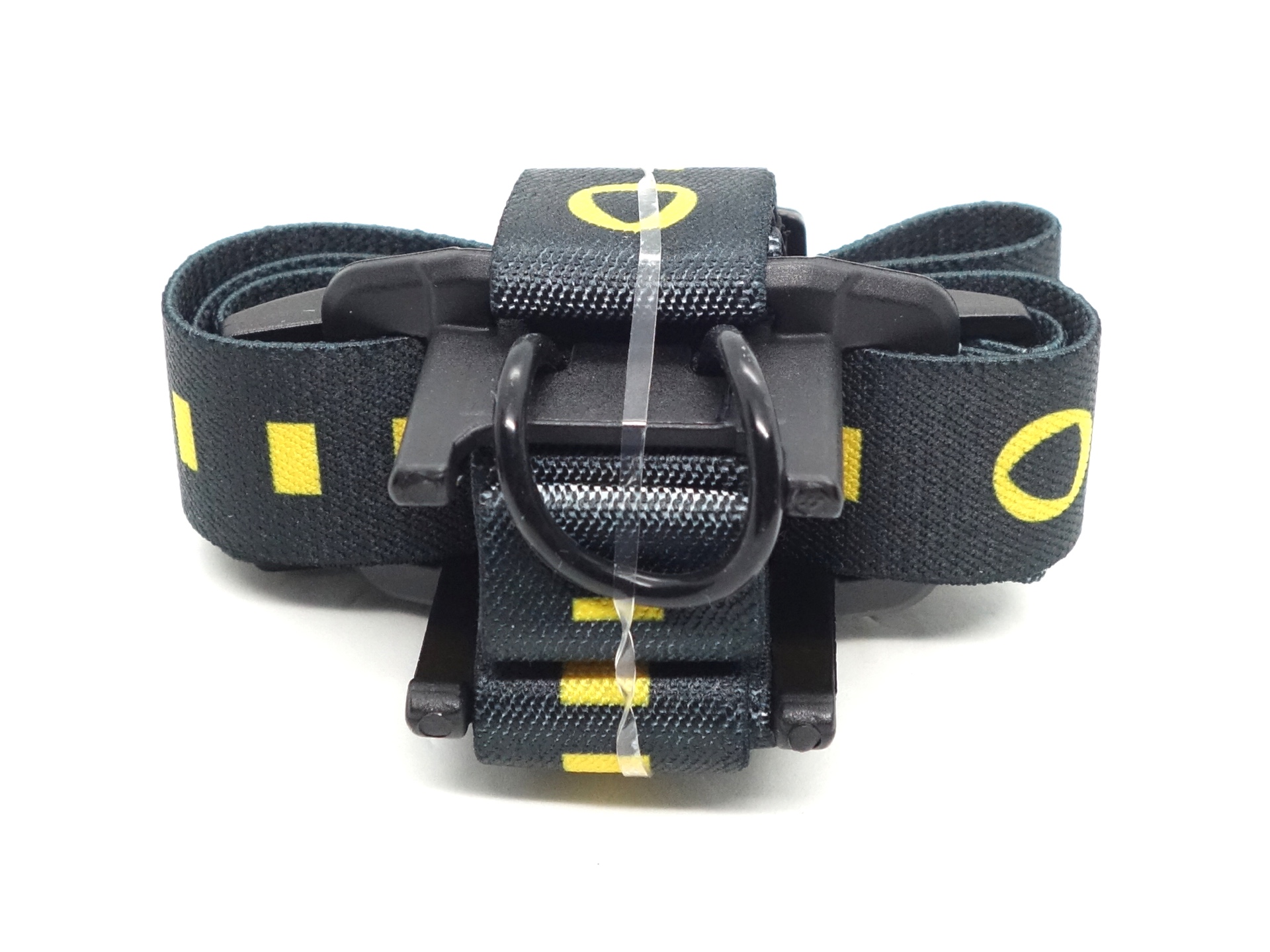
The bracket on the headband is made of a stiff plastic. It can leave a bit of a mark on your forehead if tightened down too much.
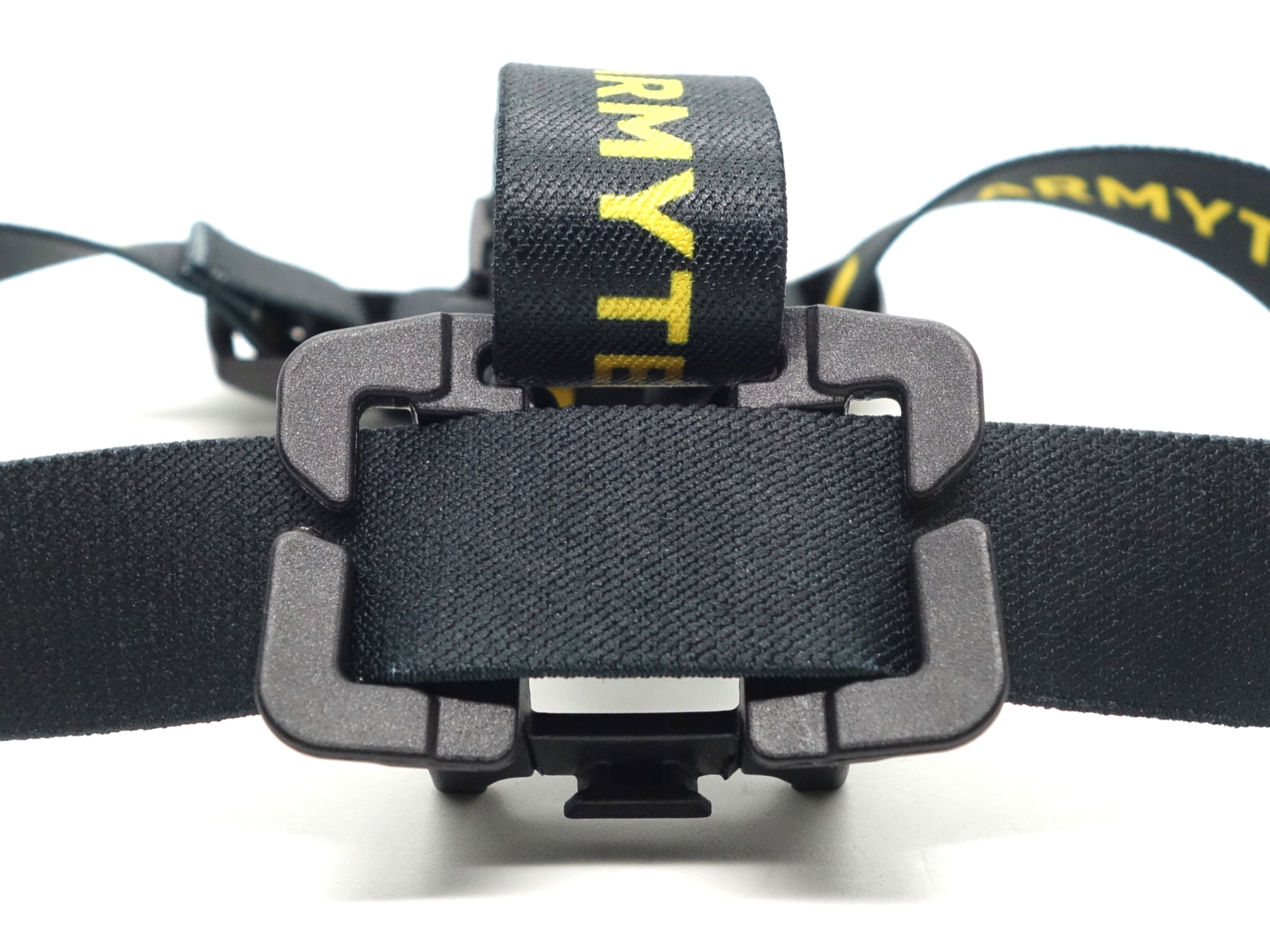
The top strap can be removed if you want to put the headband on a helmet. Armytek has an optional AHM-04 mount that can be used to clip the headlamp to a hard hat.
The headlamp clicks into place when pushed into the bracket and a large o-ring can be stretched over the headlamp to keep it even more secure.
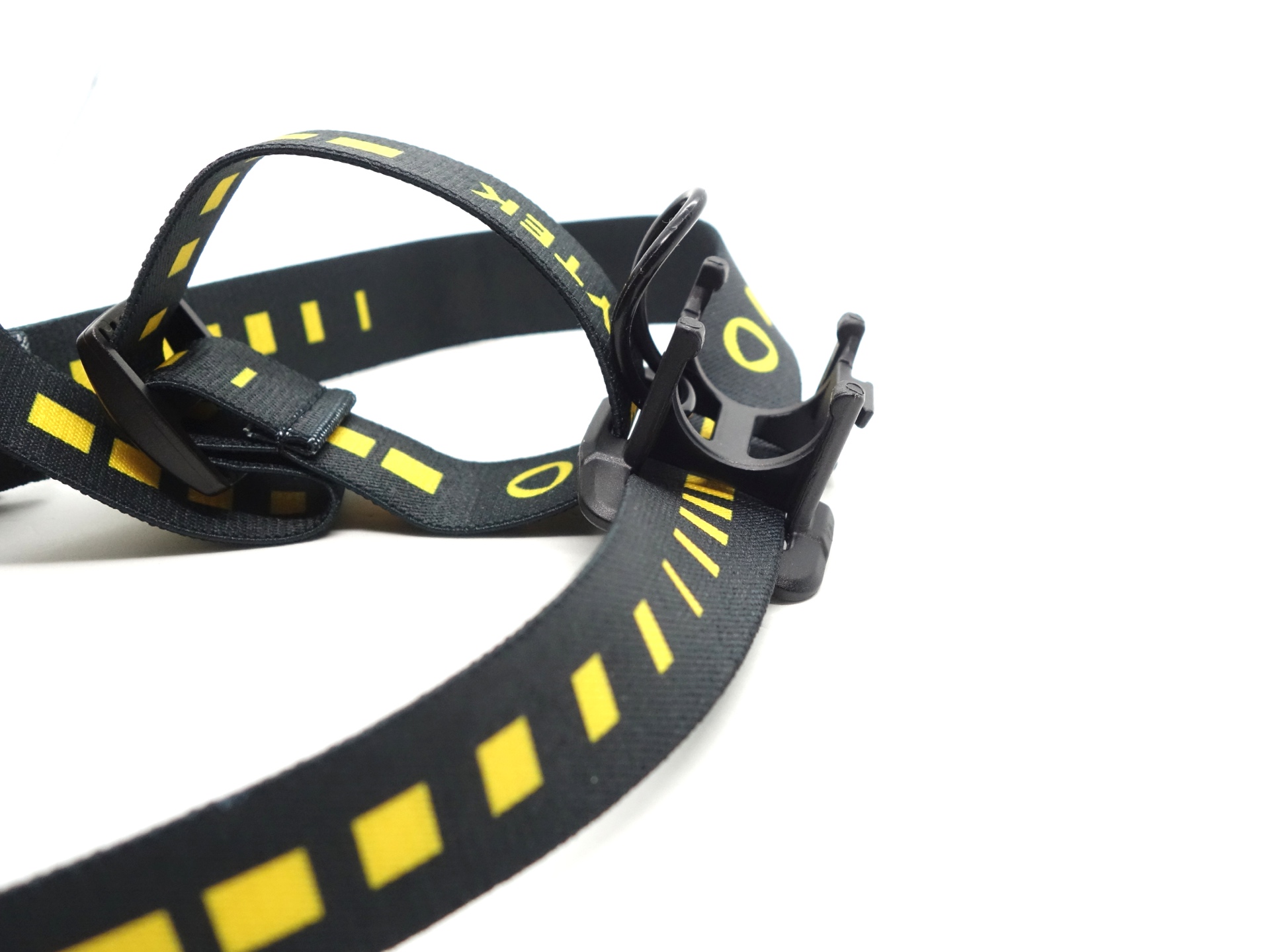
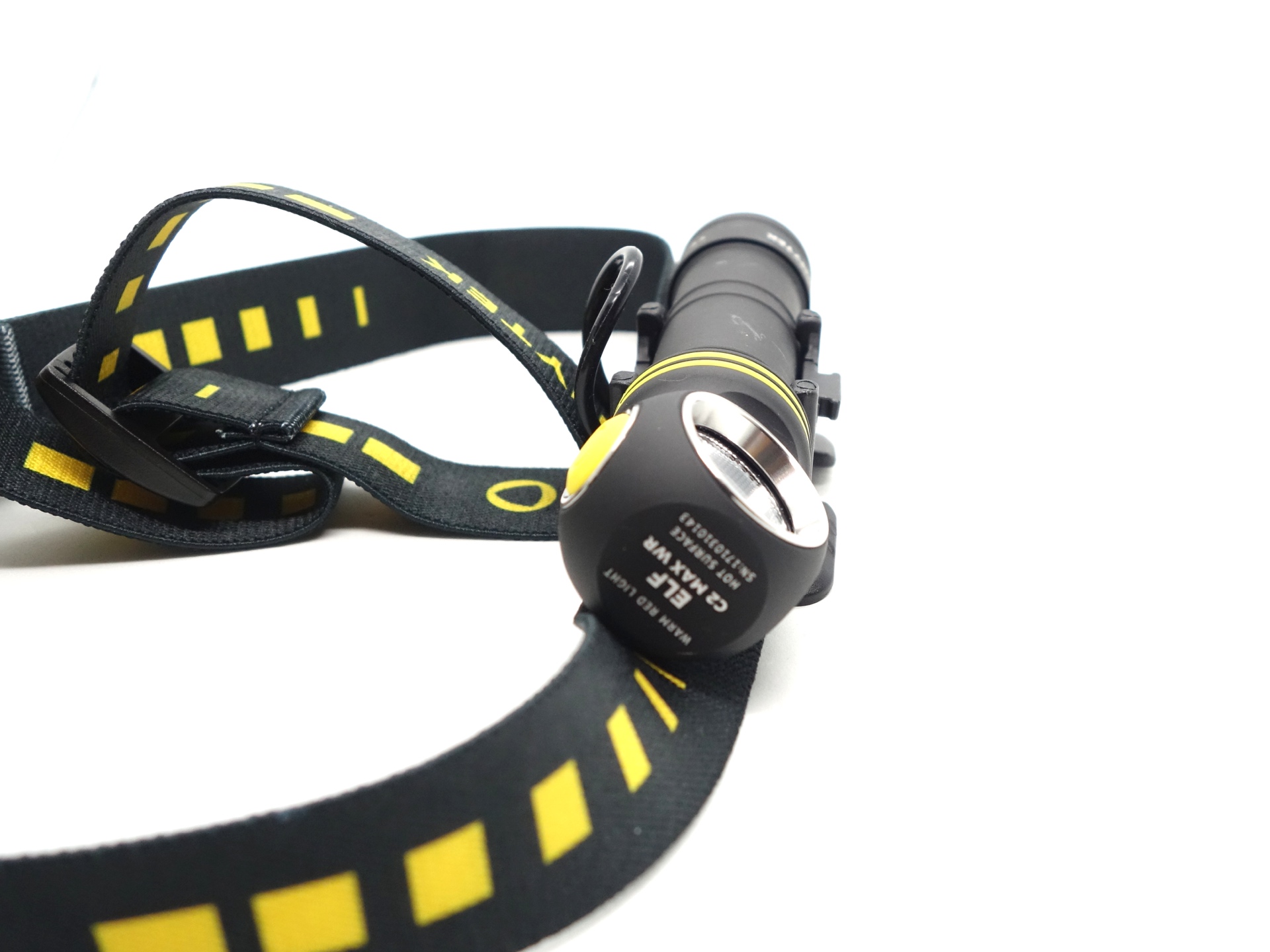
The bracket allows the headlamp to be rotated.
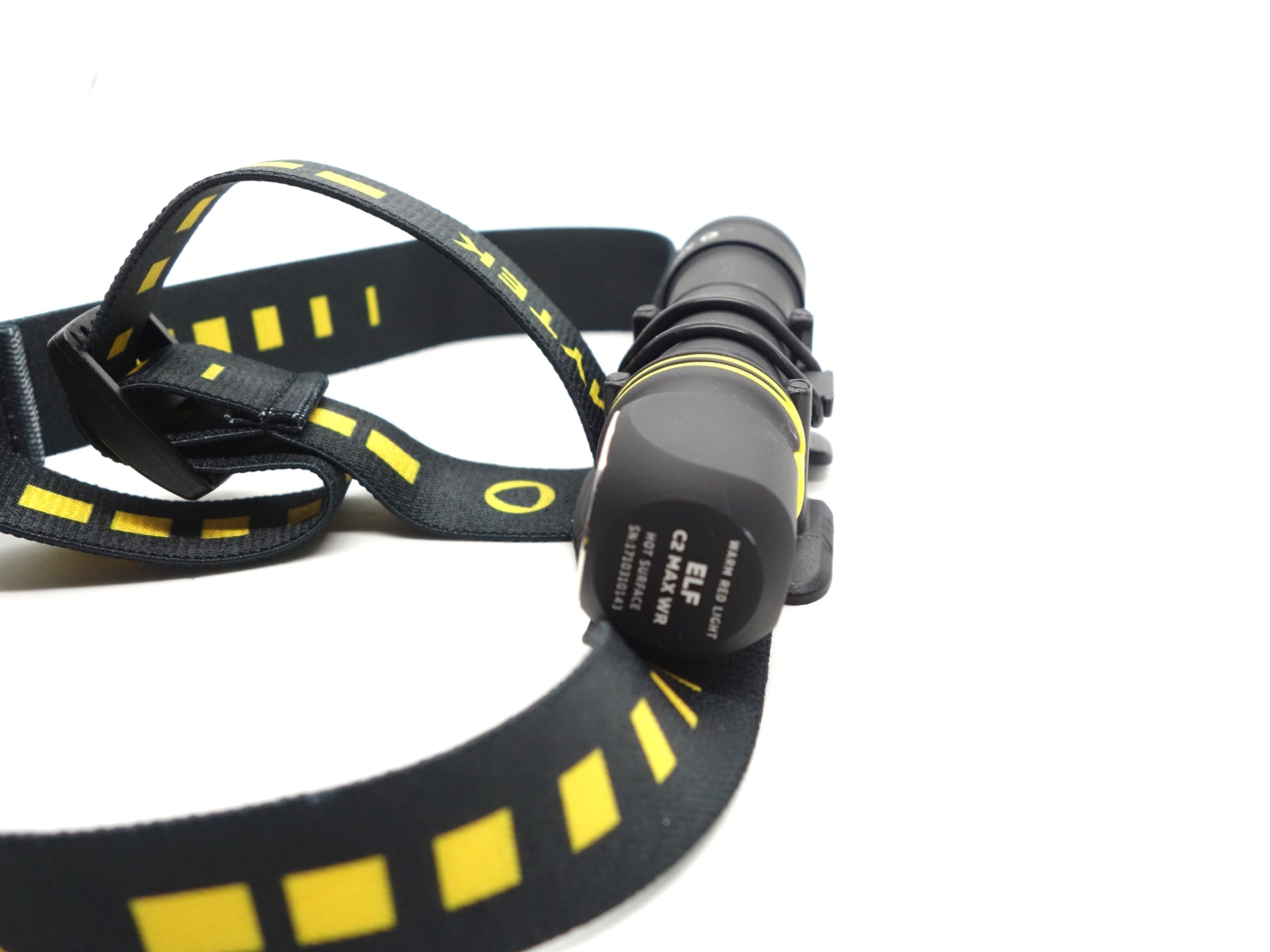
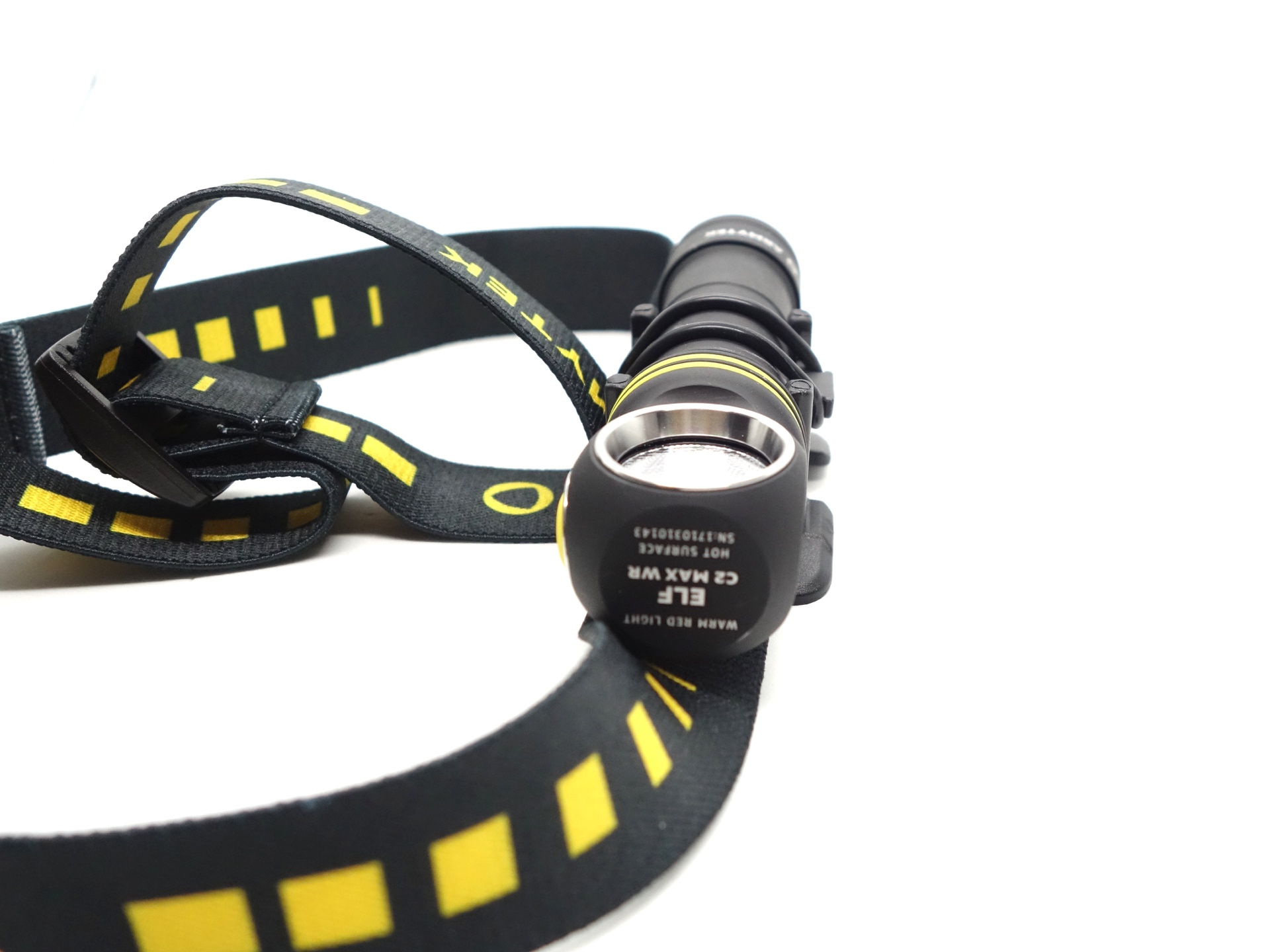
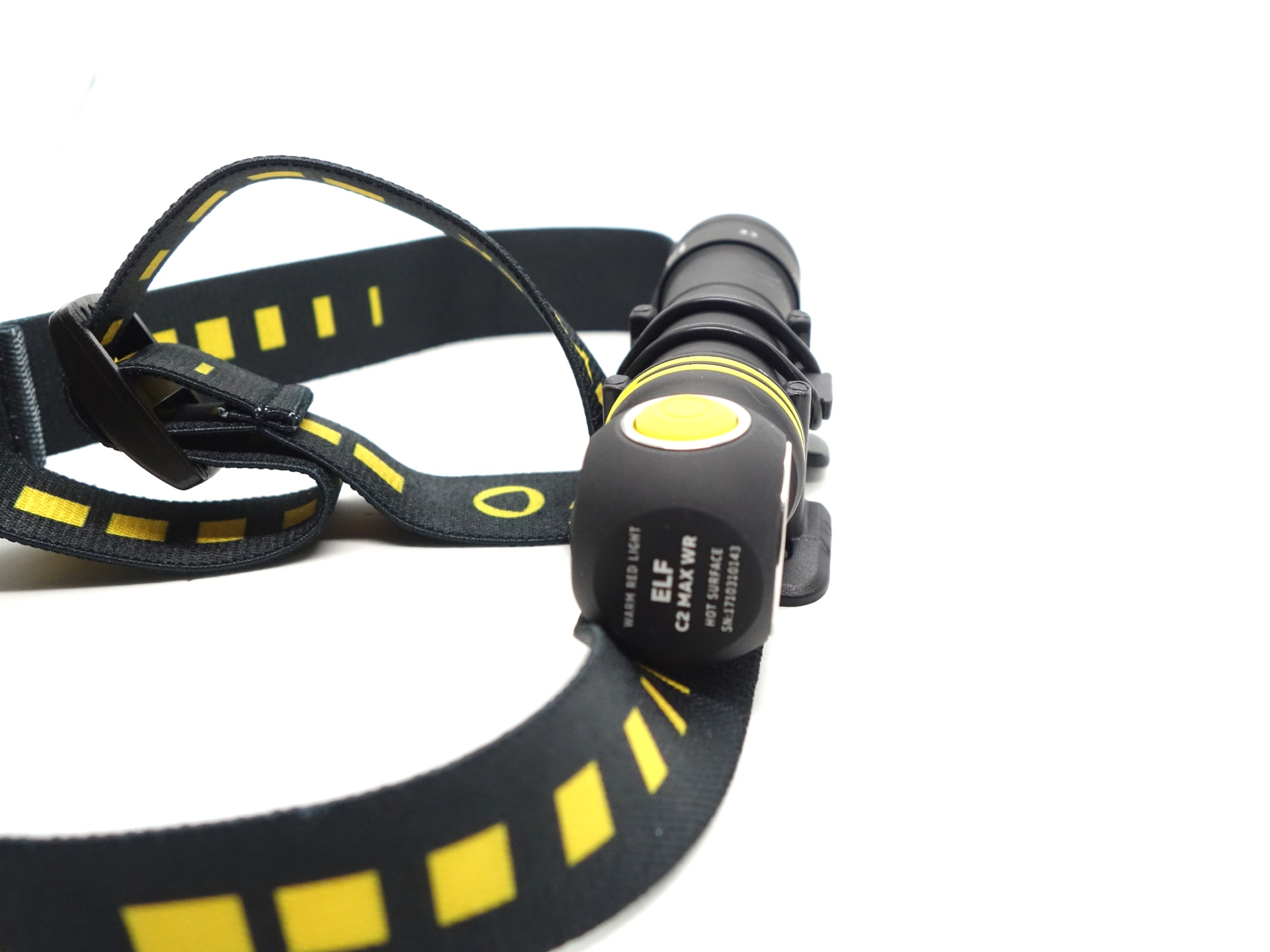
The included one-way pocket clip has a tight fit on the tube.
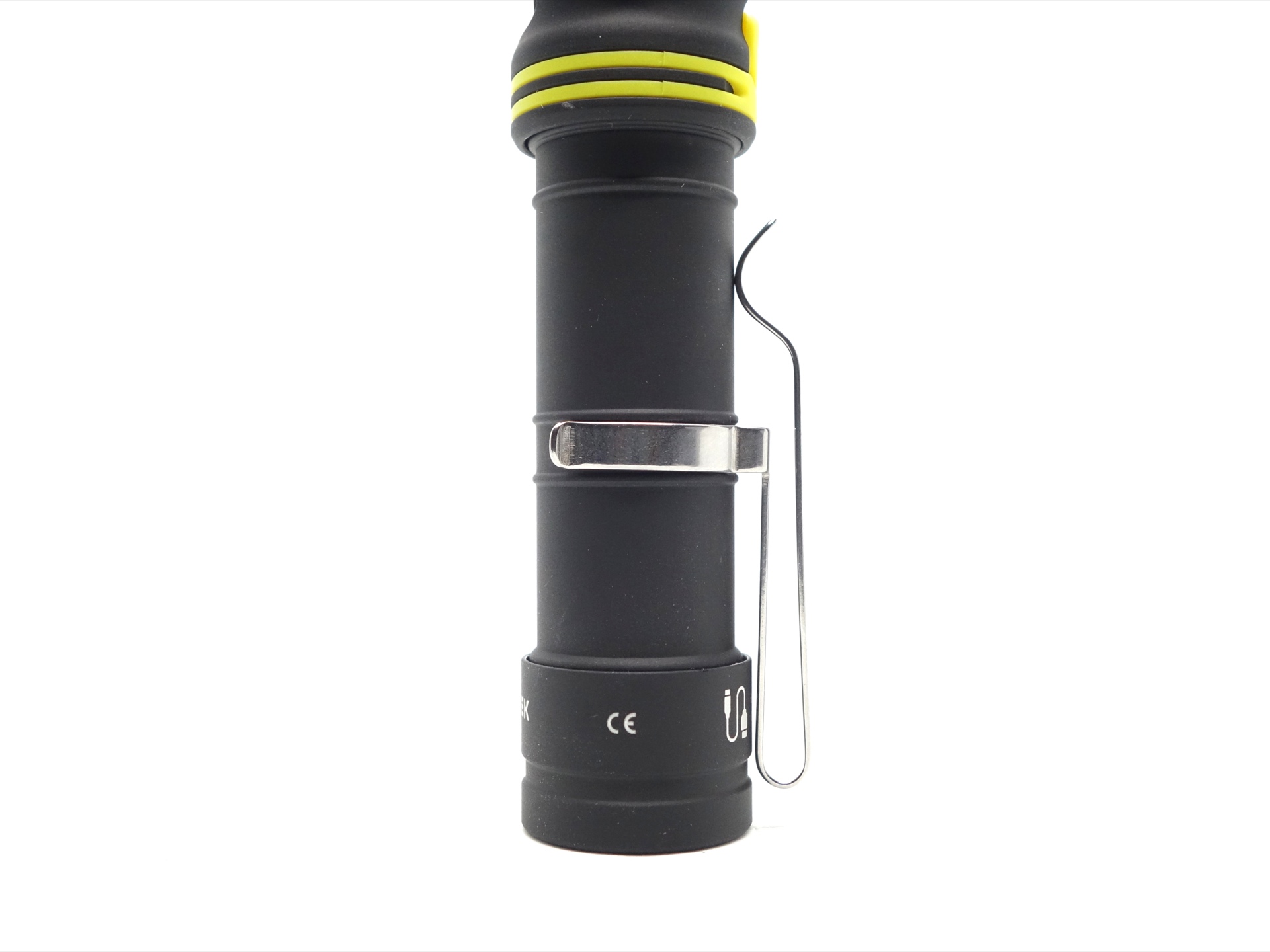
The headlamp can tailstand.
Build quality#
The Armytek Elf C2 Max WR Warm is made of aluminium and it has a matte black anodised finish.
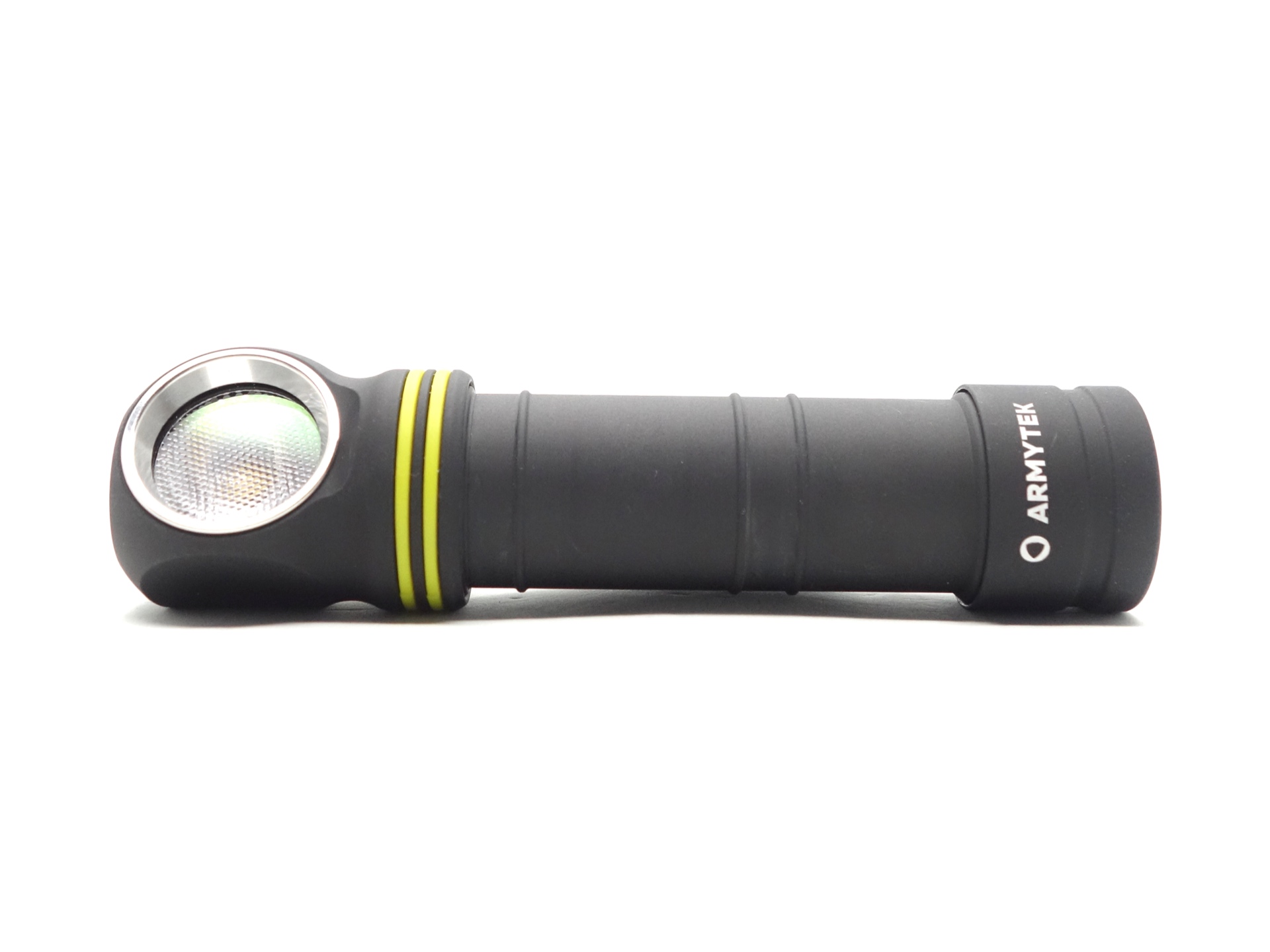
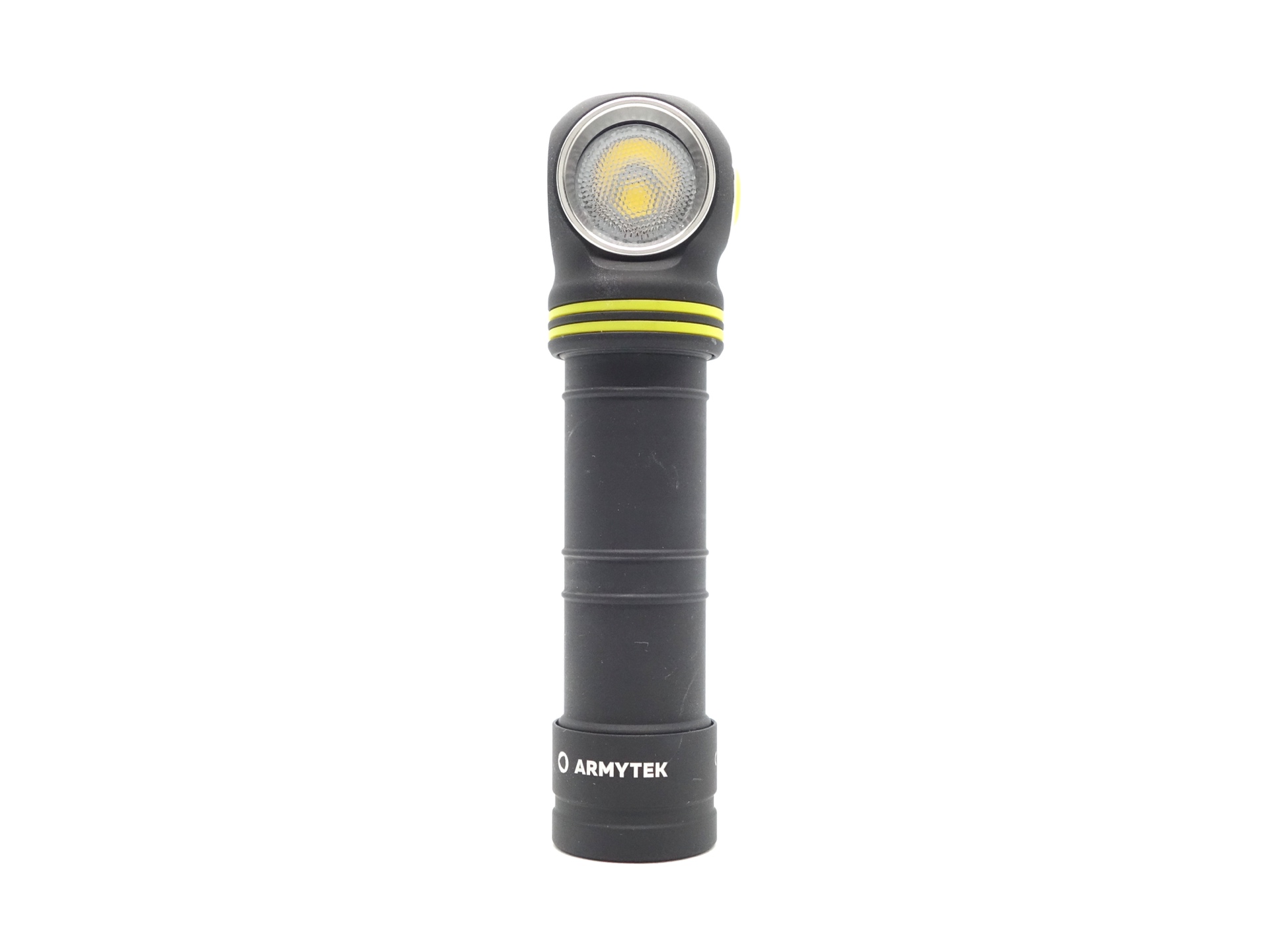
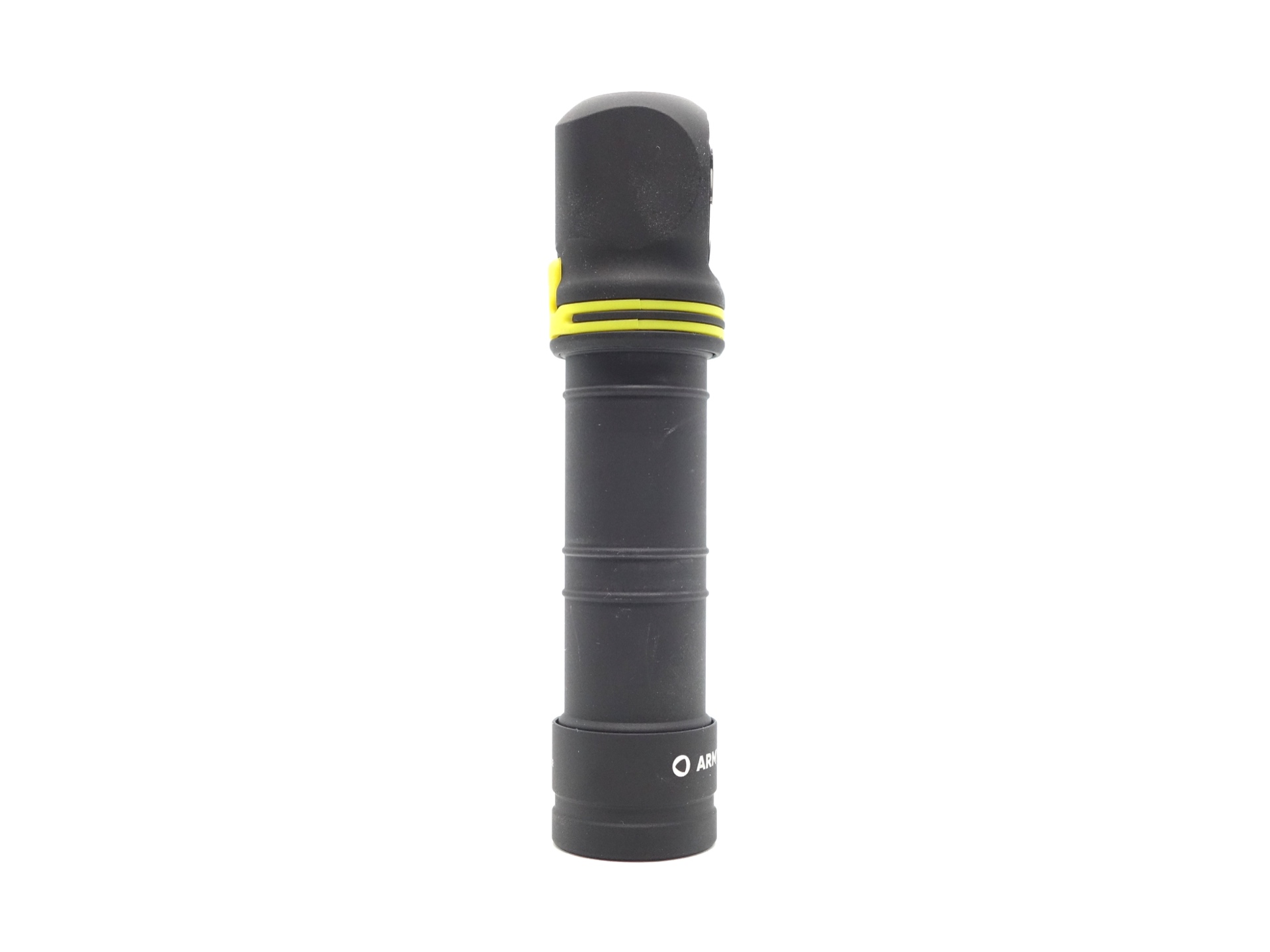
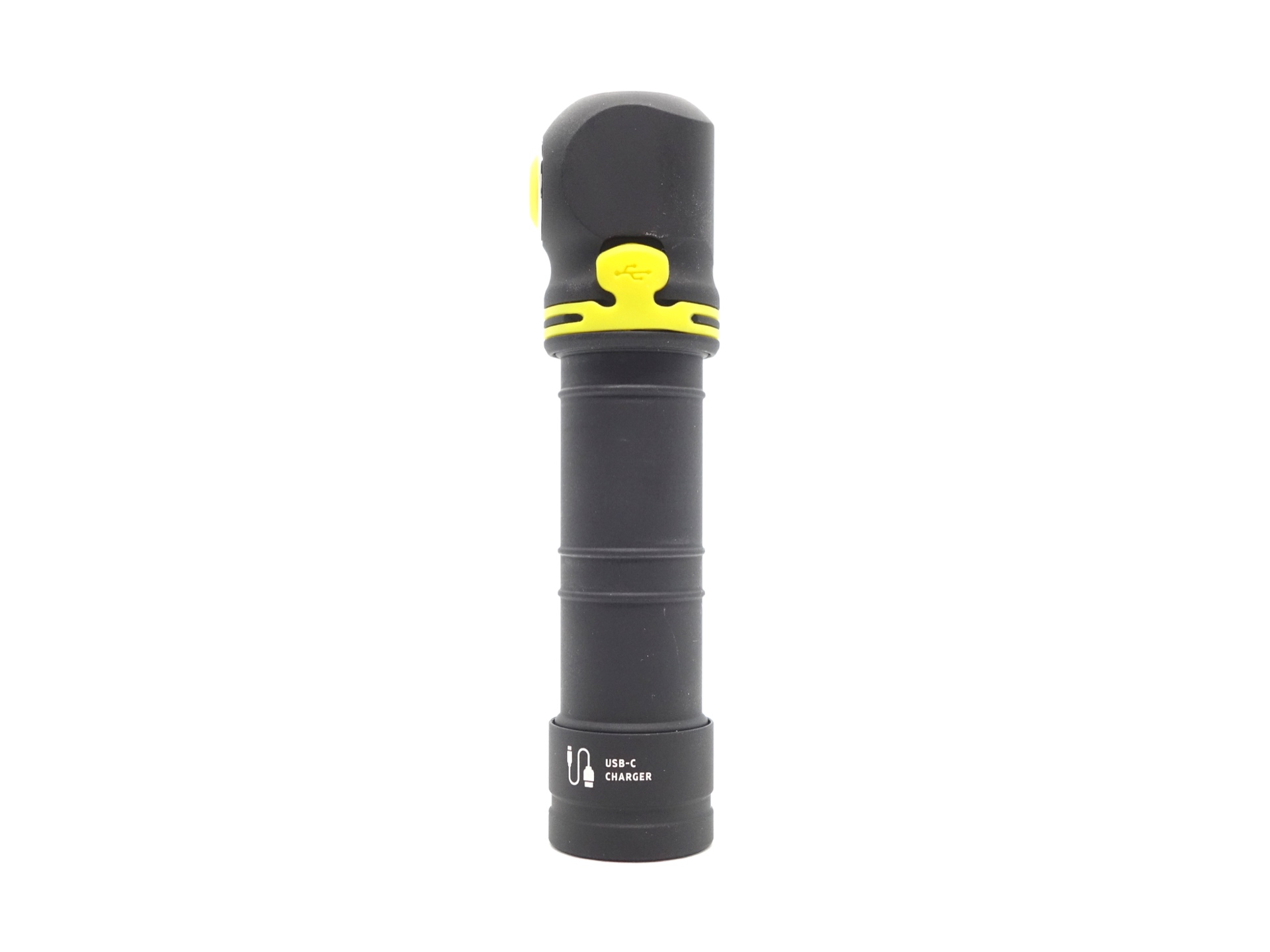
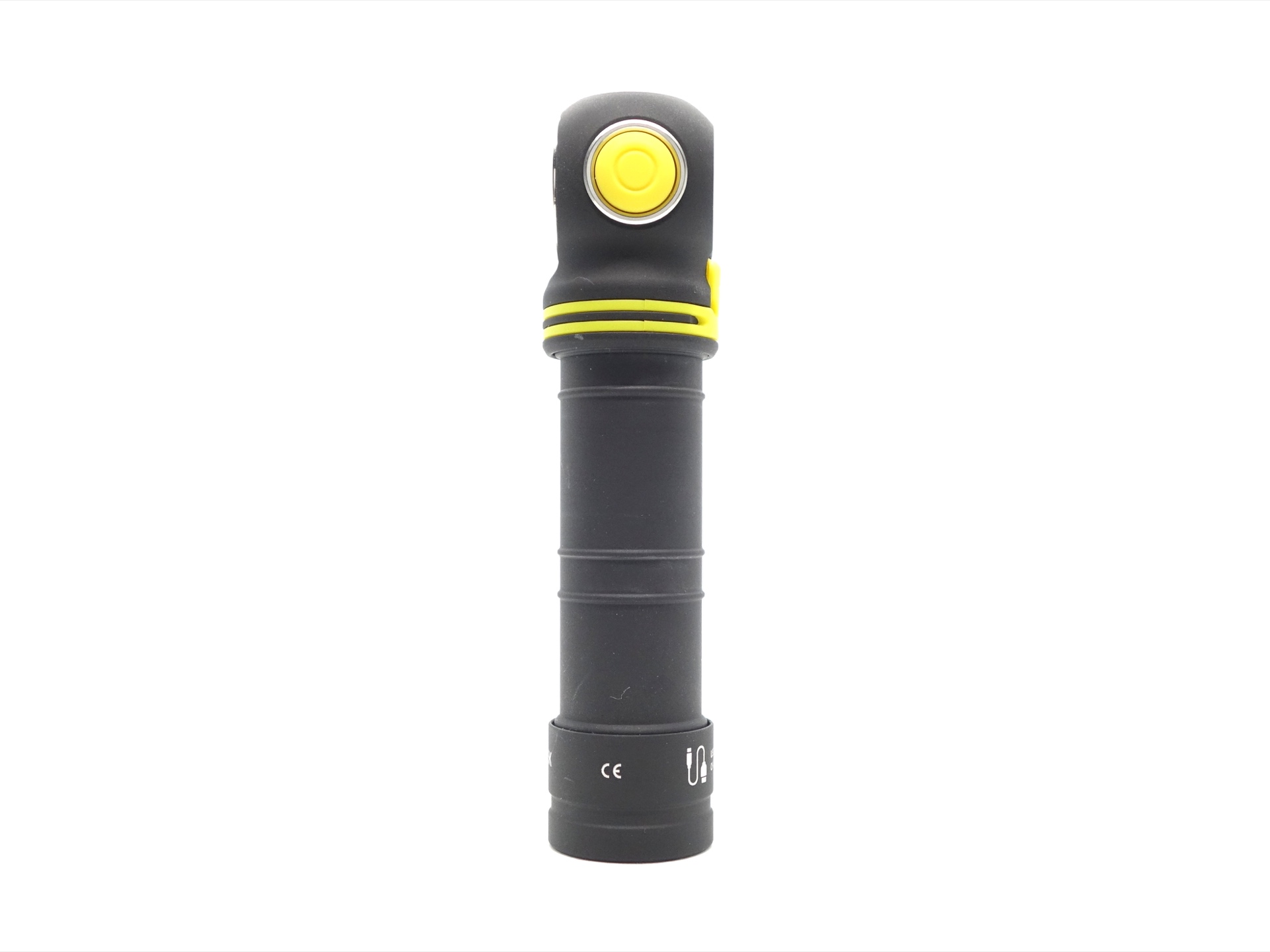
The USB-C cover feels like it could break over time. It takes a bit of effort to insert the cover into the USB-C port after charging the headlamp.
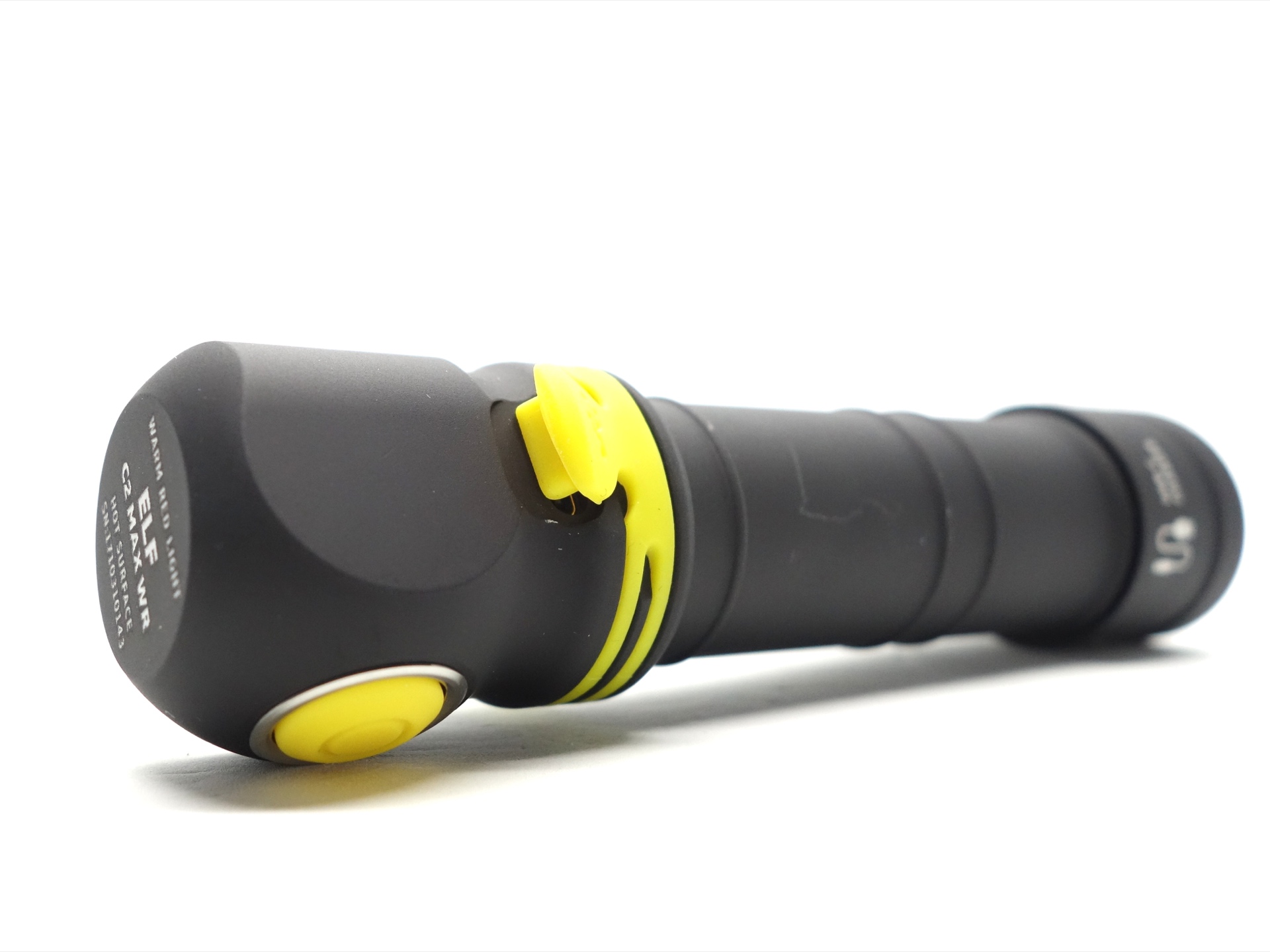
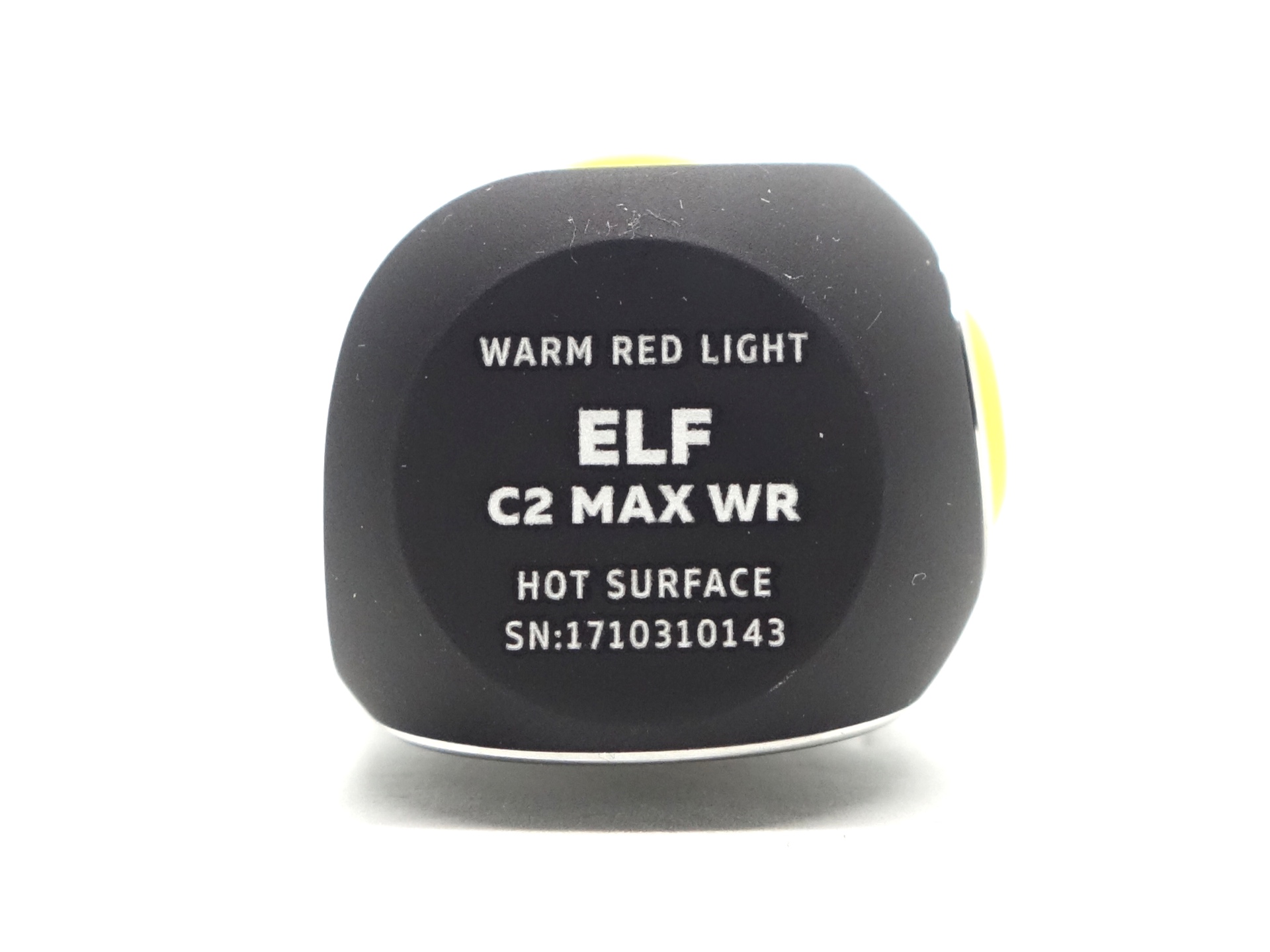
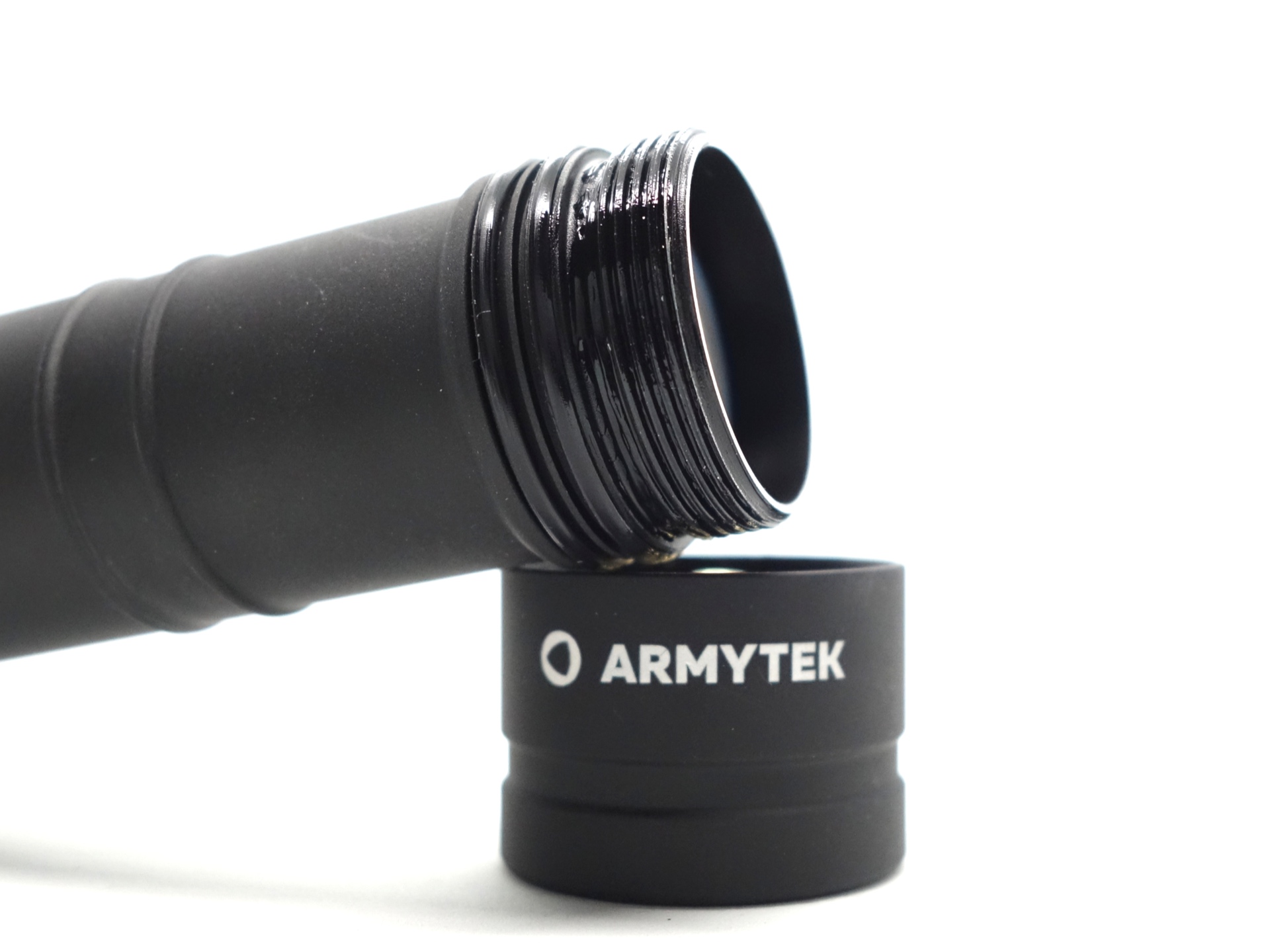
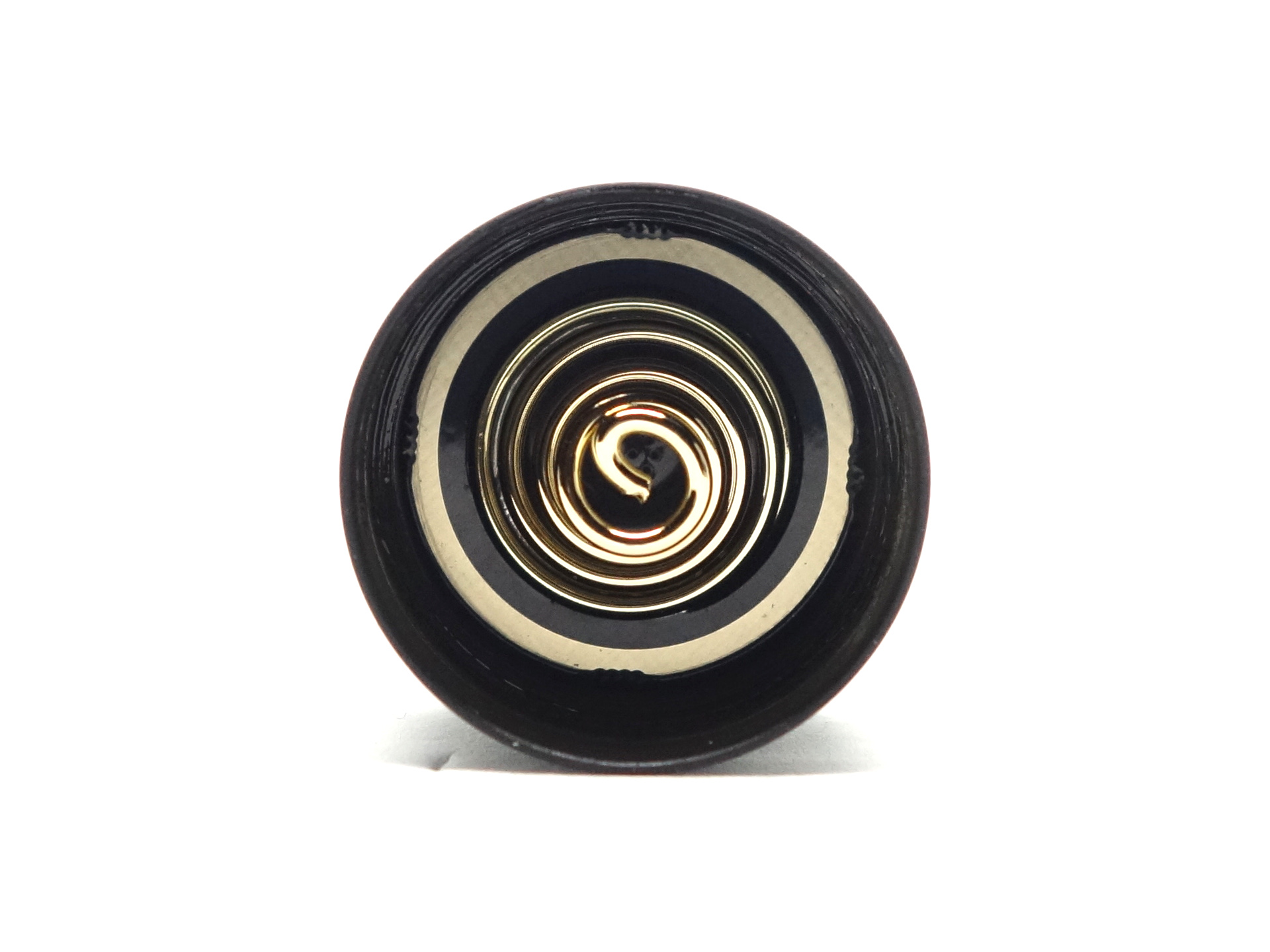
There is no magnetic charging but the magnet in the tailcap is very strong!
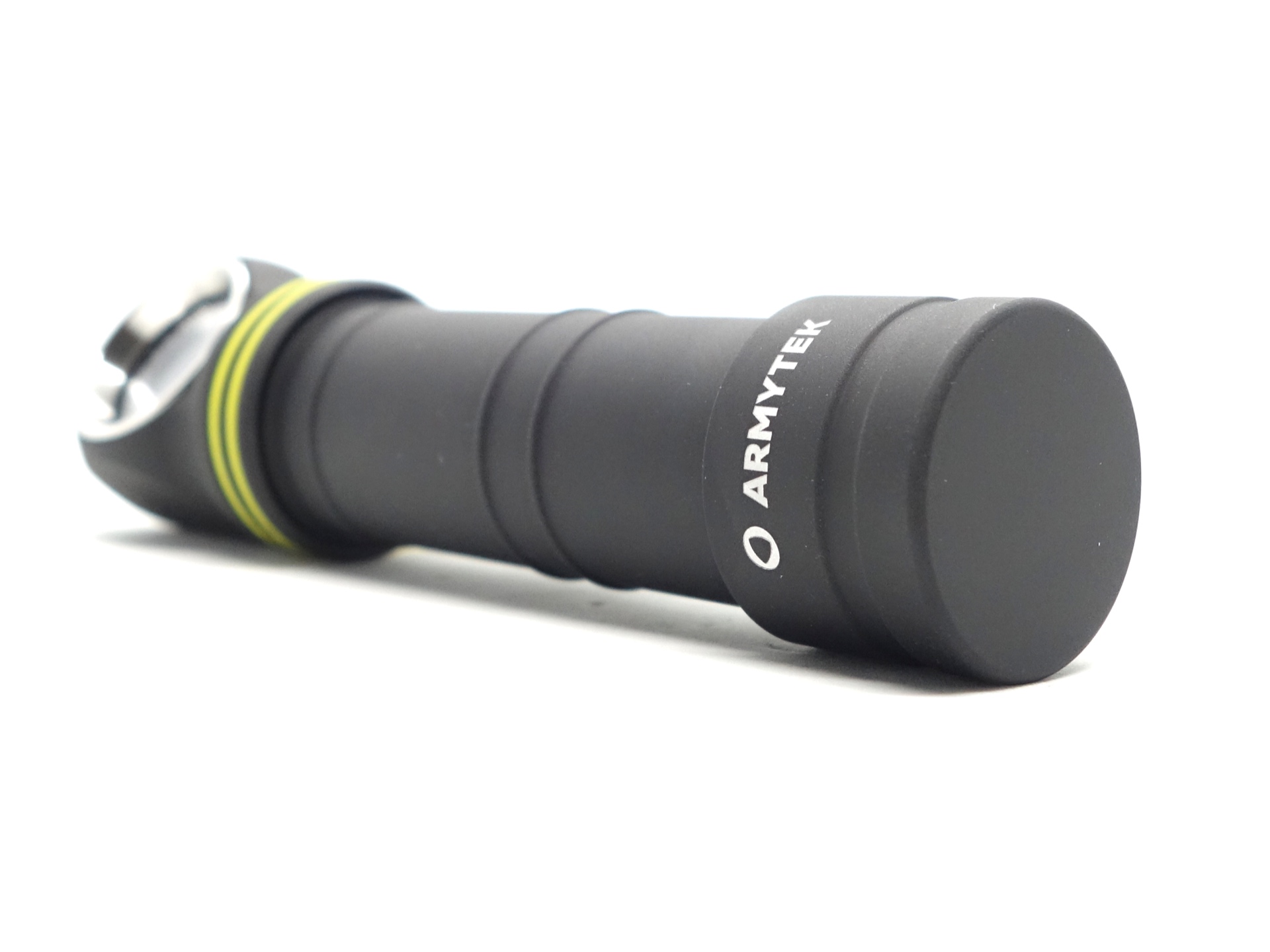
The anodised threads came well lubricated. There are two o-rings for better water resistance.
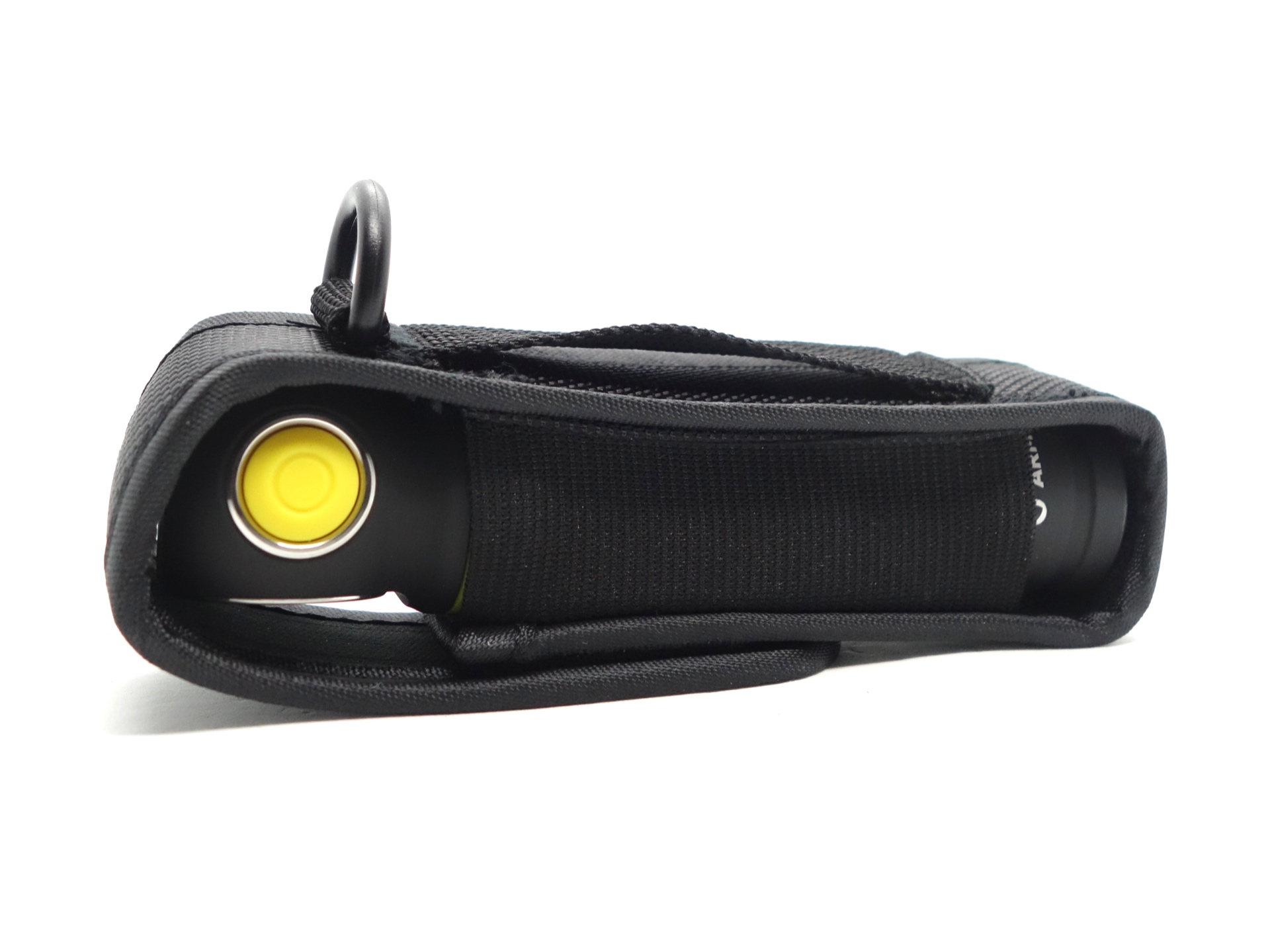
The quality of the holster is pretty good.
The sides have elastic to keep the headlamp secure.
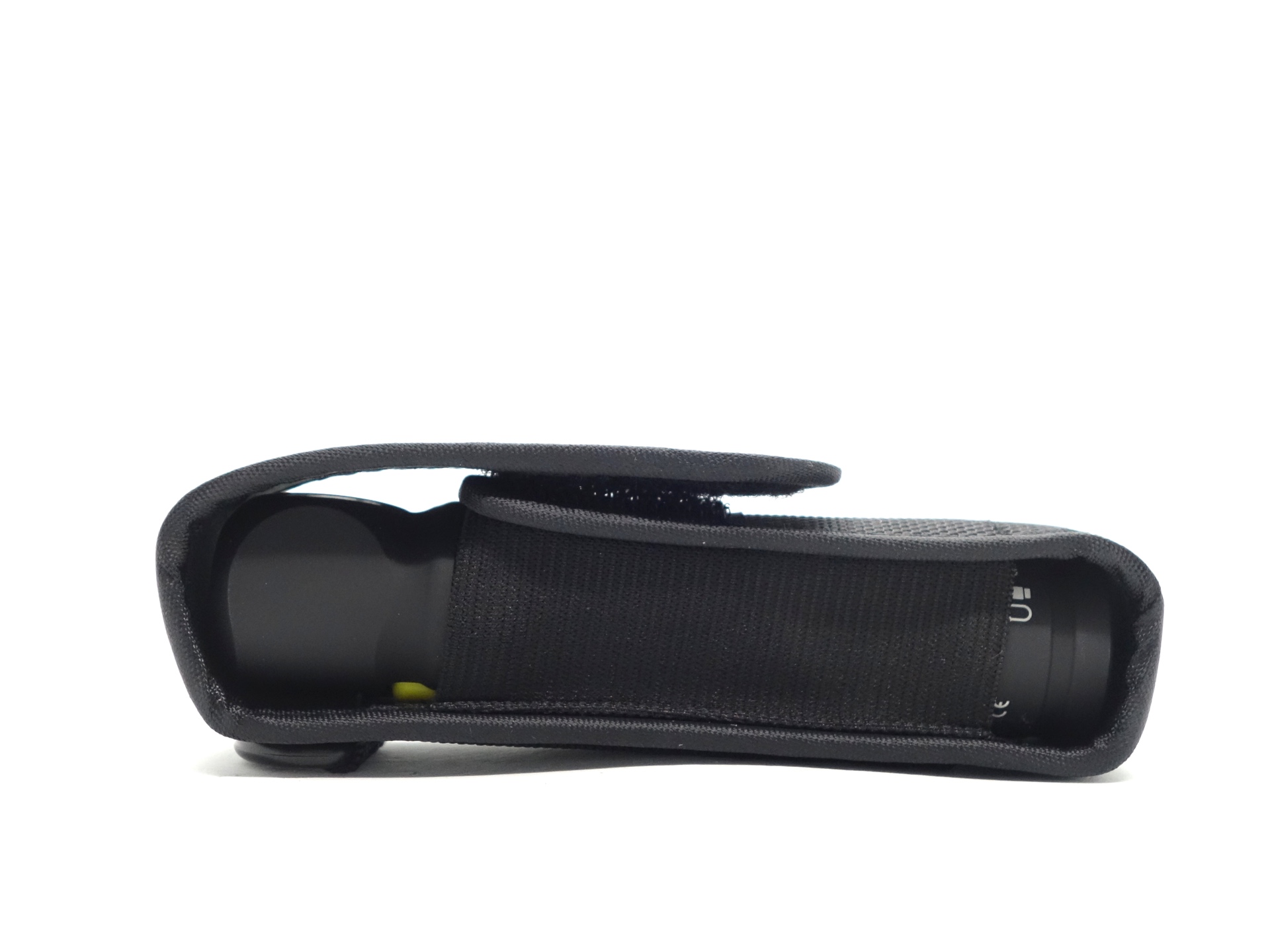
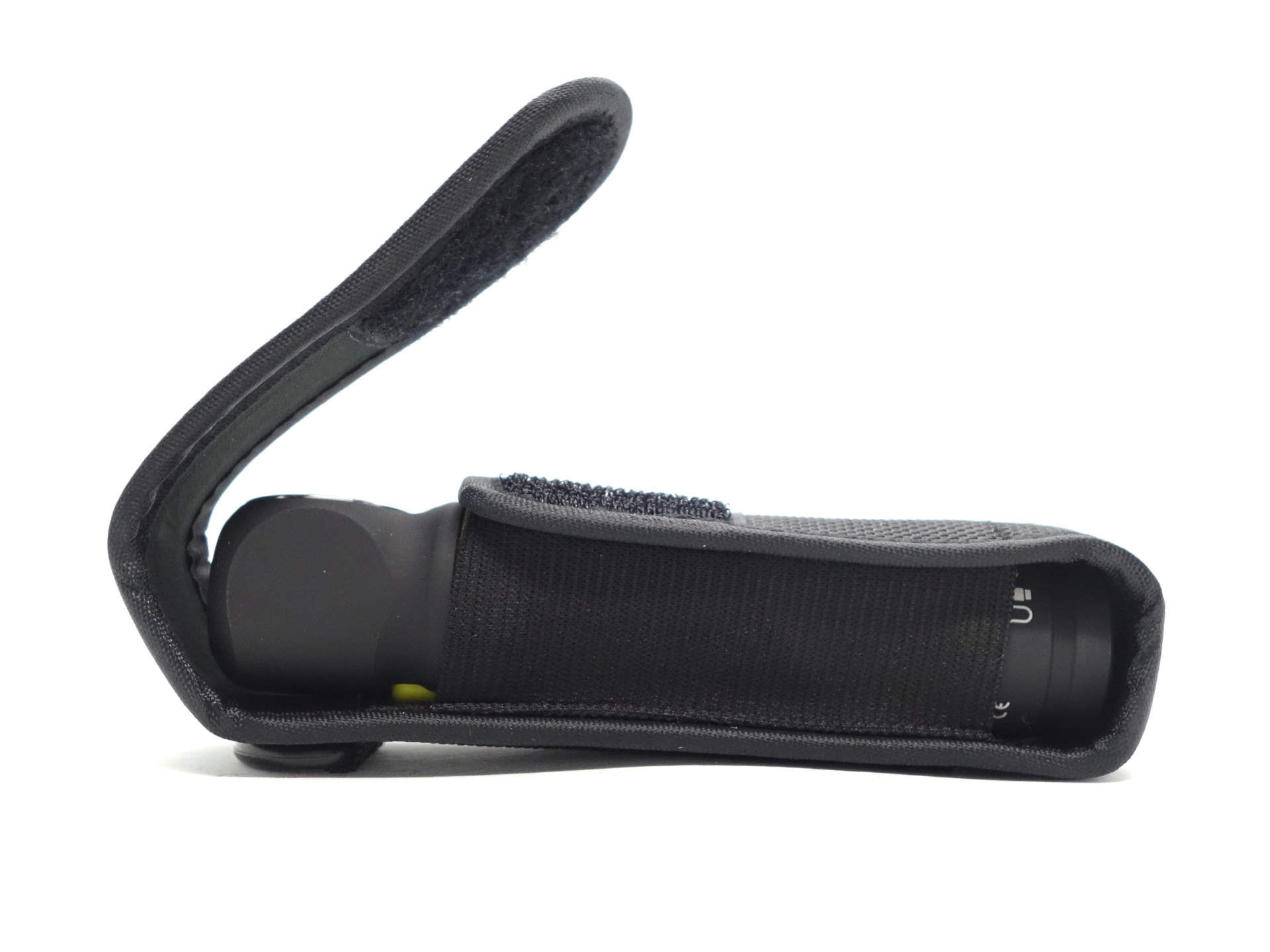
There is a wide loop to thread a belt or a strap through. And there is a small d-ring to clip or tie the holster up to something.
LED, bezel, lens, reflector and beam#
The Armytek Elf C2 Max WR Warm has CREE XHP50.3 HD for the Warm White Light and CREE XQ-E HI for the Red Light.
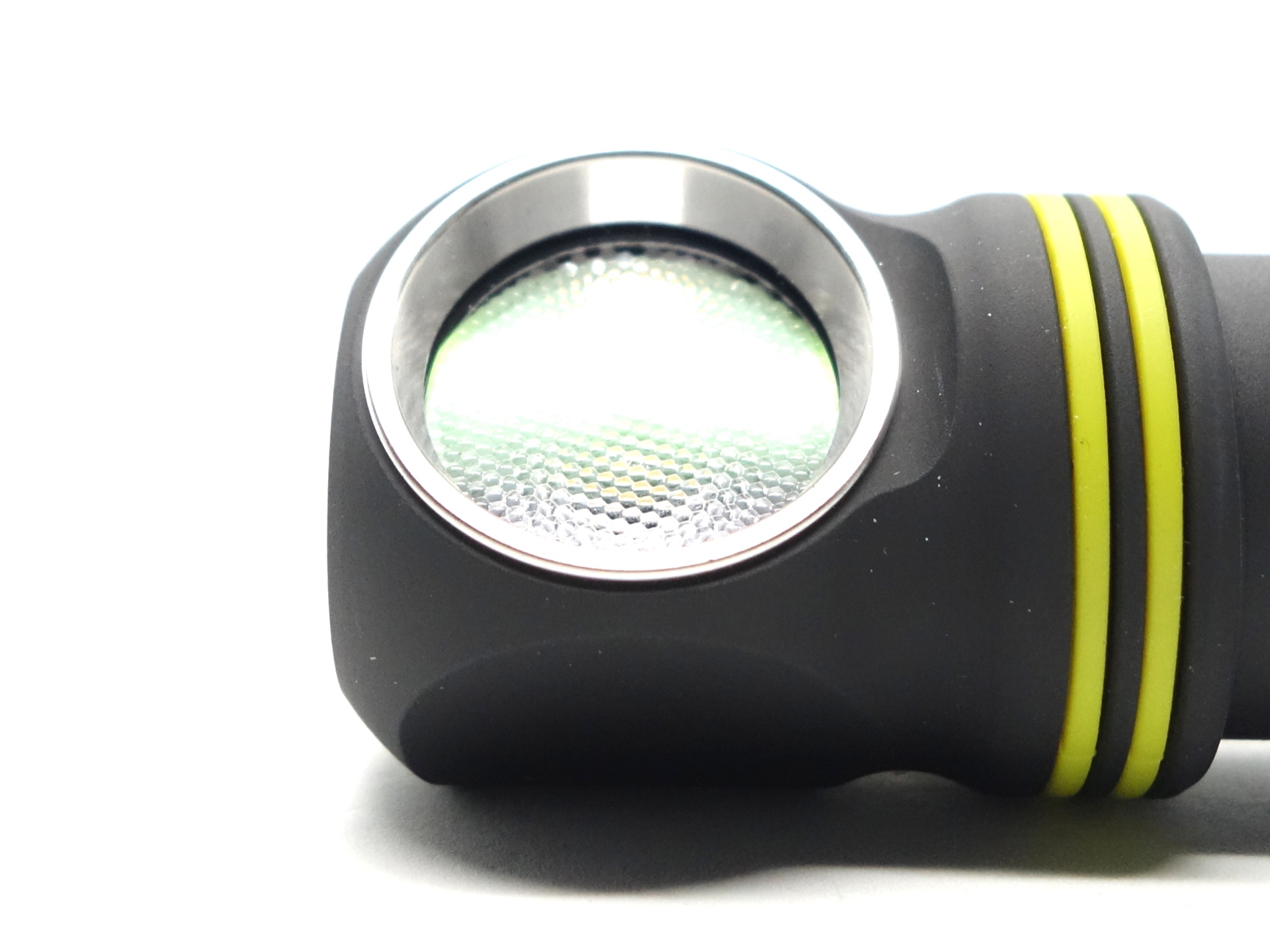
A press-fit bezel is pressed down against an o-ring, a tempered glass lens, another o-ring and a TIR optic.
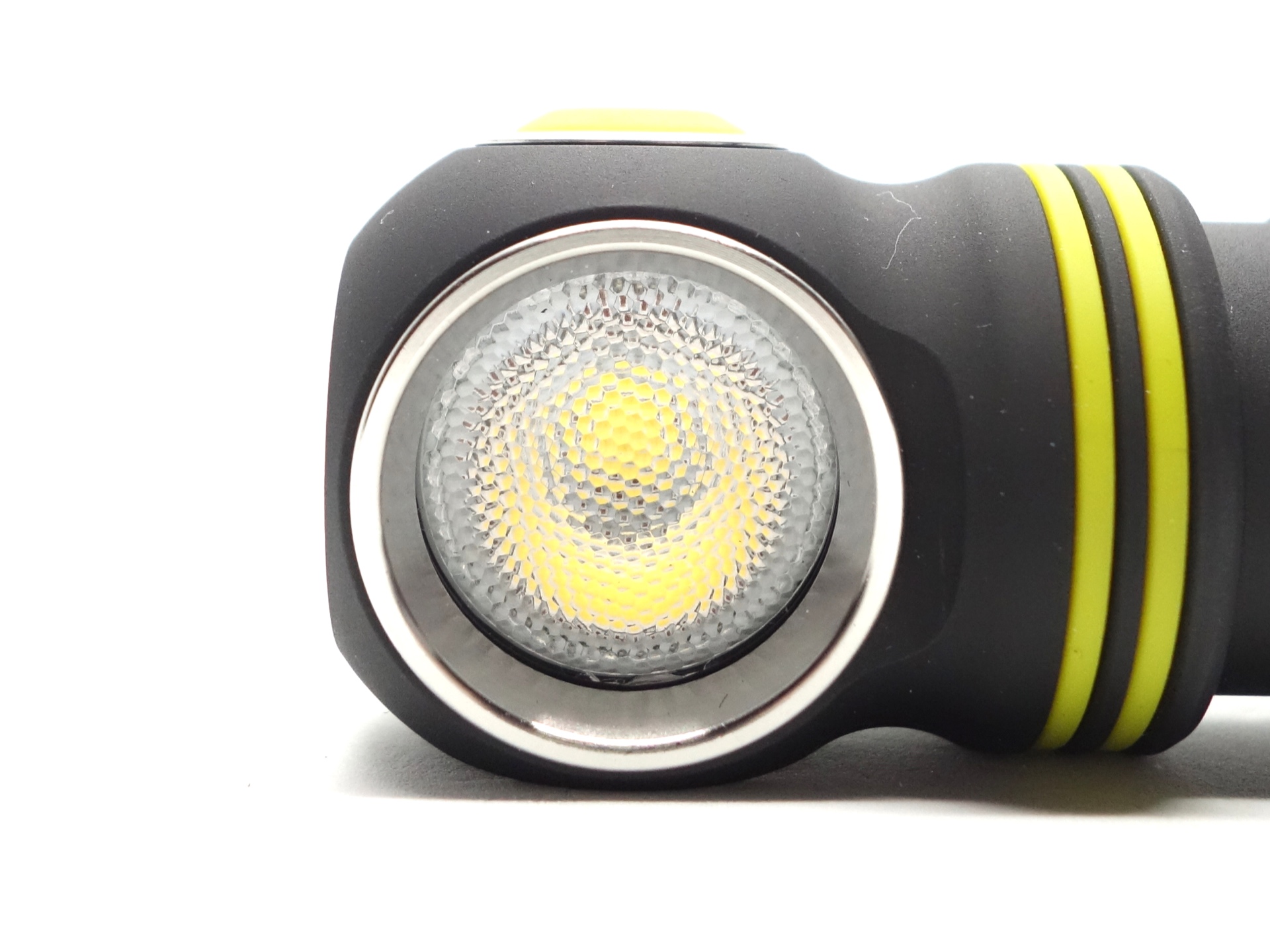
There is a green anti-reflective coating on the lens.
The packaging shows how the optical components are assembled in the head.
CCT, CRI, and duv#
I have taken Correlated Colour Temperature (CCT) and Colour Rendering Index (CRI, RA of R1-R8) measurements with the torch positioned half a metre away from an Opple Light Master Pro III (G3) for Main1, Main2, Main3 and Turbo.
The CCT is around 3700, the CRI is around 78 and the Delta u, v is positive (green).
The beam produced is very floody. It has a smooth hot spot.
| LED | Mode | CCT (K) | CRI (Ra) | x | y | Duv |
|---|---|---|---|---|---|---|
| White | Main1 | 3685 | 79.7 | 0.4036 | 0.4100 | 0.0087 |
| White | Main2 | 3721 | 79.3 | 0.4017 | 0.4092 | 0.0088 |
| White | Main3 | 3767 | 78.6 | 0.3990 | 0.4074 | 0.0087 |
| White | Turbo | 3852 | 77.1 | 0.3942 | 0.4040 | 0.0084 |
Calculate Duv from CIE 1931 xy coordinates
Dimensions and size comparison#
Dimensions#
I took the following measurements using a digital caliper.
| Measurement | Unit (mm) |
|---|---|
| Length | 121.61 |
| Head width | 30.7 |
| Head depth | 25.51 |
| Tube diameter | 23.58 |
| Tail diameter | 27.5 |
Weight#
I took the following measurements using a digital scale.
| Weight | Unit (g) |
|---|---|
| Torch | 81.0 |
| Battery | 69.86 |
| Headband | 57.71 |
| Torch with battery | 150.86 |
| Torch with battery and headband | 208.57 |
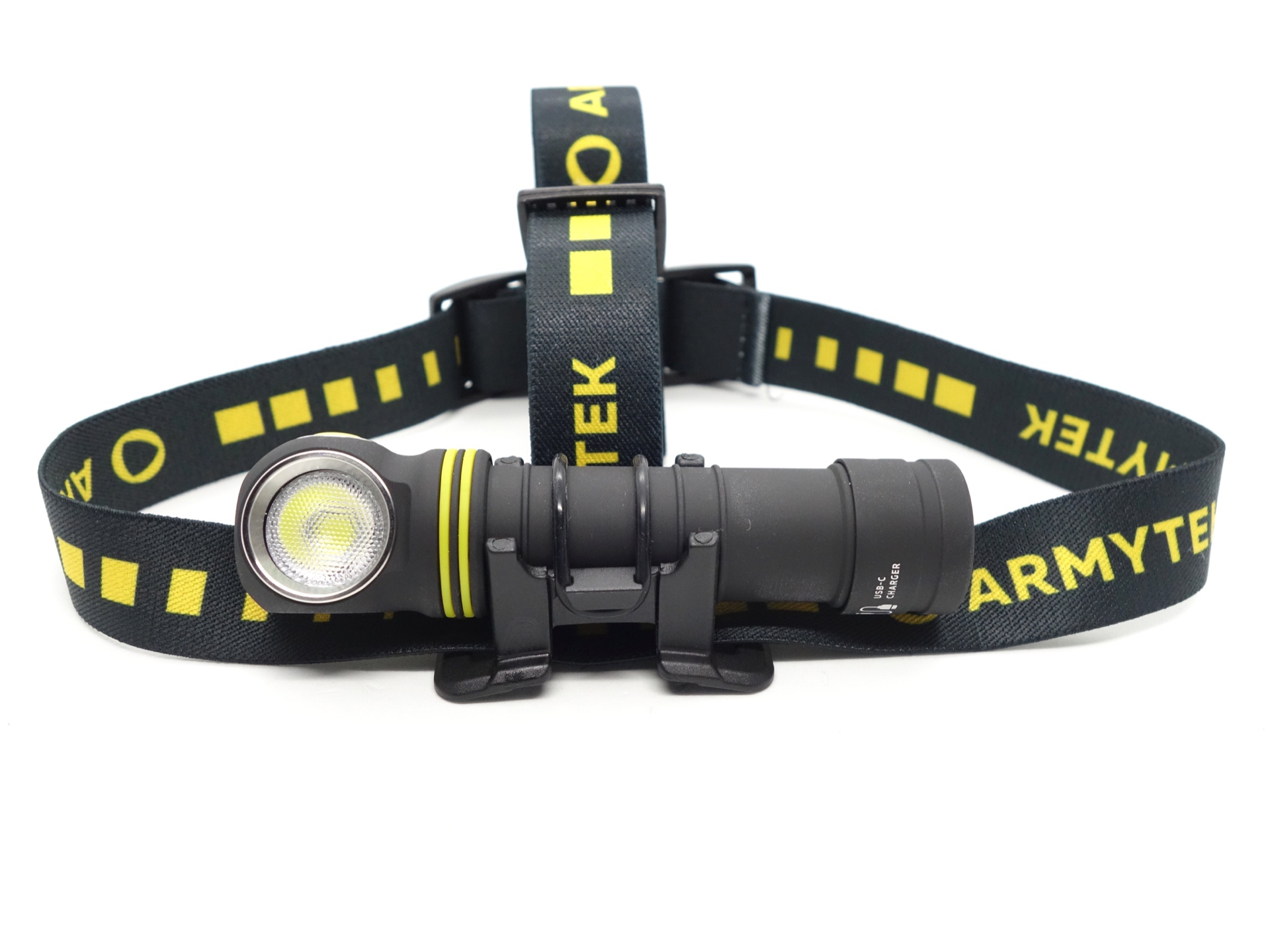
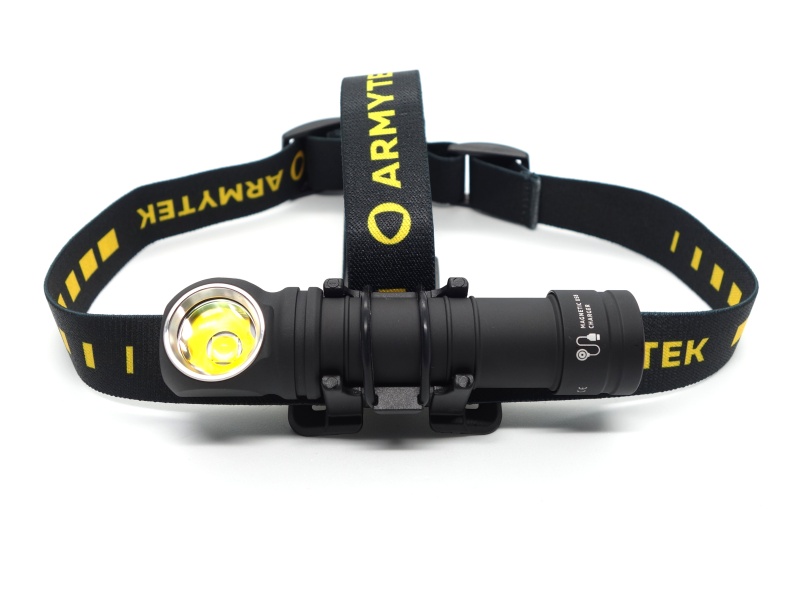
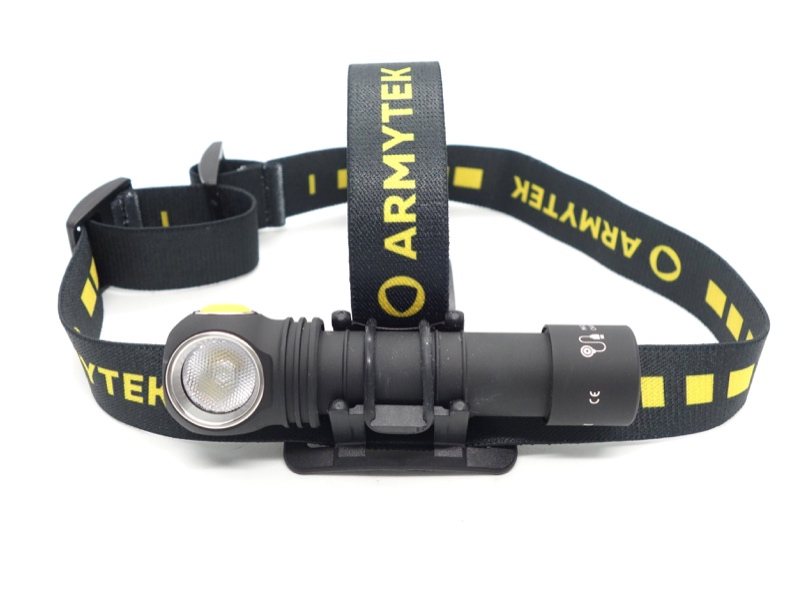
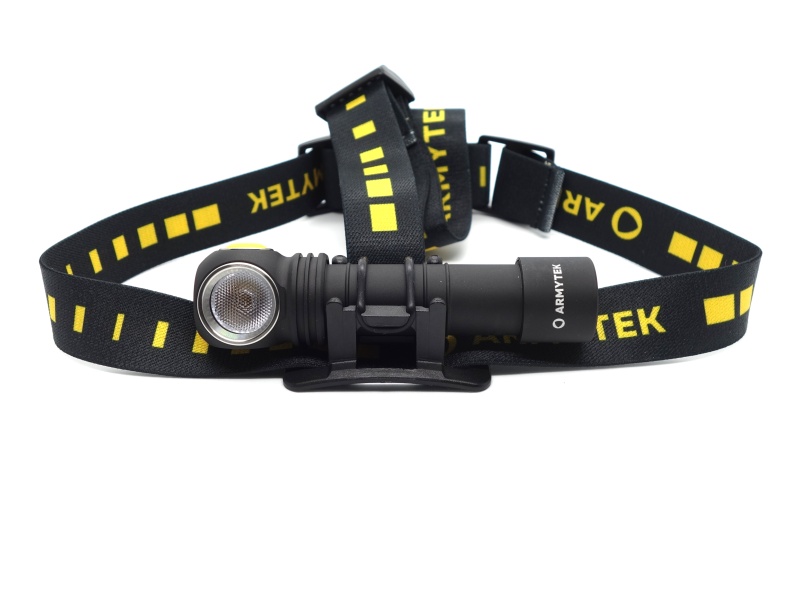
Size comparison with its competition#
Armytek Elf C2 Max WR Warm, Armytek Elf C2 Max

Armytek Wizard C2 Pro Max LR Warm, Armytek Wizard C2 WG
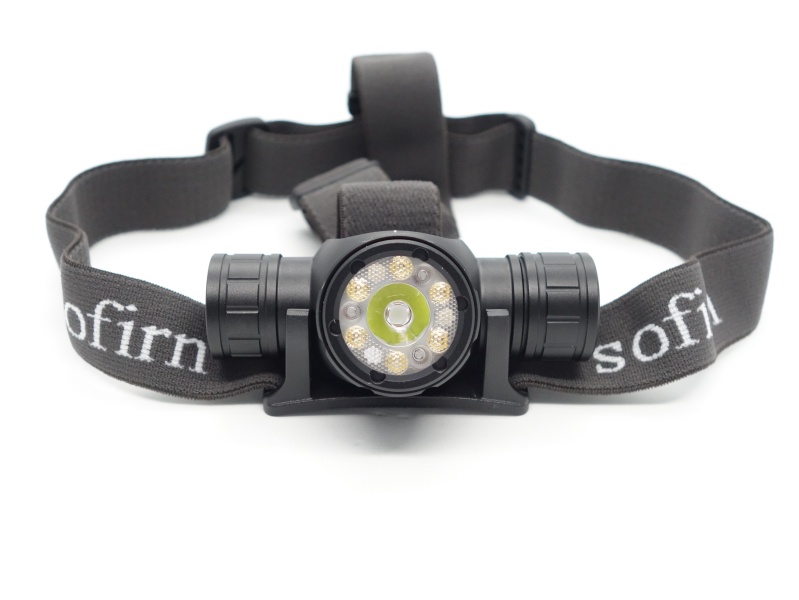
Armytek Wizard C2 WR, Sofirn HS21
User interface#
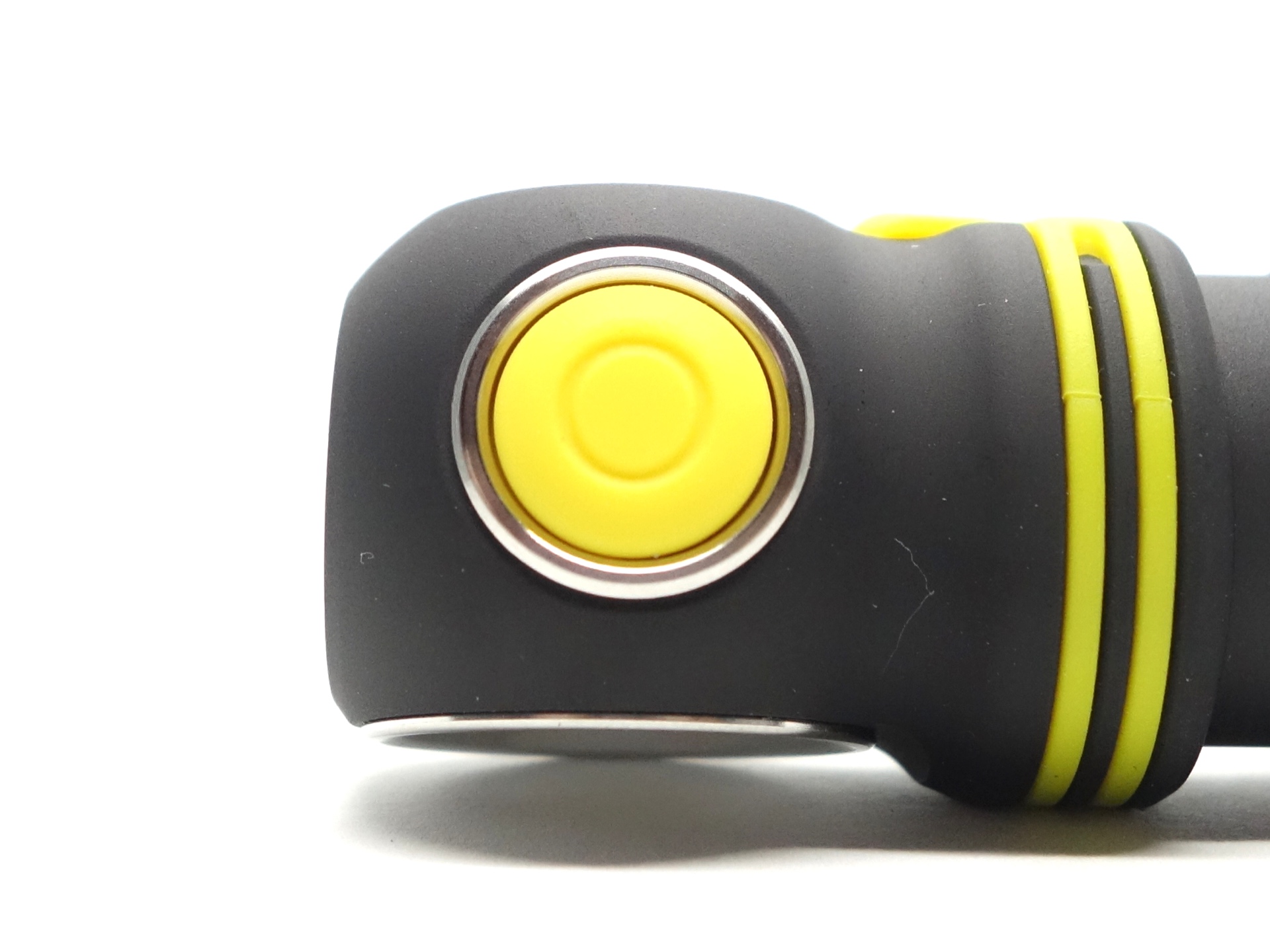
The torch is controlled by an electronic side switch.
There are multiple modes:
- Firefly mode
- Main modes (Main1, Main2, Main3)
- Turbo mode
- White blinky modes (Beacon, Strobe)
- Red Flash
Warm White Light#
| State | Action | Result |
|---|---|---|
| Any | Two clicks | Change between white and red |
| Off | Click | On (mode memory) |
| Off | Press and hold | On (Firefly) |
| On | Click | Off |
| On | Press and hold | Cycle (Main1, Main2, Main3) |
| Firefly | Press and hold | Cycle (Main1, Main2, Main3) |
| Any | Three clicks | Turbo |
| Turbo | Three clicks | Last used mode |
| Any | Four clicks | Strobe |
| Strobe | Press and hold | Cycle (Beacon, Strobe) |
Red Light#
| State | Action | Result |
|---|---|---|
| Any | Two clicks | Change between white and red |
| Off | Click | On (mode memory) |
| Off | Press and hold | On (Firefly) |
| On | Click | Off |
| On | Press and hold | Cycle (Main1, Main2, Main3) |
| Firefly | Press and hold | Cycle (Main1, Main2, Main3) |
| Any | Three clicks | Nothing |
| Any | Four clicks | Red Flash |
| Red Flash | Click | Off |
| Red Flash | Press and hold | Nothing |
| Red Flash | Three clicks | Nothing |
| Red Flash | Four clicks | Nothing |
Lamp mode with pass-through charging#
There is a Lamp mode where you can run the headlamp from a USB-C power supply with or without a battery.
You could use a powerbank with an efficient 5V/2A output to keep this headlamp powered while camping long after the 21700 cell has gone flat. You would not need to waste energy charging the 21700 cell if you unscrew the tailcap 1/4 turn to disconnect the battery.
This mode is limited to: Firefly, Main1, Main2 and Main3
If you start charging a battery in the headlamp with a USB-C cable and then turn the light on, the battery will continue to charge. Armytek recommend using at least a 5V/2A power supply when using Lamp mode while charging the battery, and 5V/1.5A when using Lamp mode without a battery.
If the USB-C power supply cannot supply enough current, the output will be reduced and the torch will switch to a lower mode automatically.
Mode memory#
There is mode memory. White and Red are memorised separately.
The torch will use the last used mode when powered by a battery.
In “Lamp mode”, if the last used mode was Turbo, Beacon or Strobe then the torch will change to Main1.
Multicolour indication#
There is a multicolour indicator under the yellow button cover. The indicator is used for the battery level and the temperature.
I did not find much information about this feature in the user manual. I have compiled this information by playing around with the headlamp to see what it does and by reading through user manuals for other Armytek Elf torches. There may be some additional modes that I have not mentioned.
| Indicator | State |
|---|---|
| Green flashes once every 4 seconds | Battery level ≥ 25% |
| Orange flashes once every 2 seconds | 10 ≥ Battery level < 25% |
| Red flashes once every second | Battery level < 10% |
| Orange flashes 3 times every 2 seconds | Warning temperature level |
| Red flashes 3 times every second | Critical temperature level |
It looks like the indicator has two modes:
- The indicator is switched on in any state.
- The indicator is switched off.
To change the multicolour indicator mode:
- Unscrew the tailcap 1/4 turn while the torch is off.
- Press and hold the button.
- Tighten the tailcap.
- Immediately uncrew the tailcap 1/4 turn when a red indicator light turns on.
- Release the button.
- Tighten the tailcap.
Strobe#
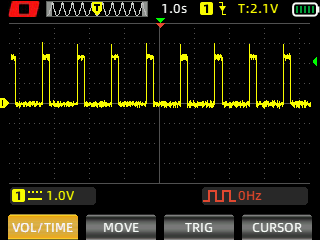
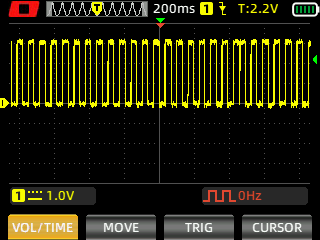
Strobe has a constant frequency of 10 Hz. Beacon is 1 Hz. Red Flash is 1 Hz.
Warm White (Beacon, Strobe)
Red Flash
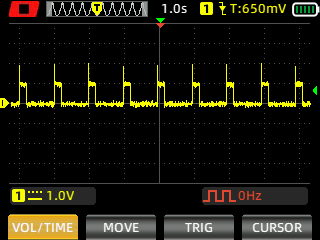
I measured Strobe and Beacon with a Zoyi ZT-706S oscilloscope using High Speed mode.
Low voltage protection#
There is low voltage protection built into the torch.
The light turns off around 2.87V.
I tested low voltage protection by connecting the head of the torch to a bench power supply and then by lowering the voltage from 4.2V to 0V.
Pulse Width Modulation#
I did not notice any visible PWM (flickering).
Main1, Main2, Main3, Turbo
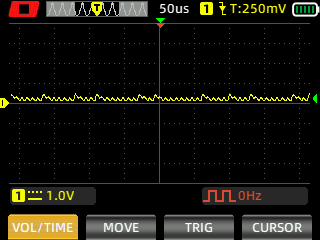
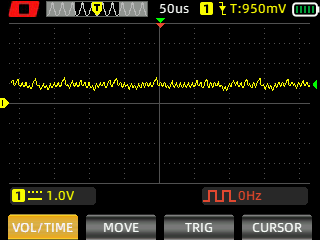
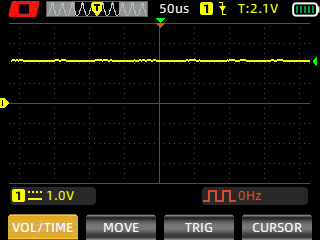
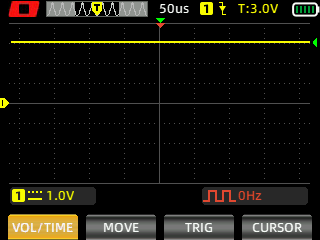
I measured the PWM of the light with a Zoyi ZT-706S oscilloscope.
What I like about the UI#
- Simple to use.
- Shortcut to Firefly from off.
- Shortcut to Turbo from off.
- Shortcut to Strobe from off.
What could be improved#
A “Press and Hold” shortcut to exit Strobe modes and go to the last used mode would be nice.
Batteries and charging#
Battery#
The torch supports a 21700 cell or an 18650 cell (with an adapter).
A protected Armytek 3.6V Li-ion 21700 5000mAh cell was included inside the torch.
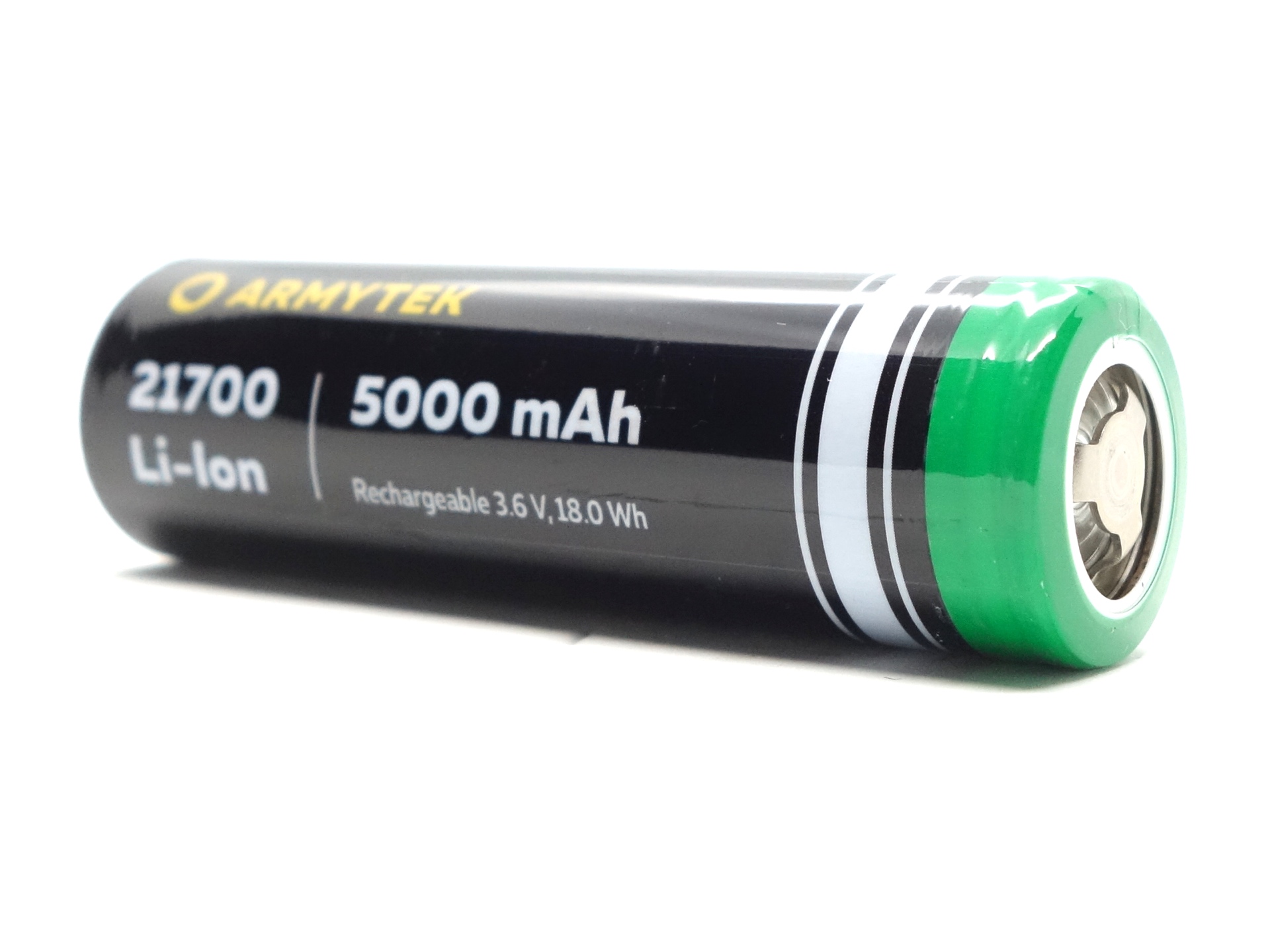
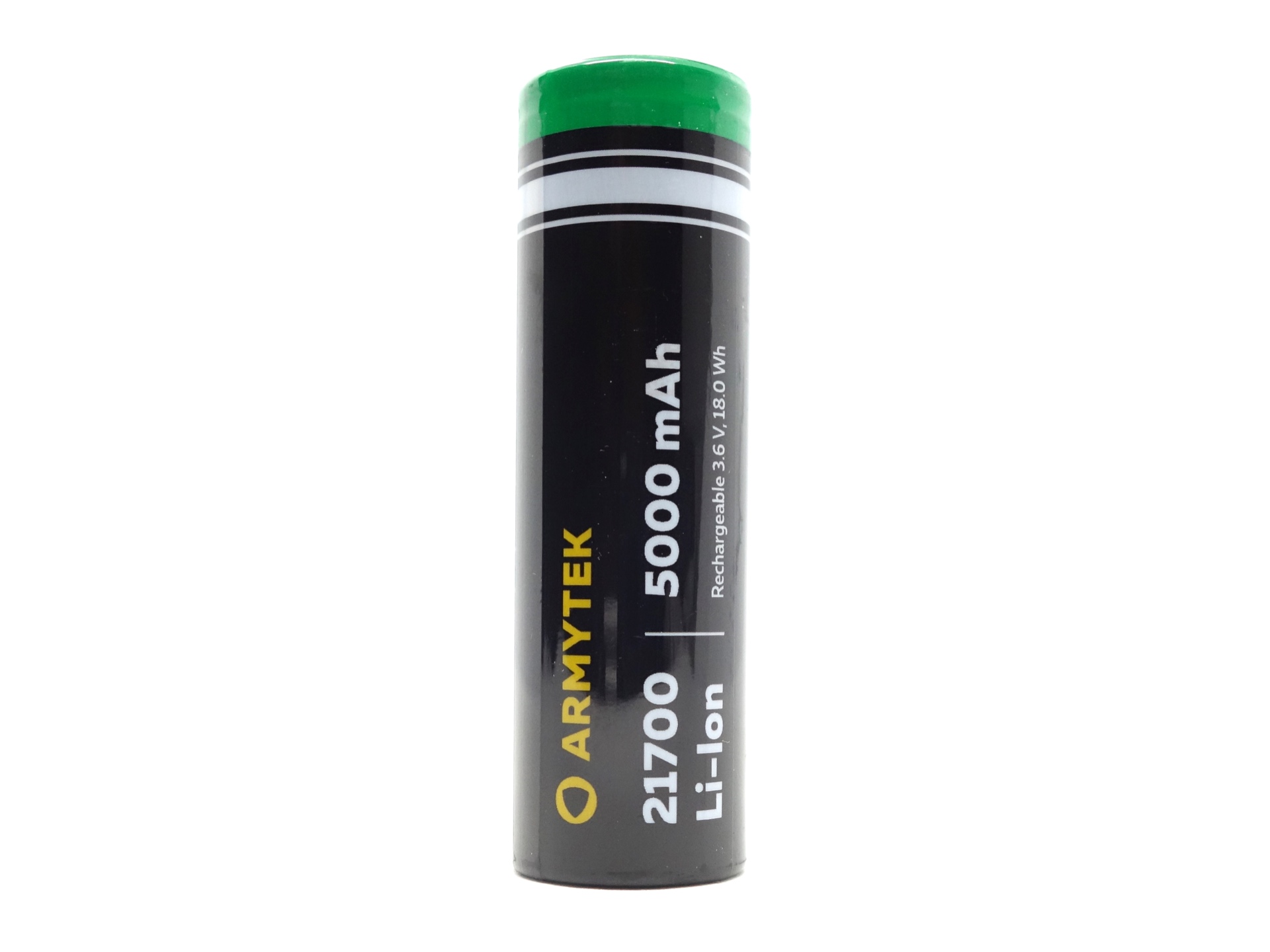
I tried the following cells:
| Cell | Top | Compatible? |
|---|---|---|
| Armytek 21700 3.6V Li-ion 5000mAh | Flat | Yes |
| Molicel P42A 21700 4200mAh | Flat | Yes |
| NEXTORCH 21700 3.7V Li-ion 5000mAh USB-C | Button | Yes |
| Wuben ABD4800 21700 3.6V Li-ion 4800mAh | Button | Yes |
| XTAR 21700 3.7V Li-ion 5000mAh | Button | Yes |
Short flat top 21700 cells and long protected 21700 cells with built-in USB-C charging work.
Charging#
The headlamp has USB-C charging.
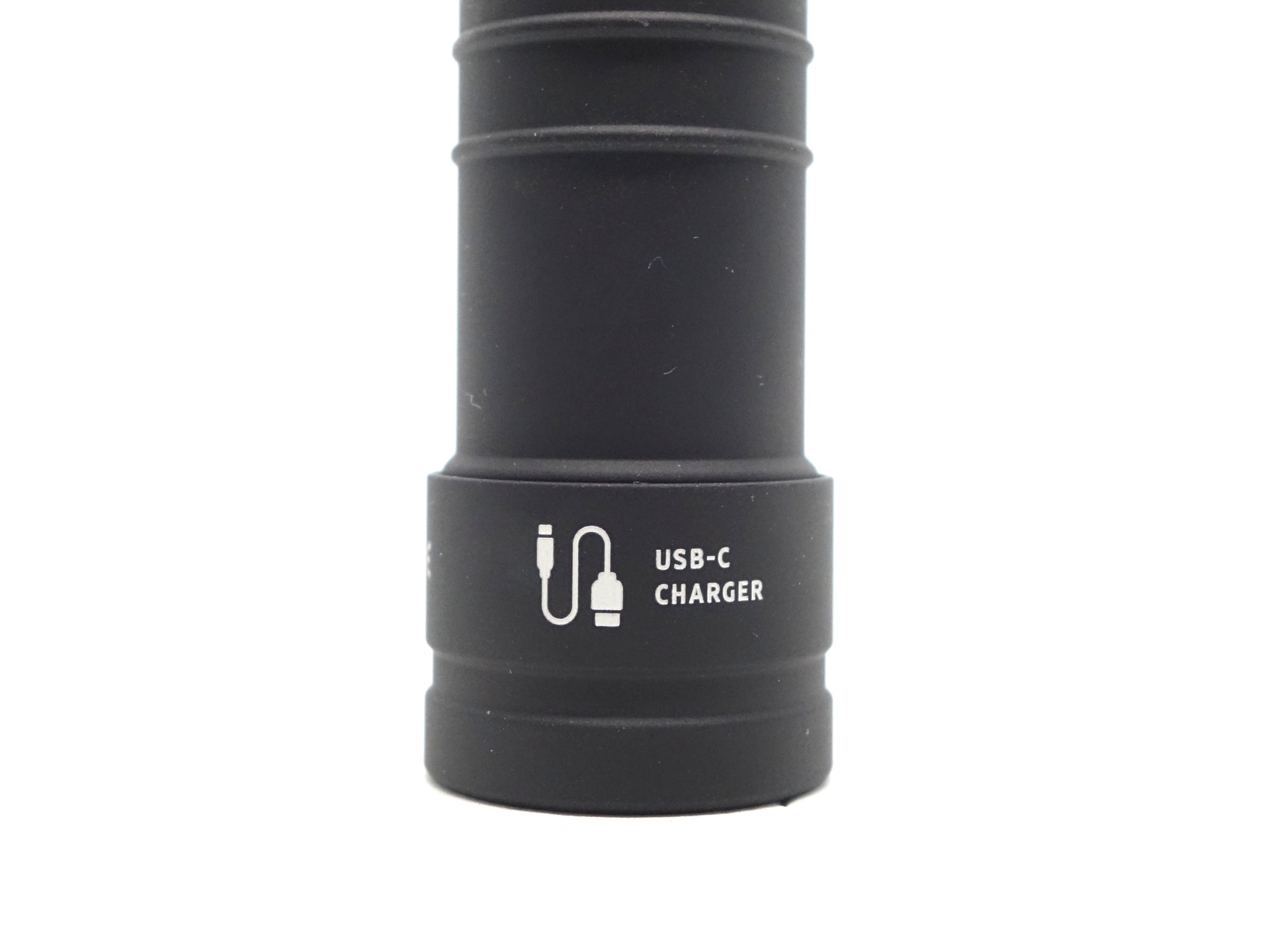
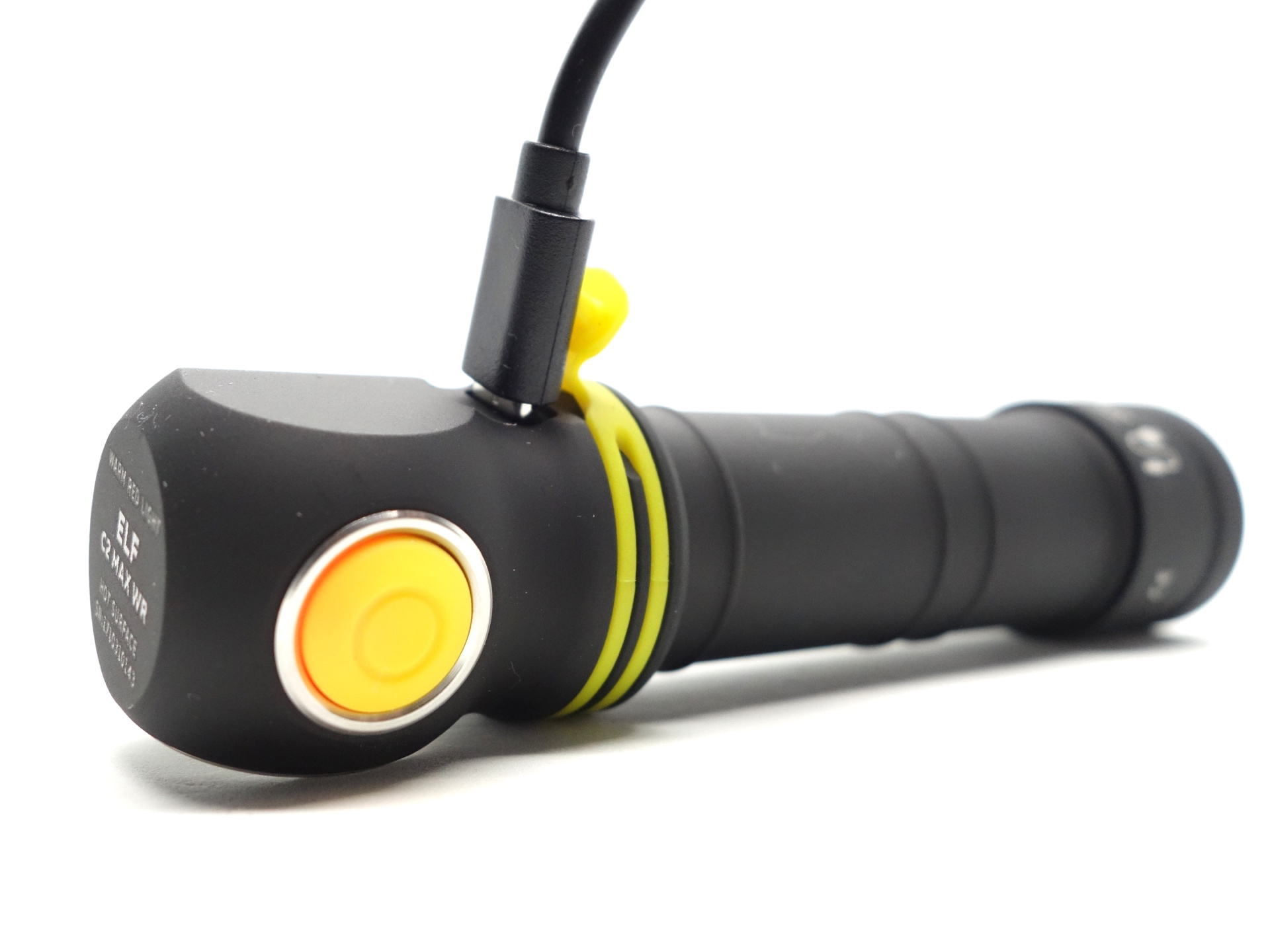
Power supply: PinePower Desktop USB-C
USB Meter: ChargerLAB Power-Z KM003C Amazon Australia
Room temperature: 15 C
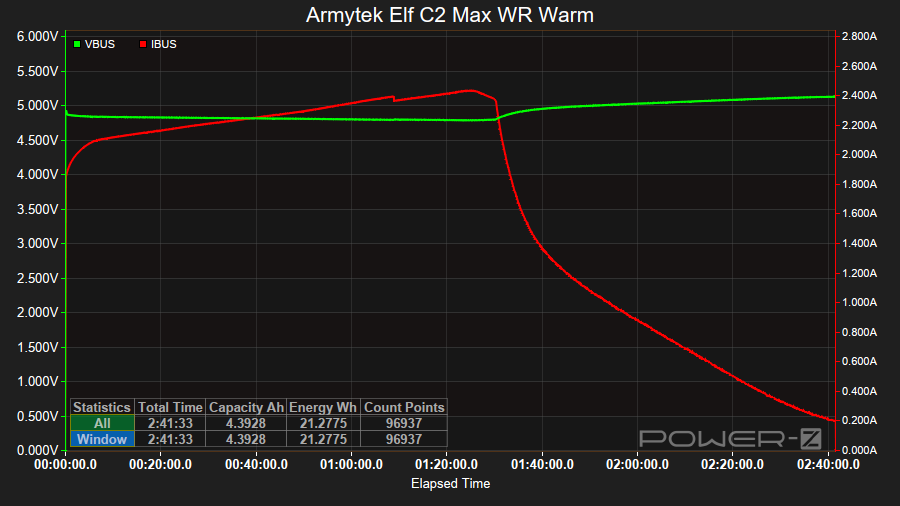
It took 2 hours 41 minutes for the torch to charge the included 21700 cell from 2.93V to 4.156V at a rate of 5V/2.4A.
The charging indicator behind the button is red while charging and it becomes green when charging is complete. If the light is blinking red then charging has not started and there is an issue.
Performance#
Specifications from the box:
Warm White Light#
| ANSI/PLATO FL1-2019 | Turbo | Main3 | Main2 | Main1 | Firefly | Strobe | Beacon |
|---|---|---|---|---|---|---|---|
| Output (lumens) | 2,325 | 930 | 344 | 102 | 1.2 | 2,325 | 930 |
| Runtime | 3h | 3h 50min | 9h 10min | 31h | 20 days | 5h 30min | 14h 35min |
| Beam Distance (metres) | 110 | ||||||
| Beam Intensity (cd) |
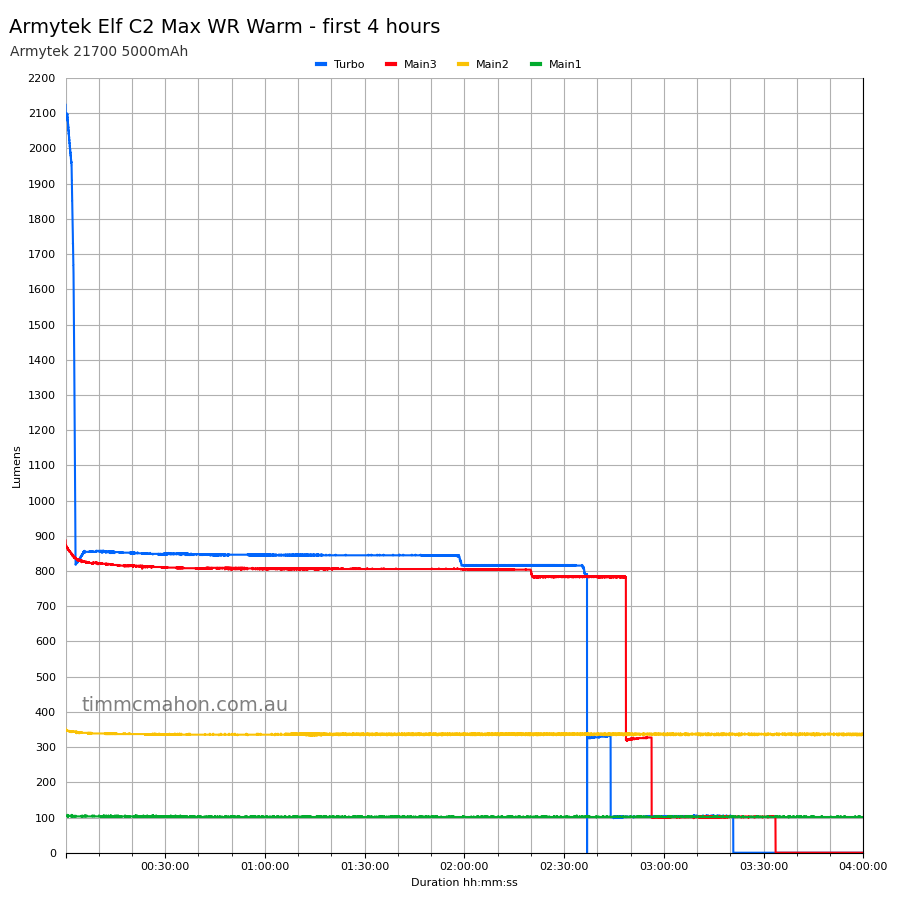
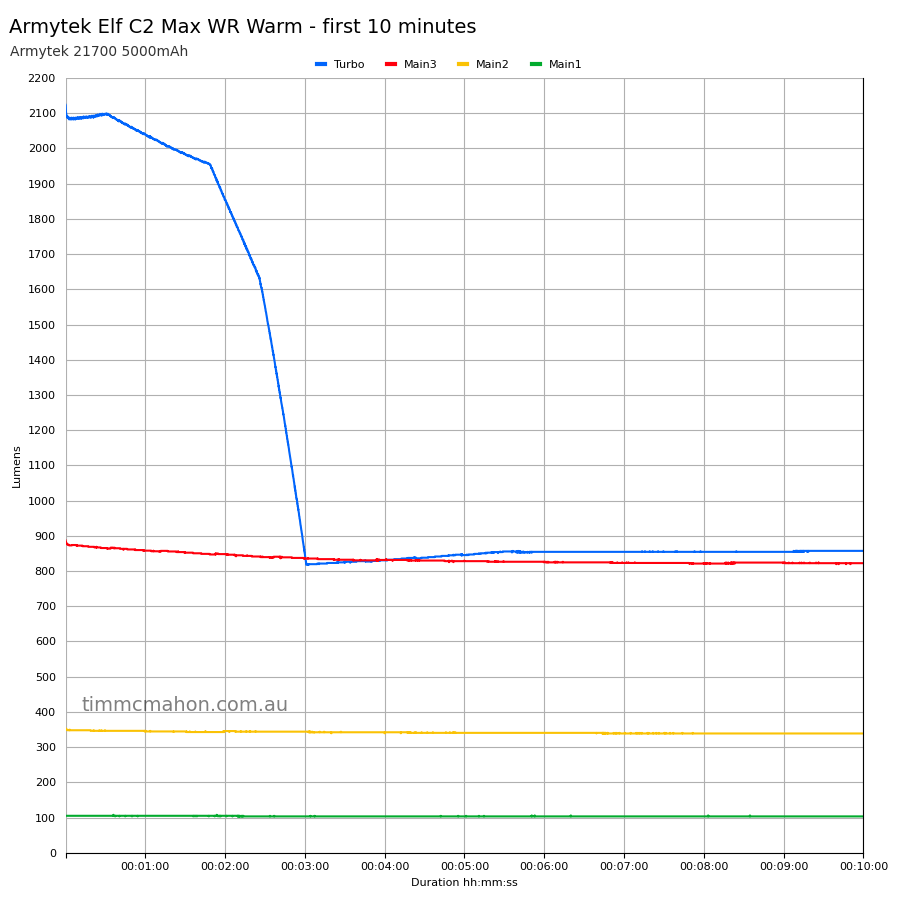
Turbo drops to 930 lumens after 2 minutes.
Strobe drops to 930 lumens after 3 minutes.
Red Light#
| ANSI/PLATO FL1-2019 | Main3 | Main2 | Main1 | Firefly | Red Flash |
|---|---|---|---|---|---|
| Output (lumens) | 200 | 100 | 45 | 2 | 200 |
| Runtime | 5h 5min | 8h 45min | 20h 30min | 10 days | 15h 20min |
| Beam Distance (metres) | 42 | ||||
| Beam Intensity (cd) |
Main3 drops to 140 lumens after 1 minutes.
I used the included cell to perform the following tests.
Lumen measurements#
I measured the current at turn on with a bench power supply for Main1, Main2, Main3 and Turbo and I used a Zoyi ZT-706S Oscilloscope Multimeter for Firefly.
| LED | Mode | Amps at start | Specs | Lumens @turn on | Lumens @30 sec | Lumens @10 min |
|---|---|---|---|---|---|---|
| Red | Firefly | 23 mA | 2 | 1 | 1 | 1 |
| Red | Main1 | 0.23 A | 45 | 51 | 52 | 52 |
| Red | Main2 | 0.54 A | 100 | 112 | 109 | 108 |
| Red | Main3 | 1.22 A | 200 | 230 | 239 | 195 |
| White | Firefly | 22 mA | 1.2 | |||
| White | Main1 | 0.15 A | 102 | 104 | 104 | 103 |
| White | Main2 | 0.54 A | 344 | 352 | 346 | 338 |
| White | Main3 | 1.59 A | 930 | 886 | 865 | 822 |
| White | Turbo | 5.91 A | 2,325 | 2,123 | 2,096 | 857 |
Firefly is too low for my DIY lumen tube to detect. It is less than 1 lumen.
Standby drain#
I measured a standby current of 27 µA with a Zoyi ZT-706S Oscilloscope Multimeter.
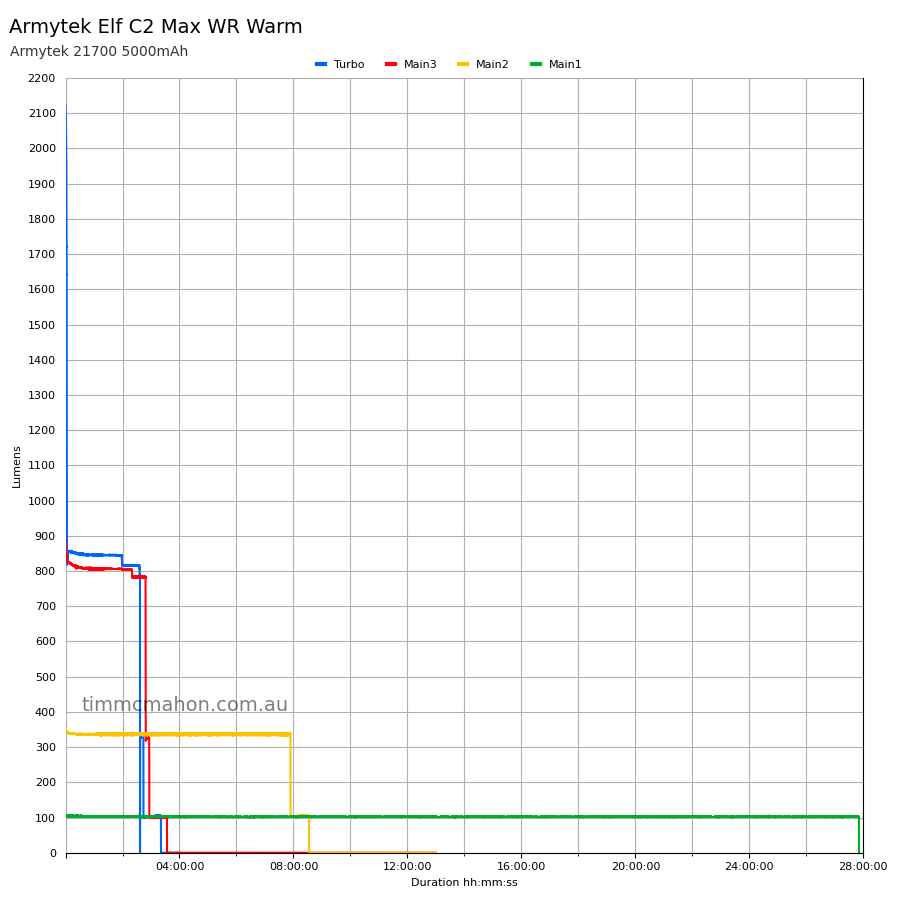
Runtime graphs#
I used my own DIY lumen tube with a TSL2591 sensor and forked bmengineer’s project RuTiTe to record runtimes.
Note: Lumen measurements may be off by 10% with my DIY lumen tube.
The room temperature was approximately 15 C.
Warm White Light#
Red Light#
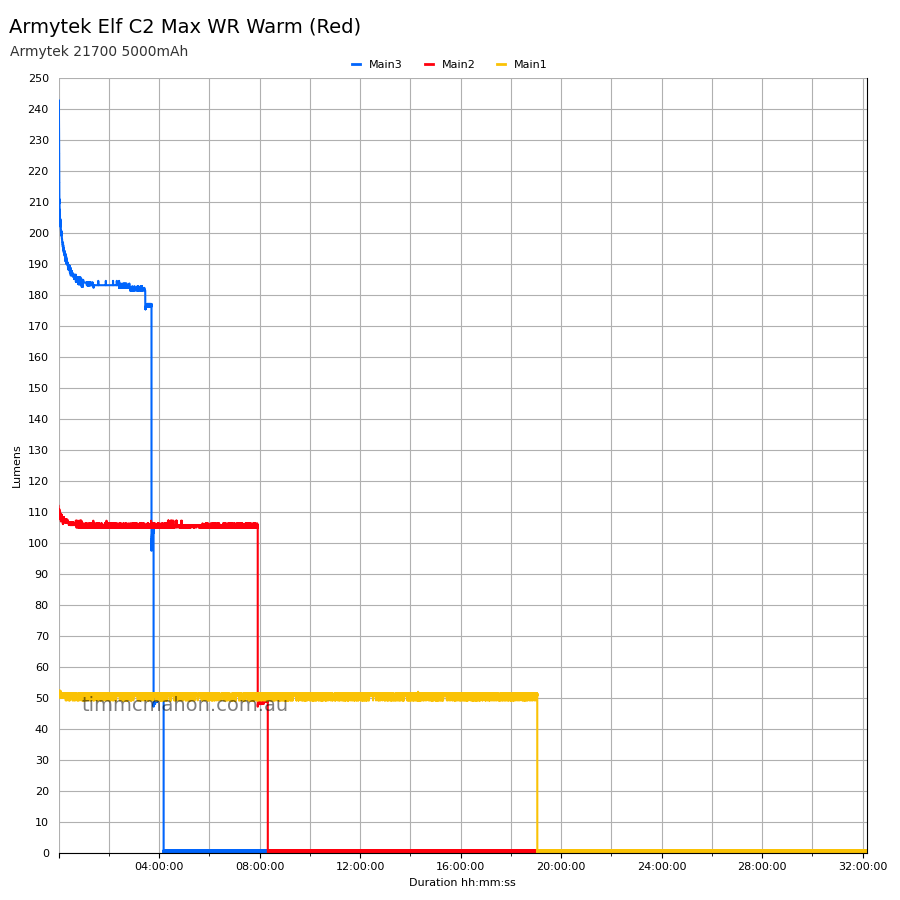
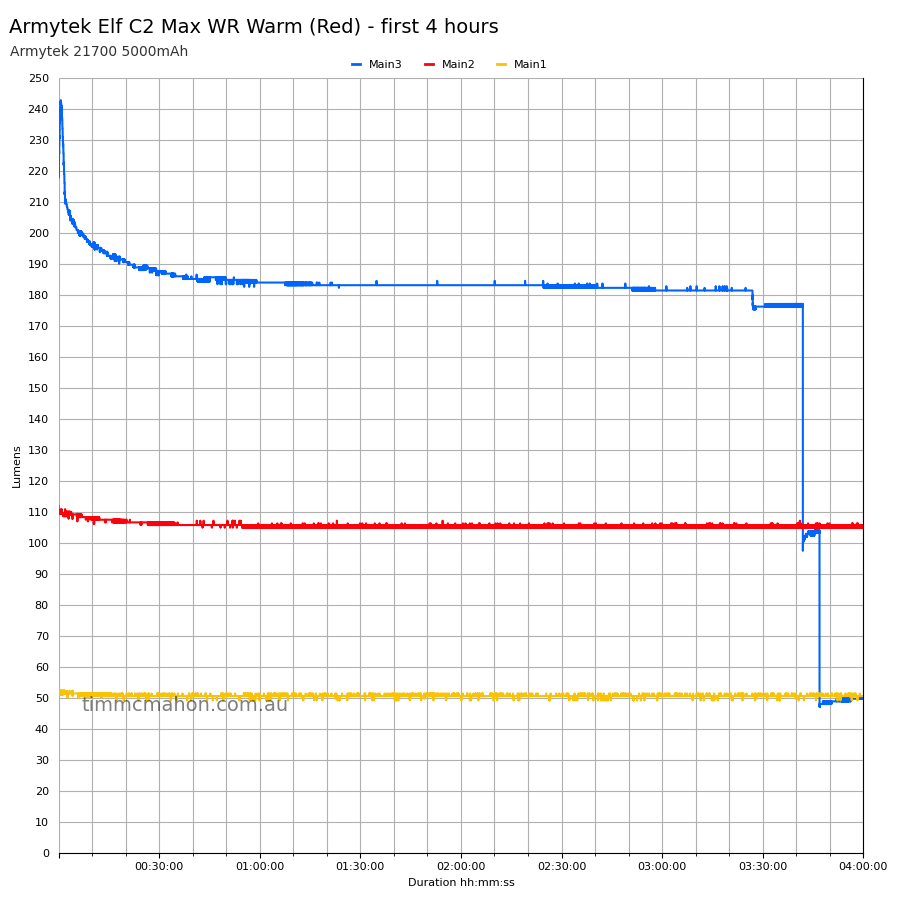
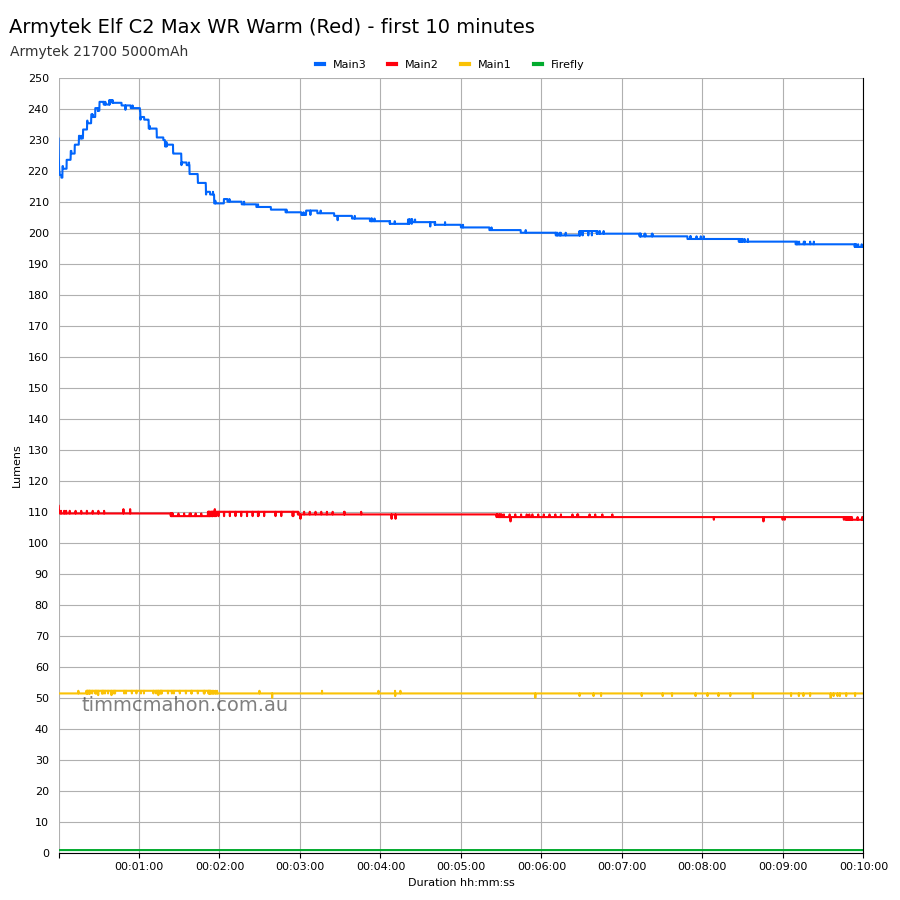
Runtime#
Here is a summary of the runtime results:
| LED | Mode | User manual | Runtime | Turn off | Final voltage |
|---|---|---|---|---|---|
| White | Turbo | 3h | 2h 43min 58s | 4h+ | 3.00 |
| White | Main3 | 3h 50min | 3h 33min 33s | 13h+ | 2.93 |
| White | Main2 | 9h 10min | 8h 32min 57s | 13h+ | 2.92 |
| White | Main1 | 31h | 27h 50min 57s | 27h 50min 57s+ | 2.96 |
| White | Firefly | 20 days | 10min+ | 10min+ | |
| Red | Main3 | 5h 5min | 4h 10min 53s | 17h 44min 7s+ | 2.94 |
| Red | Main2 | 8h 45min | 8h 19min 38s | 21h 30min 37s+ | 2.92 |
| Red | Main1 | 20h 30min | 19h 3min 4s | 32h 8min 57s | 2.92 |
| Red | Firefly | 10 days | 10min+ | 10min+ |
“Runtime” is the time until the output reduces to 10% of the output at 30 seconds (as per the ANSI/PLATO FL1 2019 Standard).
“Turn off” is the time until my DIY lumen tube no longer detects more than one lumen.
“+” indicates that the light remained on after recording had stopped.
The runtimes are pretty close to what Armytek claim but they fell slightly short when I tested.
The output is well regulated.
Throw#
I took lux measurements with a UNI-T UT383BT at 30 seconds at distance of five metres.
| LED | Mode | Specs (cd) | Specs (m) | Candela measured (cd) | Distance (m) |
|---|---|---|---|---|---|
| White | Main1 | 50 | 14 | ||
| White | Main2 | 425 | 41 | ||
| White | Main3 | 1,175 | 68 | ||
| White | Turbo | 110 | 3,050 | 110 |
Beamshots#
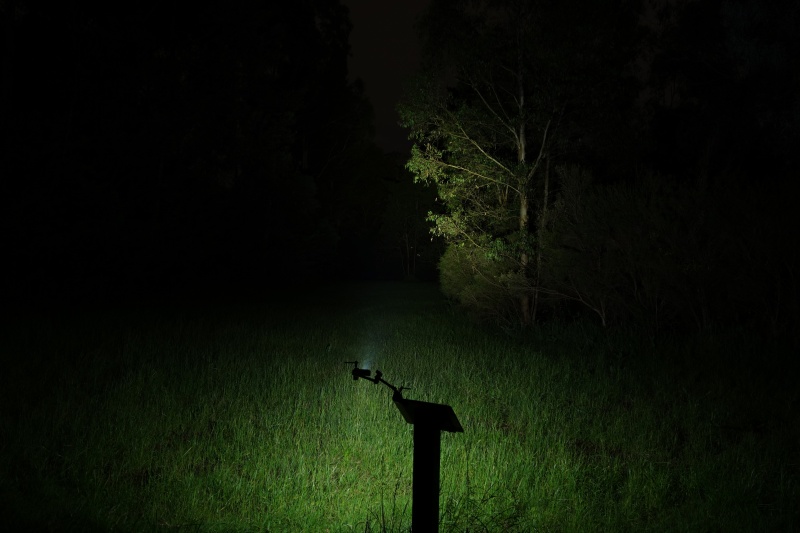
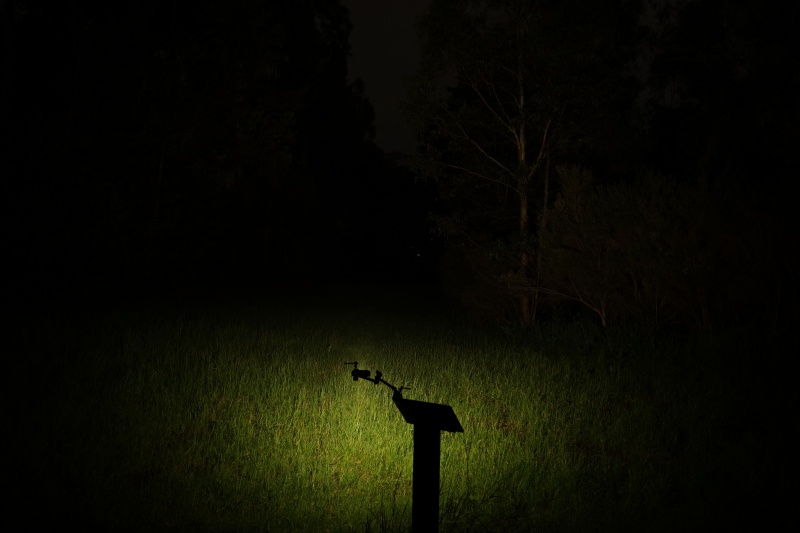
I went to a local park and I aimed the torch at a tree 70 metres away while using Turbo.
Beamshots were taken using a Sony RX100M2 using 3.2", f3.2, ISO 100, 5000K WB.
Armytek Elf C2 Max WR Warm (Turbo)#
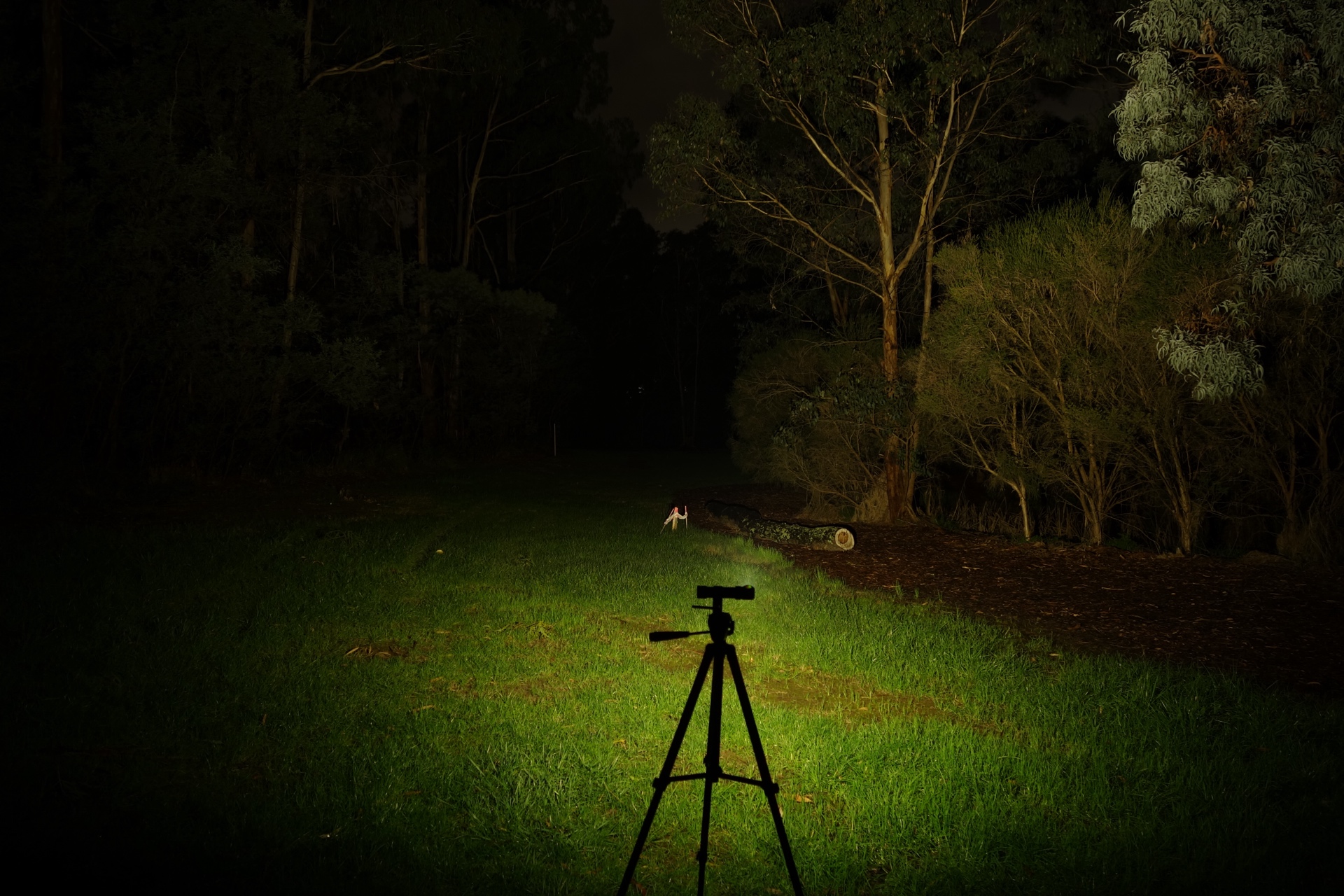
Armytek Elf C2 Max (Turbo)#
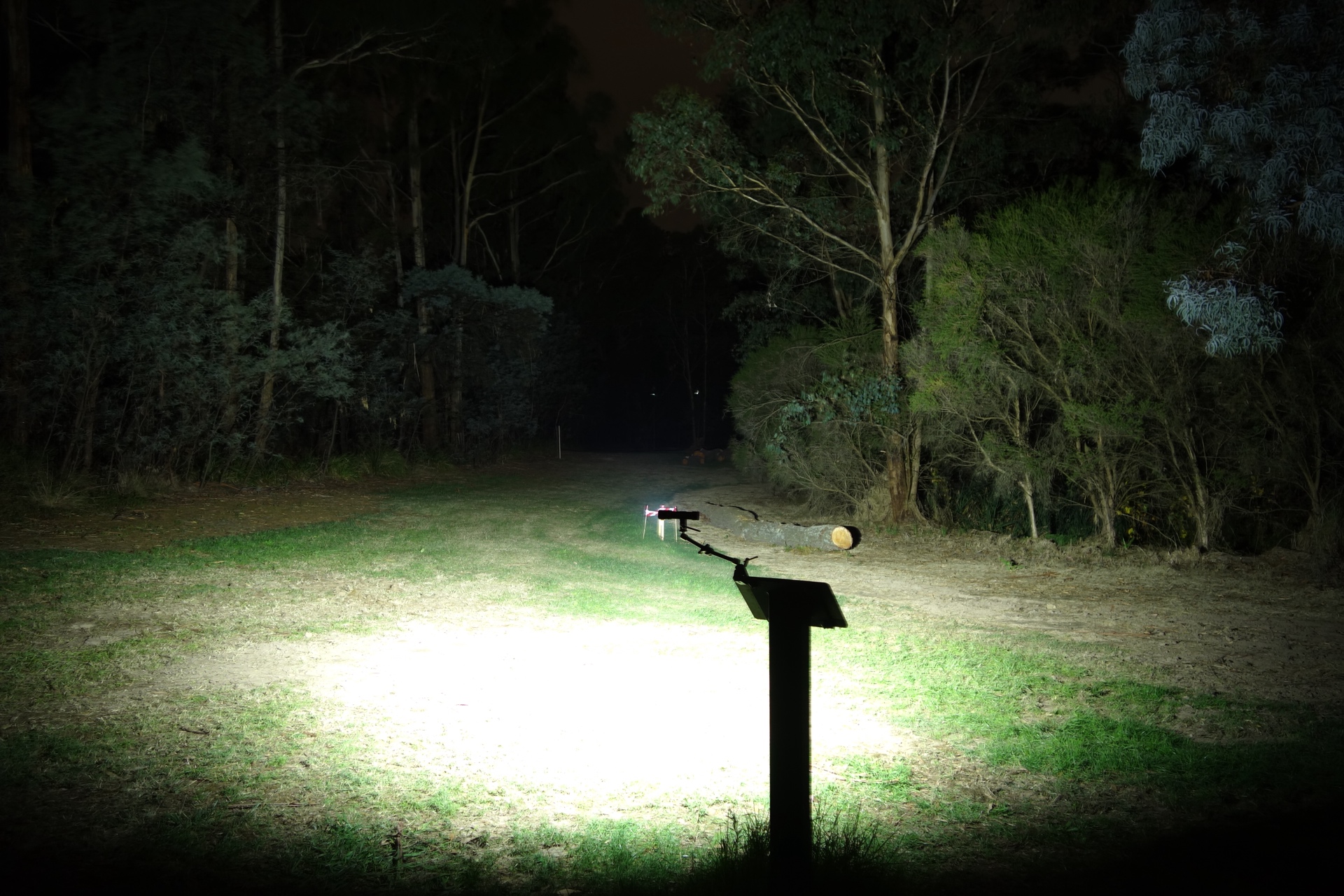
Armytek Wizard C2 Pro Max LR Warm (Turbo2)#
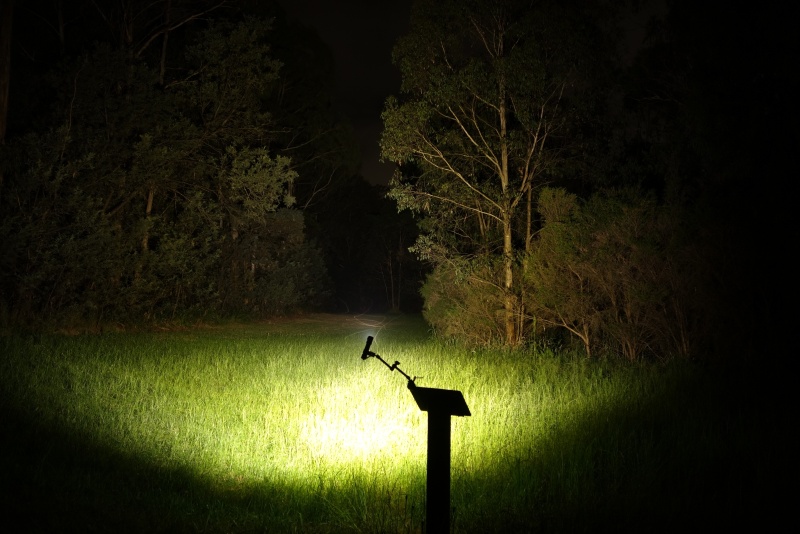
Armytek Wizard C2 WG (Turbo)#
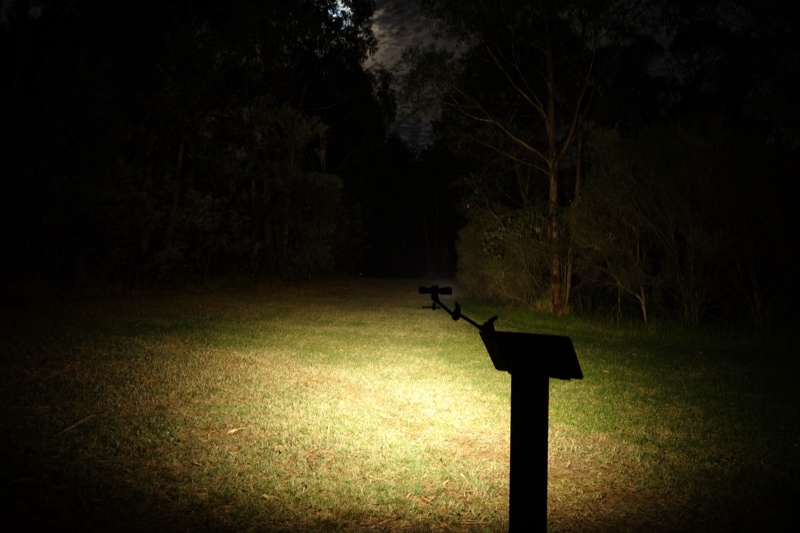
Armytek Wizard C2 WR (Turbo)#
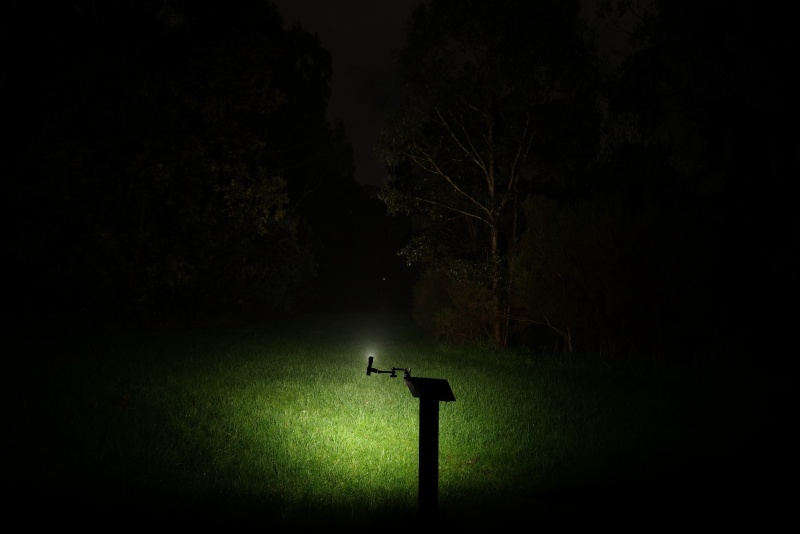
Armytek Wizard C2 Pro Nichia (Turbo)#
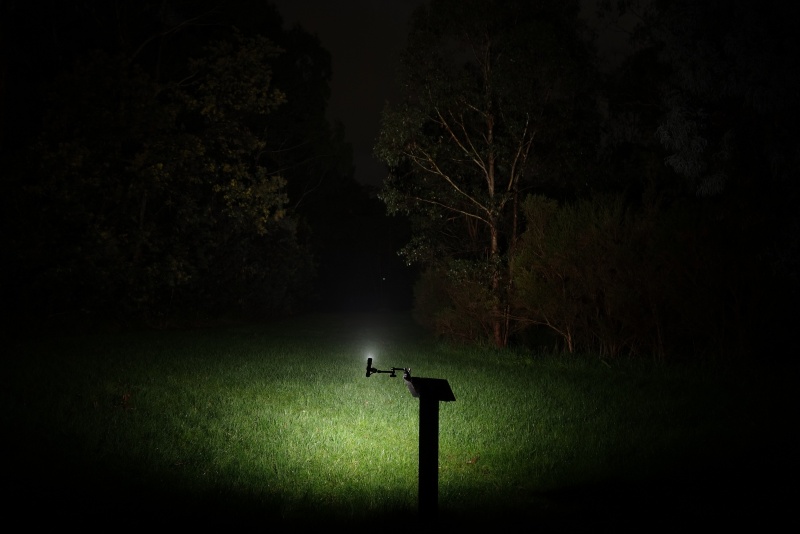
Sofirn HS21 Spotlight (Turbo)#
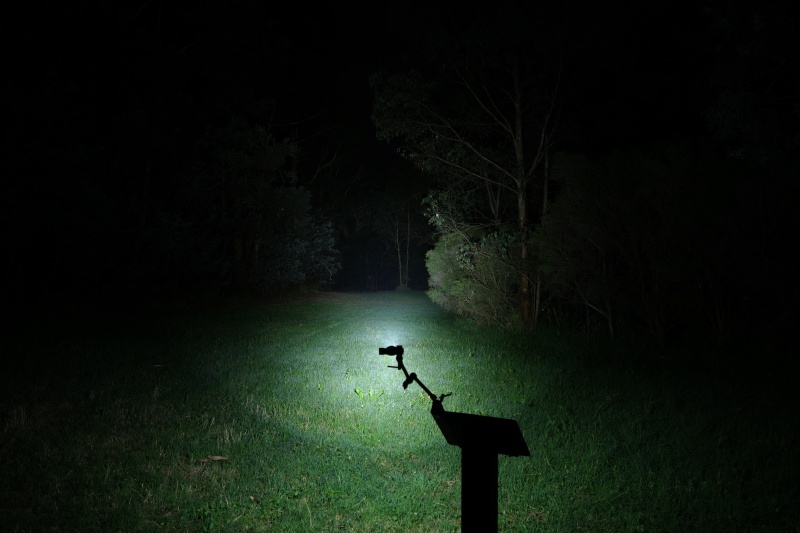
Sofirn HS21 Floodlight (Turbo)#
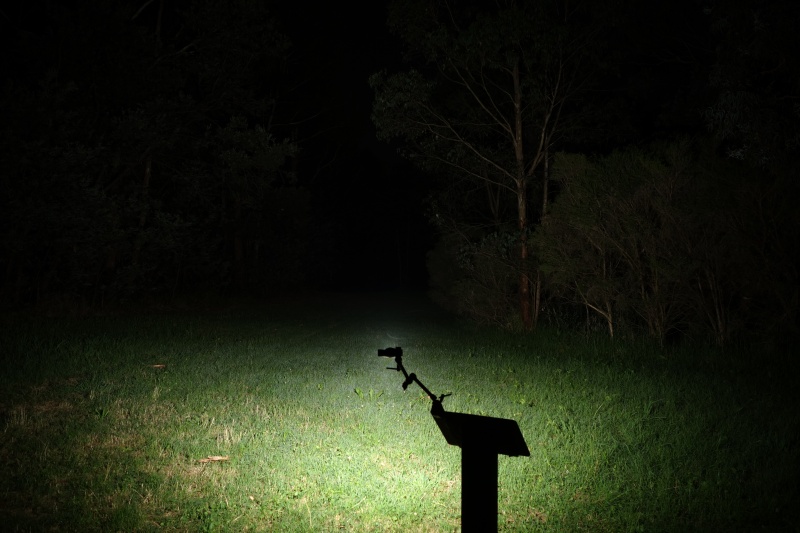
Cyansky HS6R Spot (High)#
Cyansky HS6R Flood (High)#
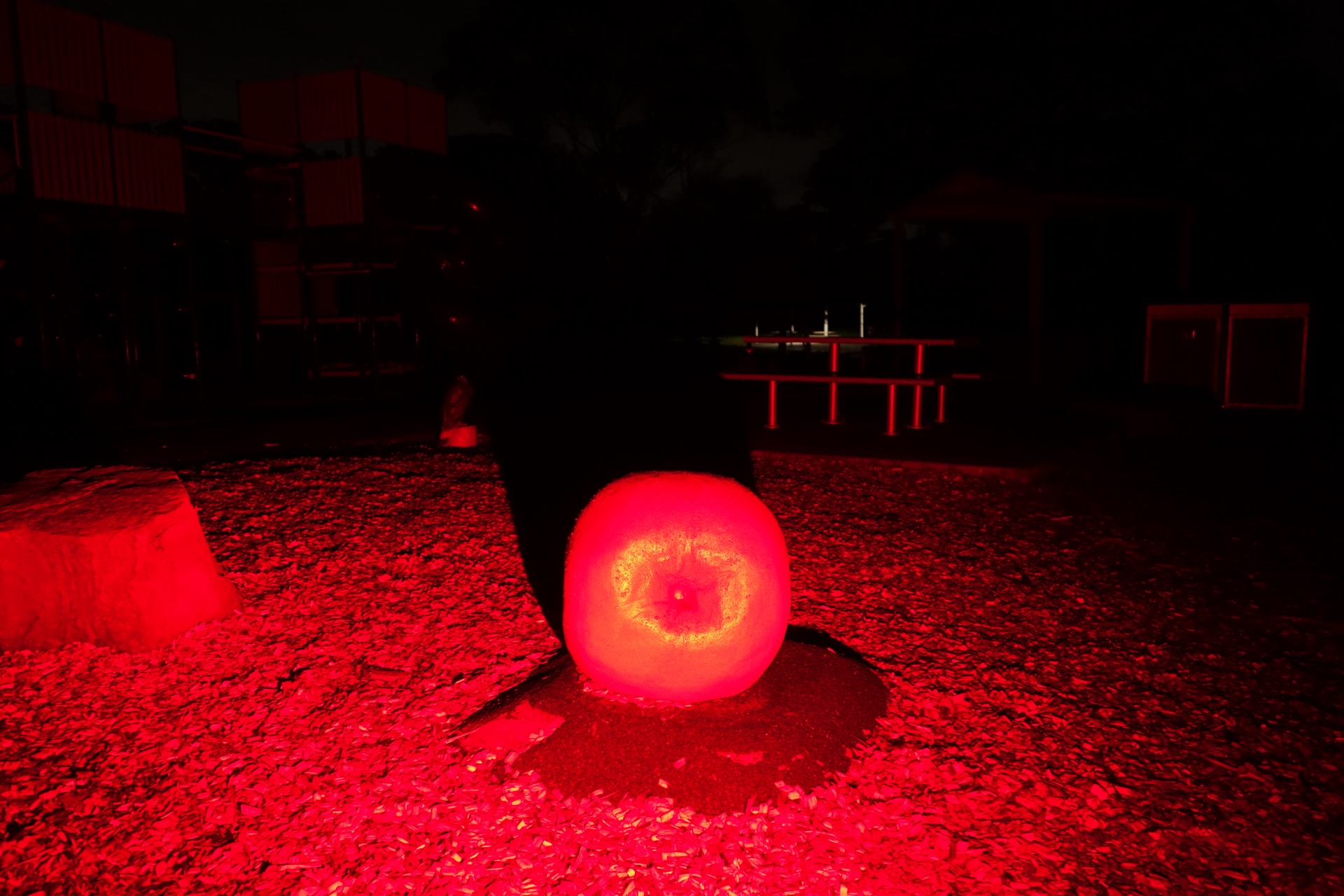
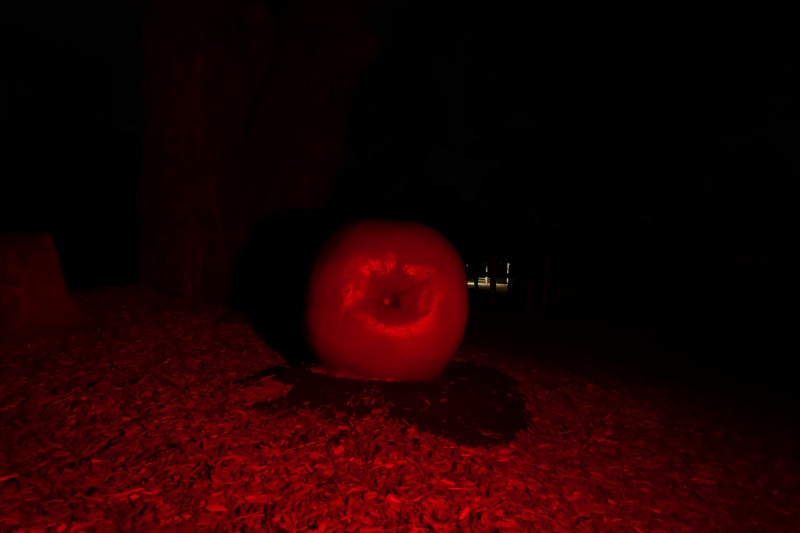
Red beamshots were taken using a Sony RX100M2 using 0.25 second shutter, f3.2, ISO 800, 5000K WB.
Armytek Elf C2 Max WR Warm (Red Main3)#
Nitecore NU27 (Red) High#
Nitecore HA23 UHE (Red) High#
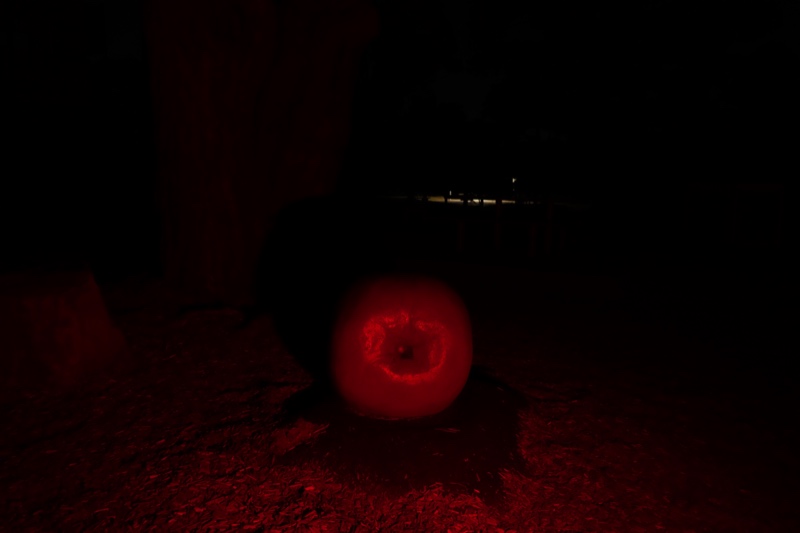
SPERAS B7 (Red)#
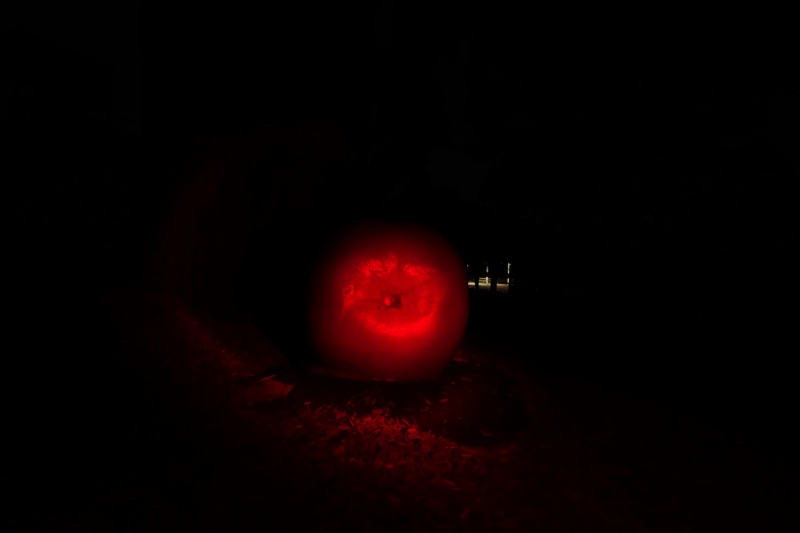
Thermal Images#
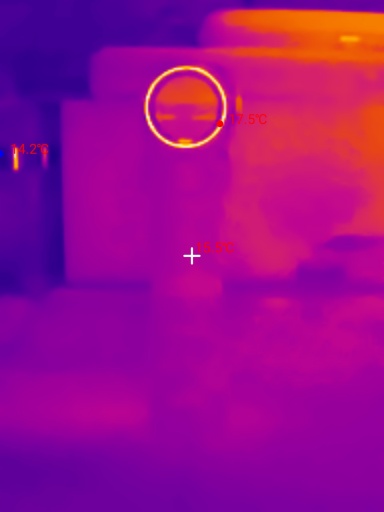
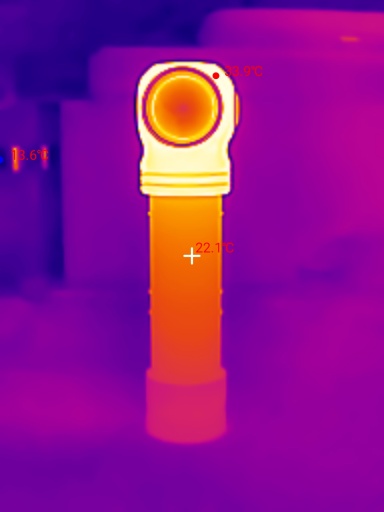
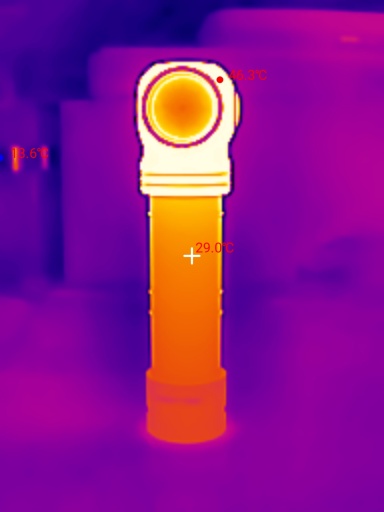
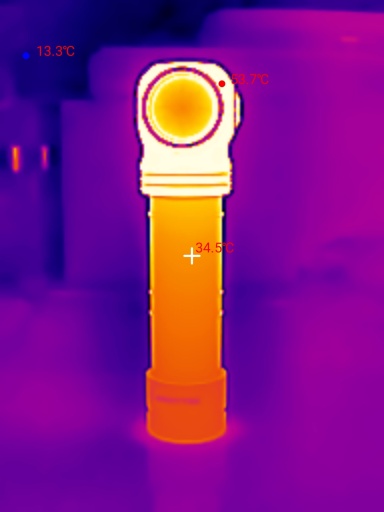
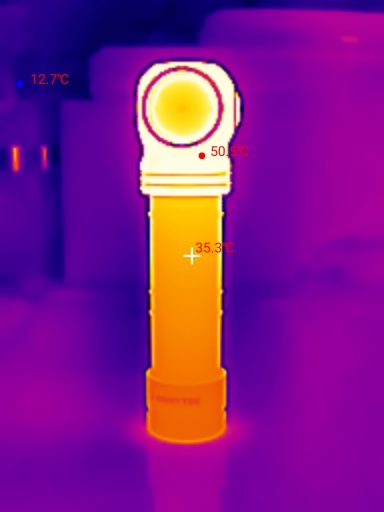
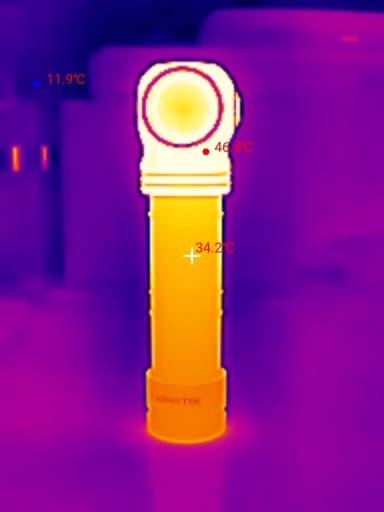
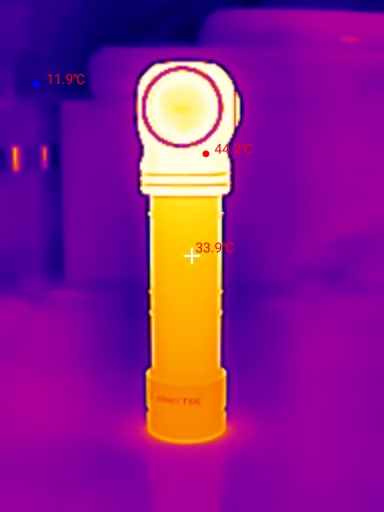
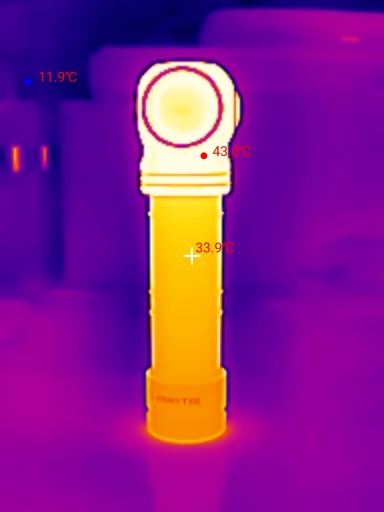
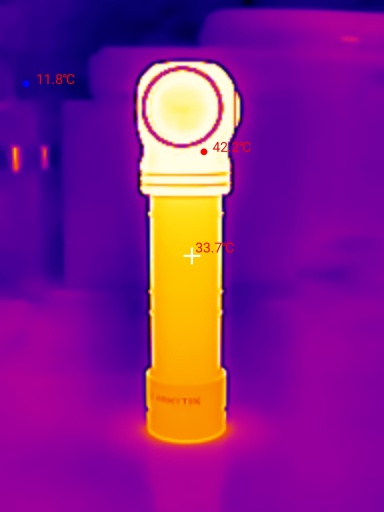
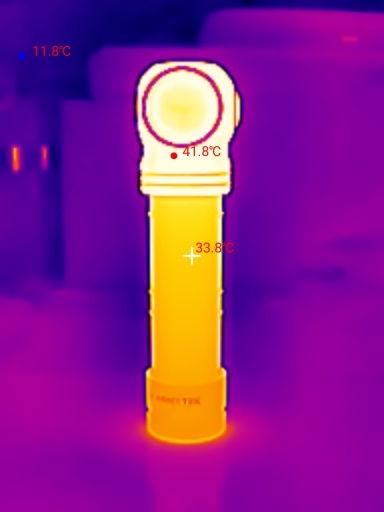
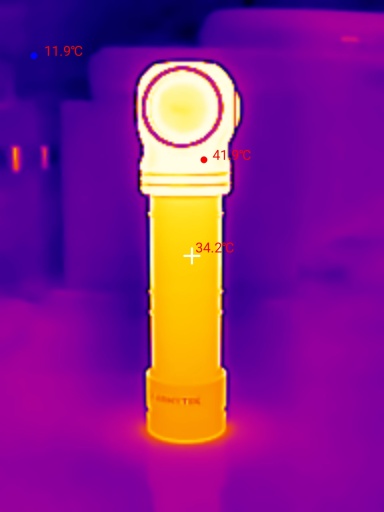
I used a Thermal Master P3 to take thermal images of the torch while using Turbo. Get 10% off the Thermal Master P3 with code Mcmahon10
Room temperature: 12 C
| Time (mm:ss) | Max Temperature |
|---|---|
| 00:00 | 17.5 C |
| 01:00 | 33.9 C |
| 02:00 | 46.3 C |
| 03:00 | 53.7 C |
| 04:00 | 50.5 C |
| 05:00 | 46.4 C |
| 06:00 | 44.2 C |
| 07:00 | 43.0 C |
| 08:00 | 42.2 C |
| 09:00 | 41.8 C |
| 10:00 | 41.9 C |
The temperature peaked at around 53.7V after 3 minutes.
There is a 58 C thermal limit where the brightness will decrease.
Conclusion#
I would highly recommend the Armytek Elf C2 Max WR Warm if you are a looking for a headlamp with multiple Red Light and multiple Warm White Light modes.
The light output is stable for several hours after the initial step down.
The Armytek Wizard C2 WR is a good option if you prefer a slightly smaller headlamp with magnetic charging instead of USB-C charging.
Pros:#
- Excellent build quality.
- Multiple Red Light modes.
- Output is well regulated.
- Good beam distance.
- Floody beam.
- Comfortable headband.
- Lamp mode.
- USB-C charging.
Cons:#
- Runtime is slightly shorter than expected.
- Low CRI.
- USB-C cover might break over time.
Price#
The Armytek Elf C2 Max WR Warm PCB White is US$110 at armytek.com